Although the Constitution gives the right to free education, the government has not been able to fulfill this duty.
- Education budgets are low, and the system is not well-managed. Promises are made, but results are missing.
Hamid Khan | Bannu KPK
Education is very important for the progress of any country. It is a way to gain knowledge, skills, and good values. It helps people grow in life and become useful members of society. In my view, education is one of the main reasons behind the success and development of a country. It is also called the backbone of a nation because without it, no country can truly move forward.
Education is directly linked with a country’s economy. It helps people get out of poverty and gives them better earning opportunities. Educated people are more aware of how to earn a living and how to use modern ways of doing work. A clear example is China. The Chinese government focused on education and gave useful knowledge to their people. Today, China is the second-largest economy in the world, and education played a major role in this success.
In Pakistan, the Constitution has clearly mentioned the right to education. Article 25-A says:
“The State shall provide free and compulsory education to all children of the age of five to sixteen years in such manner as may be determined by law.
Also, Article 37(b) talks about removing illiteracy and providing free secondary education, Article 37(c) says that technical and higher education should be given on the basis of merit. But sadly, the government has not done enough to follow these laws, and millions of children are still out of school.
According to reports for (2024–25) Pakistan’s overall literacy rate is about 60.6%. Male literacy is around 68%, while female literacy is only 52.8%. In South Asia, Pakistan has the second-lowest literacy rate just better than Afghanistan. Countries like India, Bangladesh, and Sri Lanka are far ahead in education. Even in youth literacy (ages 15 to 24), Pakistan is behind, with about 74–75%, while India and Bangladesh are above 92%,
The District Education Performance Index (2023) also shows a poor picture. The national average score is 53 out of 100, which is marked as low performance. Islamabad performed the best, but provinces like Balochistan (46) and Sindh (51.5) are far behind. Out of 134 districts, 76 are in the low-performance category, mostly in Sindh and Balochistan.
One of the biggest problems is the large number of out of school children. According to UNICEF, more than 22 million children in Pakistan are not attending school. Most of them are from poor families and rural areas where there are no good schools or teachers. This is a very serious issue that needs quick attention.
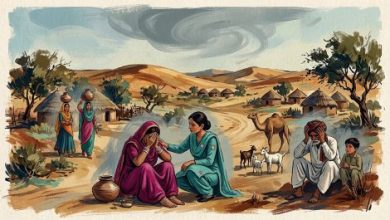
Another issue is gender inequality. In many areas, girls cannot go to school because of early marriage, family pressure, or lack of safe schools. That’s why the female literacy rate is still very low compared to males. Also there is a big gap between public and private schools. Rich students can go to good private schools, but poor students have to rely on government schools, which often don’t have proper buildings teachers or even clean water.
Although the Constitution gives the right to free education, the government has not been able to fulfill this duty. Education budgets are low, and the system is not well-managed. Promises are made, but results are missing.
In the end, I believe that education is the real solution to many of Pakistan’s problems. Without focusing on this sector, we cannot bring real change in society. The government must take strong steps to improve the quality of education, train teachers, and provide equal chances for both boys and girls. Only then will Pakistan become a truly educated and successful country.
Read: Disparity among Pakistan’s Provinces in Education Sector
_________________
Hamid Khan from Bannu KPK is Student of BS Political Science at the International Islamic University Islamabad