A frustrated and jobless youth population is a recipe for unrest and political instability
- If we continue to ignore the plight of rural youth, we risk condemning a generation to despair.
- The choice before us is clear: empower young Pakistanis today, or face the consequences of a restless, wasted, and disillusioned population tomorrow.
Ali Nawaz Rahimoo
With over 60% of Pakistan’s population under 30, millions of rural youth remain locked out of training and employment opportunities threatening both economic growth and social stability.
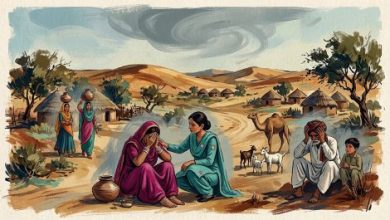
Pakistan stands at a decisive moment in its history. With nearly 64 percent of its population below the age of 30, it possesses one of the world’s largest youth cohorts. Every year, around two million young people enter the labor market. This youth bulge could be the country’s strongest asset. Yet, in rural Pakistan—districts like Tharparkar, Umerkot, Rajanpur, Dera Bugti, and Swat the story is not one of opportunity, but of neglect. Without access to resource centers or skill-building opportunities, the promise of a demographic dividend is slipping into peril.
The Unequal Landscape
In Pakistan’s major cities, young people can access vocational institutes, innovation hubs, and digital training programs. Karachi, Lahore, and Islamabad have become gateways to emerging sectors like freelancing, IT, and renewable energy. But in the rural heartland, where nearly 63 percent of Pakistan’s population lives, opportunities are vanishingly scarce.
Only 12 percent of rural youth have access to formal skill training programs, compared to 34 percent in urban areas. Internet connectivity—a lifeline for education and employment—is available in just 28 percent of rural households, versus far higher rates in cities. Libraries stand abandoned, colleges lack staff, and schools cling to outdated curricula. For many young people in villages, especially girls, the doors to modern opportunities remain firmly shut.
Numbers behind the Crisis
The consequences of this neglect are stark. Rural youth face an unemployment rate of 18.1 percent, nearly double the 9.8 percent in urban centers. Among rural university graduates, the figure stands at 14.5 percent, compared to 7.2 percent for urban graduates. Nationally, about 4.5 million young people are jobless, with the 15–24 age group carrying the heaviest burden.
Pakistan’s Technical and Vocational Education & Training (TVET) infrastructure highlights the imbalance. According to the National Skills Information System (NSIS), the country has only 3,634 TVET institutions in total—1,672 in Punjab, 620 in Sindh, 686 in Khyber Pakhtunkhwa, and just 149 in Balochistan. Spread thin across a population of 240 million, these centers cannot meet demand, let alone reach remote districts.
Education without Employability
The paradox is that many of Pakistan’s unemployed youth are educated. In urban Sindh, 23.6 percent of jobless young people hold university degrees. Across the country, surveys suggest as many as 31 percent of educated youth are unemployed due to a mismatch between academic curricula and market needs. This disconnect leaves rural youth especially disadvantaged: they are not only undereducated, but also unequipped with the practical skills that today’s economy demands.
The Human Cost
This gap between potential and opportunity is producing devastating consequences:
Unemployment and underemployment: Educated but unskilled youth languish without meaningful work, wasting human capital.
Migration: With no local opportunities, rural youth flock to cities, often ending up in precarious, low-wage labor.
Mental health challenges: Growing numbers struggle with depression, anxiety, and feelings of exclusion from Pakistan’s development story.
Vulnerability to extremism: Idle, frustrated youth are prime targets for extremist groups, drug traffickers, and local conflicts.
The crisis is no longer only economic—it is eroding social cohesion and threatening long-term stability.
Why Skill Development Centers Matter
Expanding rural resource and skill development centers is not just desirable; it is essential. The benefits are manifold:
Empowerment through skills: Training in IT, carpentry, tailoring, solar technology, and mobile repair equips youth for jobs or entrepreneurship.
Local economic growth: Skilled workers can boost rural industries—agriculture, livestock, handicrafts, and renewable energy.
Reduced urban migration: Opportunities closer to home will ease pressure on overcrowded cities.
Gender inclusion: Training programs can give rural women pathways into freelancing, embroidery, healthcare, and teaching.
Stronger communities: Productive youth foster safer, more vibrant, and cohesive societies.
The Cost of Inaction
Failure to invest in rural youth will deepen Pakistan’s divides. The urban–rural gap will widen, economic inequality will sharpen, and the country risks squandering its demographic dividend. A frustrated and jobless youth population is a recipe for unrest, anti-state sentiment, and political instability. The price of neglect is far higher than the cost of investment.
A Way Forward
The path ahead requires bold, coordinated steps:
Government leadership: Federal and provincial governments must expand initiatives like NAVTTC, TEVTA, and the Youth Development Program into rural districts.
Public–private partnerships: NGOs, donor agencies, and corporate CSR programs should co-invest in rural training centers.
Digital inclusion: Internet-enabled labs in villages can unlock opportunities in freelancing, e-commerce, and IT.
Mobile training units: Bringing training directly to villages can bypass infrastructure gaps.
Community ownership: Local involvement is key to making these centers sustainable and relevant.
Support for women: Safe spaces, childcare, and transport must be part of the plan to ensure female participation.
A National Investment, Not Charity Pakistan’s rural youth are not a burden—they are its greatest untapped resource. What they lack is not ambition or talent, but access to tools, platforms, and guidance. Establishing rural skill centers is not charity; it is a national investment that will return dividends in growth, equity, and stability. If we continue to ignore the plight of rural youth, we risk condemning a generation to despair. The choice before us is clear: empower young Pakistanis today, or face the consequences of a restless, wasted, and disillusioned population tomorrow.
Read: The Missing Link between Education and Employability in Pakistan
________________
 Ali Nawaz Rahimoo, based in Umerkot, Sindh is a social development professional. He can be contacted on anrahimoo@gmail.com