The war between church and kings was a struggle for dominance; the masses were instruments in that game.
- Europe’s civilization was born not from harmony but from conflict—first with its own gods, and then with the rest of the world
Noor Muhammad Marri Advocate
The struggle between the Church and the feudal kings in Europe was not about religion in its pure sense; it was a struggle for power and control over the social and political order. In medieval Europe, two authorities dominated the life—the Church, which claimed divine authority over the soul, and the kings and nobles, who ruled the land through force and lineage. Their conflict, often called “religious wars,” was a war over power, not faith. Both sides used religion as a justification, but what they truly sought was authority. When the Pope and the Emperor fought over who had the right to appoint bishops, it was not a question of theology but of control. Neither side fought for the common man; they fought to secure their own interests.
In those times, the masses were closer to the Church than to the feudal lords, because the Church provided spiritual comfort, moral guidance, and some protection in a brutal and unjust system. The common people found hope in faith when worldly life offered none. However, over the centuries, as the Church accumulated wealth and became corrupt—selling indulgences and exploiting believers—the sympathy of many began to shift. The Reformation, led by figures like Martin Luther and John Calvin, divided Europe. In the north, many supported Protestant reformers, partly because their kings wanted to free themselves from papal influence. In the south, people largely remained loyal to the Catholic Church. The masses were thus divided along lines of geography, propaganda, and power rather than a clear moral or ideological stance.
 When we say that Europe progressed because it “got rid of religion,” it would be more accurate to say that Europe limited religion’s dominance. The Renaissance and Enlightenment did not destroy faith but separated it from science, governance, and philosophy. Religion was confined to personal life; public life began to rely on reason, observation, and secular law. This separation of the sacred and the secular opened the path for modern education, scientific discovery, democracy, and capitalism. Europe did not stop believing in God; it simply refused to let the Church define truth or law. That transformation—placing reason above dogma—was the foundation of its development and the Industrial Revolution.
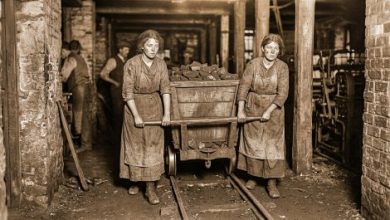
However, once Europe freed itself from the internal dominance of the Church, it did not become peaceful in the moral sense. Its newly awakened power turned outward. Industrial expansion created a hunger for markets, raw materials, and labor, and this energy led to colonialism. The same Europe that claimed to have embraced human reason and liberty began to conquer, enslave, and exploit foreign lands in Asia, Africa, and the Americas. The peace achieved within Europe was maintained by exporting violence beyond its borders. Europe’s freedom was built on the unfreedom of others.
Even after the decline of religious authority, Europe did not stop fighting wars. The nature of its wars changed—from religious to national and imperial. After the Treaty of Westphalia in 1648, which ended the Thirty Years’ War, Europe stopped fighting for faith but began fighting for power and territory. France, Britain, and later Germany fought repeatedly—from the Napoleonic Wars to the First and Second World Wars. The dream of peace only began to take shape after 1945, with the creation of the European Union, and even that peace depended heavily on the military protection and economic influence of the United States.
The truth is that the European journey from faith to reason, from feudalism to industrial modernity, was not a moral transformation but a historical one. The war between church and kings was a struggle for dominance; the masses were instruments in that game. Europe’s progress came from the containment of religion, not its destruction. But the freedom it achieved internally was mirrored by oppression abroad. Its peace was not natural but manufactured, built through centuries of conquest and blood. Europe’s civilization, in short, was born not from harmony but from conflict—first with its own gods, and then with the rest of the world.
Read: Why Politics Fails – A Critical Summary
____________________
 Noor Muhammad is a Lawyer and Mediator, based in Islamabad. Email: noormuhammad@gmail.com