A recent global survey has ranked Pakistan as one of the most dangerous places for women
- Pagans used to bury their daughters. They buried them physically, we bury them emotionally
- Then there are issues like honor killings, domestic violence, marital rapes, dowry demands, sexual harassment and much more that are specific to women.
By Nazarul Islam | USA
A recent global survey has ranked Pakistan as one of the most dangerous places for women. To stress my point, I need to recall a quote from Pakistan’s Former Prime Minister Benazir Bhutto, who had once remarked “Women of our country continue to remain victims of a culture of exclusion and male dominance”
By way of tradition, women in Pakistan are generally expected to look after their homes, take care of children, cook and clean, and satisfy the egos of men who are expected to be their breadwinners. And, this exactly is what Pakistanis have brazenly classified themselves in their traditional gender roles. Most Pakistanis reside in villages, where these roles are even more strongly enforced. No wonder, both these essential features have continued to define today’s women in this part of our world.
The roles assigned to women, are more similar to functions performed by a ‘servant’ or a household member, who remains totally submissive. A male in the house is the person who controls finances, and is generally the one who has the authority (which is universal), and therefore comprise of men who yield real power in the household.
Some anti-feminists in Pakistan have expressed reservations about social expectations of men, and their specific role as providers, regardless of ongoing patriarchal supremacy. This unique position in social hierarchy isn’t something that puts men in a position of authority. It tends to overlook the fact that young men in the community impose a demand from would be brides requiring them to possess exceptional talents of restraint, before the knots are tied.
Consistent with the norms of tribal behavior, family honor is sacrosanct and is the real deal in Pakistan—something which can even lead to and provoke a new bride to commit suicide. In extreme cases the unhappy husband has not hesitated to take away his partner’s life. Obviously, this realization among women has placed a greater burden on their shoulders than men.
Down the road, Women in Pakistani society are expected to dress and behave more modestly in their households, and disobedience of accepted norms may likely result in consequences. In exceptional cases, it may also end up with the errant woman losing her precious life.
Quite frequently, the words ‘Honor’ and ‘self-respect’ are tossed around intrinsically by men living in the household. Tools including Rape and sexual harassment are frequently employed against women to compel them to practice an ‘orderly’ social conduct at home that is best suited for her muscular life partner. If an act or an expression of a woman may bring shame to the family, the victim may end up getting murdered, instead of the perpetrator. Blaming the victim after her life has abruptly ended, is acceptable, normal response of the Pakistani society that reeks of our tribal heritage.
Again, marital rape is not recognized either by law or society. It is considered a husband’s right that his wife obeys him, and surrenders to the whims of the breadwinner. This may include not denying him sex, unless she’s on her periods.
In a society that is historically damned by rampant discrimination, a sense of ‘equality’ for the better half, is a farfetched, distant dream. In this land of the pure, everyday harassments continue to thrive. In the Pashtun dominated north, in most of the Balochistan, rural Sindh, and Southern Punjab women are known to have encountered drastically severe forms of gender based oppression. Reportedly, feudal lords of Sindh are notoriously infamous for the exploitation of younger women who make their way in their lives.
Read: A Baloch Couple Killed for Love in the Name of ‘Honor’
Frequent episodes of Honor killings, or “Karo Kari” (black man/woman) capture small attention within the community—or the print media in Pakistan. Whether or not a precious life is lost augurs little or no shock, because it happens every day and everywhere in this country. We are all immune to shocks. The pressures of everyday life, hardly wakes us up. News related to the murder of individuals, primarily women, for allegedly violating family or community honor, drawing little ire or concern. Bad things unfortunately happen to others only.
While this is a complex issue with no single cause, several intertwined factors have contributed to its persistence in Pakistani society. Why have we, in the so called Muslim society, opted for tread this path?
Has our sense of ingrained patriarchal norms and codes dampened, adding layers of insensitivity over the passage of time?
The traditional societal structure in Pakistan is a collective, patriarchal society where honor is based on the behavior of family or the community’s group members.
Ask yourself, are women in Pakistan the true custodians of honor?
They are often perceived as the embodiment of family honor (“Izzat”-honor or “Ghairat”-self-respect) and any perceived breach of traditional norms by them is seen as a stain on the family’s (the husband’s) reputation.
Perhaps there is something sinister that matters most—are summed up in just two words ‘masculinity’ and ‘control’. Men’s masculinity is often linked to their ability to control the women in their families, in their efforts to protect their honor. If a woman acts in a way considered immodest or defiant, men are expected to regain family honor, often times through violence that keeps recurring
Then, there arises the reality of societal pressure. Families may face immense pressure and fear of being ostracized by the community if they don’t take action against a woman perceived to have brought dishonor.
In this context, how can we define what truly is a dishonorable act? Most of us will suggest such acts can include refusing arranged marriages, seeking divorce or separation, being in relationships deemed inappropriate, seeking employment, or even being a victim of sexual abuse.
Are these occurrences a direct consequence to legal loopholes associated with our weak legal system? Despite laws being in place to combat honor killings, they are often not fully enforced, and loopholes exist that can allow perpetrators to evade justice.
In our rush to add meaningful Islamic reforms, we have relied on the Diyat ordinance. The Islamic concept of Diyat allows the victim’s family to pardon a murderer, even in honor killings, often in exchange for financial compensation, making it difficult to secure convictions and preventing justice from being served.
How cruel and inhumane has our society transcended into, with such add ons to the overburdened legal system?
To add insult to injury we proudly initiated the Tribal courts (“Jirgas”): In some rural areas, parallel justice systems like Jirgas (tribal councils) exist, which may prioritize tribal customs over state laws and issue verdicts that condone violence in the name of honor.
How can we address the Police complicity and inaction that is rampant in our country? Some elements within law enforcement may sympathize with perpetrators or be influenced by local pressures, leading to a lack of proper investigation and prosecution.
Moving forward, how do we address the malaise of Underreporting of cases? These have resulted directly out of fear of retribution, social stigma, and the belief that such acts are “private matters “that have contributed to a large number of honor killings, most of which are hushed up or go unreported.
Are there social and economic factors catalyzing the mayhem? Inheritance disputes are far too many in this country. Some of these never end. In some cases, honor killings are disguised to settle land or property disputes, preventing women from claiming their rightful inheritance.
What about efforts to settle feuds inside and outside the families? Honor killings are frequently employed to settle inter-tribal or inter-family rivalries, where the death of a woman becomes a pawn in a larger conflict.
What about societal Control and exploitation? Honor killings have been a manifestation of the exploitation and control of women within a patriarchal system, where human lives are considered expendable for the sake of male honor.
Can we ignore misinterpretation and manipulation of religion, prevalent in various spheres of Pakistani society? There arises a haunting question of false justification. While honor killings are explicitly condemned in Islam and the Quran, some individuals misuse religious terminology and distort Islamic teachings to justify these acts.
There is an outpouring focus on moral transgressions. Some honor killings result from allegations of adultery, which is punishable under Islamic law, but stricter evidentiary standards are required, and private individuals are prohibited from carrying out any punishment.
Other contributory factors have included a lack of education and awareness. Ignorance and a lack of proper understanding of Islamic principles have contributed to the misuse and exploitation of religion, in order to justify violence.
In summary, the practice of honor killing in Pakistan is a result of a confluence of deeply entrenched patriarchal norms, a weak legal and judicial system, societal pressures, economic factors, and the misinterpretation of religious teachings.
Addressing this issue requires a multi-pronged approach that includes challenging societal norms, strengthening legal frameworks and enforcement, empowering women, and promoting a nuanced understanding of religious texts to counter the misuse of religion to justify violence.
The Constitution of the Islamic Republic of Pakistan has prima facie granted women their fundamental rights. However, for a segment of lawless society that thrives in the country, it hardly means anything. The prevalent Pakistani culture should not be judged by laws, rather by the manner in which people behave within their communities. It is pertinent to mention here that Fundamental Human Rights laws were enacted as a result of foreign pressure under bait of monetary assistance.
So, it remains apparent that women face gender based discrimination and violence. A question arises: what’s so controversial about women’s march? Do we find slogans vulgar? Try listening to “boy talk” at school, college or universities. Those who may have studied in a boys-only environment from 5th grade onwards to 12 were reported to have witnessed their peers in acts of sexualizing their female instructors, along with consistent and profuse use of profanity.
Such problems in our country however, lie with women not standing up for their rights, and looking for excuses that have made their arguments more appealing.
It is really difficult to determine an aggregate of individual experiences particularly when they occur in different regions, cultural and social backgrounds and communities. Pakistan is a superbly diverse country, where we may come across kaleidoscopic contrasts across the length and width of the country. In the mega cities of Karachi and Lahore, you will find women living starkly contrasting lives.
Generally speaking, life for women in Pakistan is fine so long they conform to the societal, cultural and religious conditions put forth by their families and to some extent, their communities. Those conditions can range from being distressingly strict to being surprisingly lenient. Magnitude of leniency is usually tied to the open-mindedness, religiosity and socioeconomic status of the family.
A woman will be given due care, respect, emotional and financial accommodation so long she sticks to the conditions imposed on her. Problems begin when she puts or wants to tow herself out of the line drawn by her family.
On a good day, if you go knocking door to door in Pakistan and ask women if they feel oppressed; most would say ‘no’. Almost all of them are conditioned from their childhood to be apologists and conformists. They are taught that their ultimate purpose in life is to get married, raise children and build their nests.
Although there are clear provisions both in religion and in the 1973 Pakistani Constitution which focus on providing respect, safety and equal rights for women, Pakistan remains a male-dominated society where women still struggle to achieve their basic rights. Several amendments have been added to the constitution to enhance political and economic rights for women, but the State apparatus has miserably failed to implement its own laws that may protect them. A number of female politicians, (including Benazir Bhutto), have been killed when they raised their voices against extremists and anti-feminine forces. Women are frequently abused by law enforcement agencies such as the police and para military forces.
Today Pakistani women are still classified into three groups: elite class women, middle class women, and lower class women. Each of these classes is treated differently. Honor killings, forced marriage, and unprovoked violence against women are common in many areas. This treatment even extends to women who are elected to the national parliament where they are often humiliated by their male parliamentarians.
It goes without saying that Pakistani women have the potential and capacity to excel in every field of endeavor, but they very often cannot exploit their talent in this chauvinistic male-dominated society. Exceptionally few women who are safe, protected, and have established themselves in their professions are fortunate to have the strong support of their family members.
Unfortunately, these few women cannot change the mindset of society at large nor are they able to become praiseworthy pillars of the nation.
Fitting in gender roles associated with women, boasting of a state of normalcy in Pakistan and that’ is one of the reasons why many women don’t see it as an oppression. Some do see it but have begrudgingly given in to the pressures, because breaking shackles had never been an easy option.
Pakistan’s expansion of electronic media in recent times and abundance of accessible information have started to infiltrate with a positive sense in women (and men). They are beginning to realize what freedom actually is, fully capable of seeing the contrast between the lives they’re forced to live and the ones women live in distant lands where individual freedom, women empowerment and gender equality have flourished.
And that is what seems to have caused a new wave of rebellion. Reality is now dawning on Pakistanis that there is a life beyond gender roles. True liberty will only kiss them when they are free to make their own decisions, are able to pursue careers and personal relationships, are able to choose what to wear, are free to go anywhere without male’s company and permission.
And that is exactly where a Pakistani woman finds herself today in a precarious position when she embraces or tries to embrace true liberty. Westernized slut and characterless bitch are the labels she receives. Her family tries to gain control of her and sometimes it’s the girl who wins and sometimes it’s the family that comes out triumphant.
If you’re a woman in Pakistan who wants to dress to her liking, have a career and party the shit out of life, you’ll have to face a barrage of patriarchal, sexist and misogynistic hurdles. It would be anything but easy, but of course there are exceptions.
Conformists women may say it’s fine but they haven’t got it easy either. They are generally accommodated and respected but that simply comes at the cost of sacrificing liberty, dreams, emotions and desires. Pakistan probably has the largest pool of idle female doctors because a large number of girls get medical education, become a physician and then get married. That puts an end to their professional career. Then there are issues like honor killings, domestic violence, marital rapes, dowry demands, sexual harassment and much more that are specific to women.
I like to end my piece with a quotation that continues to impress me the most.
“Pagans used to bury their daughters. They buried them physically, we bury them emotionally.”
Read: I have left my footprints….
__________________
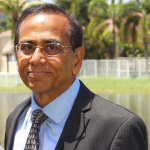 The Bengal-born writer Nazarul Islam is a senior educationist based in USA. He writes for Sindh Courier and the newspapers of Bangladesh, India and America. He is author of a recently published book ‘Chasing Hope’ – a compilation of his articles.