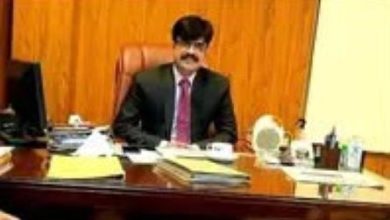
As a translator, Vali Ram worked on both fiction and non-fiction. In fiction, he translated ten novels, more than 300 short stories, and half a dozen non-fiction books
By Habib Sanai
Vali Ram Wallab, an acclaimed translator and writer, was born on 18 August 1941 to Kewal Ram and Chatra Bai in Mithi, a remote town in Thar. His father worked in the Police Department.
Wallab completed his secondary education in Mithi and passed his Matriculation in 1959 from Local Government High School, Mithi. He then went to Karachi seeking employment, but soon returned to Hyderabad, where he found work in the Forest Department and remained until 1969. During this period, he continued his educational journey, graduating from Sachal College in 1964. He subsequently earned his first MA in Urdu from the University of Sindh (1967), an LLB from Jinnah Law College (1969), a second MA in Sociology (1971), and a third MA in Mass Communication (1991).
In 1969, he resigned from his government position and joined as Manager of the Hyderabad Branch of a cinema advertisement agency, where he worked until 1988. Following this, he joined the Institute of Sindhology, Jamshoro, and retired as Deputy Director in 2001.
Literary Passions
As he told an interviewer, he developed literary leanings at a very early age. He acknowledged that three teachers greatly influenced him. In primary school, during fourth grade, his class teacher was Rai Chand Harijan, himself a writer and historian of Thar. Since Raichand’s elder son was his classmate, he would often visit their house, where he saw numerous books in a large almirah. He reminisced that with his friend’s help, he browsed through numerous pictorial books and once stole a children’s book from there—a royal-sized book with large fonts. He enjoyed reading that book and declared that it kindled his love for reading.
In high school, two other teachers influenced his life and enriched his literary inclinations. One was Mr. Lachhman Das, who was both the headmaster and his class teacher in the matriculation class. The other was Chaudary Zia ul Haq (a friend of the renowned Urdu writer Muhammad Khalid Akhtar). Chaudary taught them English, Urdu, and Persian with scholarly expertise. He recounted that Chaudary sahib would always provide background information about the topics under discussion. When teaching English translations of Omar Khayyam’s Rubaiyat, he would recite numerous Urdu and Persian couplets. Furthermore, he stocked their school library with books by the best Urdu writers of that time, and Wallab remembered reading works by Manto, Krishan Chander, Ismat Chughtai, and Khwaja Ahmed Abbas during his school days. According to him, his teachers and relatives frequently discussed books, creating an environment in school that was conducive to literary pursuits. During this time, he also read books by Tagore and Sarat Chandra, which influenced him and his fellow students due to the similarities between the social conditions of Sindh and Bengal.
During his school days, he began writing poetry but was too shy to show it to any friend. Additionally, he married very early—while still in matriculation—which imposed certain restrictions. He lost his poetry collection during moves from one posting to another.
He translated his first short story, “Dozakh and Bihshat,” from Gujarati in 1962, and it was published in the quarterly Mehran. When he settled in Hyderabad in 1967, he developed a friendship with Tariq Ashraf, a renowned writer and editor of the periodical Sohni. He wrote an original story, “Pushp,” which was published in Sohni. He then translated Krishan Chander’s short story “Taxi Driver” and novel “Ghadar,” which were widely appreciated, though his original story did not receive a warm response. Consequently, he tried his hand at translation and became an acclaimed translator.
As a translator, he worked on both fiction and non-fiction. In fiction, he translated ten novels, including Anna Karenina by Tolstoy (which remains unpublished), more than three hundred short stories, and half a dozen non-fiction books. His translated works are listed below:
Novels
- Ghadar by Krishan Chander (1968-1980-1983-1990) (from Urdu)
- Sita Hiran by Qurratulain Hyder (1977-1982-1996) (from Urdu)
- Band Darwazo by Amrita Pritam (1978 and 1991) (from Punjabi)
- Dhariyo by Albert Camus (1991, 2021) (from English)
- Paoeene Pahra ja Pandheeara by Qurratulain Hyder (2000) (from Urdu)
- Sumhiya Pani by Sarveshwar Dayal Saxena (2015) (from Hindi)
- Chhitan Kutan jo Maseeha by Sarveshwar Dayal Saxena (2015) (from Hindi)
- Kunhani hunan jee by Amrita Pritam (2016) (from Punjabi)
- Karo Kitab by Abid Soorati (unpublished) (from Hindi)
- Anna Karenina by Tolstoy (unpublished) (from English)
Short Story Anthologies
- Teen Duniya joon Kahaniyoon (1980)
- Thakal Sureet and other stories by Alberto Moravia (1983)
- Nain Tara and other stories (Urdu and Hindi) (2003)
- Bihshat an Dozakh (from different languages of the subcontinent) (2004)
- Mithra Bhau and other stories (Stories and Plays from the Middle East, Far East, and subcontinent) (2006)
- Pardehi Kahaniyoon (Selected American, Latin American, European, Australian and South African stories)
Poetry
- Kawita Phulwari (Selected poetry of 112 poets from 26 languages belonging to 19 countries) (2006)
- Morchhal (poetry from different languages of the subcontinent) (2016)
- Loo by Shamsher ul Haideri (translated into Urdu)
- Kawtaaen jo Kak Mahal (selection of poetry from different languages of India)
Non-Fiction Works
- Iqbal by Ahmed Nadeem Qasmi (1977)
- Sada Sawa Pan (Mahmoud Darwesh, Yashpal, Pablo Neruda and Lorca) (1984)
- Kheer Dhara (Foreign literatures and their works) (2015)
- Sindh Kahany by Kewal Ram Malknai (1991, 2001 and 2005)
- Gita jo Ibhiyas (translation of Gita in Marxism by Sardesai and Dileep Bose) (1992)
- Man jee Shanti (from Hindi) (2002)
- Janwarn jee Ajeeb Duniya (translation of Amazing World of Animals) (2013)
As mentioned earlier, he also wrote poetry and short stories. His stories and poetry have been translated into Urdu and English. His Sindhi story “Leeka n Oranghan Jehra” was translated into English as “Barriers that Remained” and included in an anthology of translated short stories published by Penguin. Urdu writer and translator Bashir Unwan translated his poetry and short stories into Urdu, which were published in a collection entitled Zindagi se Kata Hua Tukra (2001). Most of his original works have not been published in book format.
Original Works
- Zindhi jo Hik Kapyal Tukrao and other stories (Short stories) (2001)
- Udaroon Aakaas me (Poetry)
- Mithi Shahr je Muaashi and Samaji Halatn jo Tahqeeqi Jaaezo (Research)
- Unheen Sadee jee Akhbar nawesi (Research)
- 1947 khhan ag Sindhi Me Chhappyal Trajuman jo Tahqeeqi jaazo (Research)
- Mukha Melo (Interviews)
- Yadoon Mulaqatoon and Kujh Ibhiyas (2016)
He also compiled, edited, and improved numerous works and periodicals, some of which are listed below:
Books
- Baar Sindhi Kahani me (Collection of 22 short stories) (1984)
- Leeka n Oraghan Jehra (2002)
- Aarsi Kahaniyoon (along with Zafar Hassan) (2013)
- Sajan Saar Paee (letters of Sindhi writers from India)
- Saneehrha (letters of his daughters)
- Moon wat n ka peeti n ko Kulf Kunji (autobiography of Baghat Khemchand Asnani) (2004)
- Zafar Hassan jee Dairi (Volume 1 along with Zafar Junejo and Rafiq Mangi) (2003)
- Sindhi Barano Kitaab, Sindh Textbook Board, Jamshoro (2004)
- Sindhi Chhaoon Kitaab, Sindh Textbook Board, Jamshoro (2005)
- Sindhi Pahaka: Lasaniyatee a Samaji Saqafati Ibhiyas by Dr Rawi Parkash Tekchandani (2010)
- Sindhi Boli jo Grammar by Ernst Trump (translation and revision along with Dr. Fahmida Hussain) (2011)
- Saath Sikhya ya Samaji Zandi by Shewaram Pherwani (2011)
- Mao Baar khhey Keean Sudhaare (Translation of Natural Education by W.S. Stunner) (2013)
- Pakistan Niralo Wijood Niraali Taqdeer (Translation of English writings of Javed Jabbar by Muhsin Babar) (2014)
Periodicals
- Five issues of Sohni as sub-editor (1971)
- Aalmi Adab Volume 1 (1978)
- Sindhi Sahat (1979)
- Five issues of Aarsi along with Zafar Hassan (1983 to 1986)
- Five issues of Biannual Sindhi Adab (1989, 1994 to 1997)
- Some issues of Ibrat Magazine
- News and Opinion (Member of Editorial Board)
He had two daughters (Dr. Pushpa Vallab and Gori Wallab, both poets) and a son, Mr. Kameshwar.
He passed away on 29 October 2023.
Read: Valiram Vallabh – A diamond carved at the foothills of Gadhi Bhit of Thar
____________________
 Muhammad Habib Sanai is based in Hala town of Sindh. He is a freelance writer and contributes his research-based articles to various newspapers and other publications.