Poems can mobilize a whole nation to protest and build resistance – Tasneem Hossain
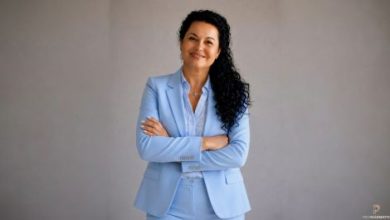
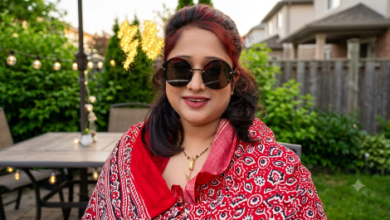
 Tasneem Hossain is a multilingual poet, columnist, op-ed and fiction writer, educator, translator, and training consultant from Bangladesh. She writes poems in English, Urdu, and Bengali. As an op-ed writer, she has authored over 130 articles. Her articles deal with day to day life events and deals with personal development issues; and creates awareness about social and human rights issues. Several of her articles and poems are utilized as teaching material in universities and academies across various countries; some have been referenced in university research papers by academics. She is author of three poetry collections—Grass in Green, The Pearl Necklace, and Floating Feather and a book of articles ‘Split and Splice’, she also leads an international poetry project and group called Life in Lyrics. Additionally, four more books are currently in progress.
Interviewed by Praise Mk Nkhoma
When did you first realize that poetry was your calling?
Well, poetry has been a part of me since childhood. From the moment I first began to write, it was poetry that naturally flowed. I often wrote when emotions ran deep, letting verses speak what I couldn’t say aloud. But it was in 2018 that I truly realized—this is where I belong. Poetry isn’t just something I do; it’s who I am.
Do you remember the first poem you ever wrote? What was it about?
Yes, I do. It was a poem about sunrise, written when I was in class three. It was published in the children’s section of a newspaper, and I still have a copy of it. The poem was titled Sunrise. Being a naturally positive person, I think the sunrise—with all its promises and hope—deeply resonated with me. Perhaps that’s why it became the subject of my very first poem.
Was there a specific moment, person, or event that pushed you into writing poetry seriously?
I used to write occasionally from my childhood. Whenever my emotions were evoked, I jotted down my feelings in a diary, and somehow it would take the shape of a poem. Unfortunately, I lost my diary. I was disillusioned and stopped writing until 2018. At that time, I was visiting my children in Canada. As I had nothing much to do, I used to roam in the surrounding areas around the home. The beauty of the place inspired me to start writing. This time, I took it seriously.
Would you say your poetry is a gift, a habit, or a coping mechanism — or all three?
In my opinion, all three. Poetry is a gift and coping mechanism first. When I am disturbed or excited, words come piling in my head and I express my feelings on paper or my mobile. Sometimes it may be prose, sometimes poem. It helps me cope with the situation at that moment. It’s a habit that I have started to incorporate in my life now. But I believe that writing poems every day, as a habit, hampers the flow of the rhythm and emotions get lost. I can only employ this habit when I am emotionally charged.
Do you need silence, music, or chaos to write best?
Frankly speaking, it depends. I can sit in a room crammed with people, and I can play with words in my mind. Even the surroundings, the people or their conversations can arouse certain thoughts and give birth to poetry. Music is a catalyst for my poems. I have written many poems while listening to music. The rhythm stimulated me with different emotions, and poetry rushed through my veins. Silence helps me finalize my poems.
How do you know when a poem is truly finished?
I think, a poem is never truly complete. The more you read, the more you can add. So, consciously, I have to stop when I think the readers will get to understand my specific theme. That is when I finish writing. It may be complete at that time or may not be complete. But it has to stop there.
Do you ever go back and rewrite old poems? Or do you let them live as they are?
Yes, I rewrite poems sometimes, if I feel those can be better in another way.
What recurring themes show up most in your poetry — and why do you think they do?
Love, nature, human rights and peace are the recurring themes in my poems. I am a daydreamer and so the theme of love is prevalent in my poems. I love to look around nature where I find beauty. The chaos, greed for power and the injustice in our society and the world around us make me sit up; and I voice my thoughts to stop these and try to awaken human conscience. I think these find a way to my poems because I am a positive, compassionate and peace-loving person. At the same time, I am a rebel at heart. When I see injustice, as a poet, I think it’s my responsibility to give voice to the voiceless and awaken others to see what’s happening around us.
How much of your personal life or emotional experience makes it into your work?
A lot. I have mentioned earlier that I write poems when I am emotionally charged. Naturally, it must be something personal to excite my emotions and affect me to write. Sometimes, when I hear about some incidents in the lives of my friends or society that affect me emotionally, then also I write.
Would you describe your poetry as more healing, rebellious, and romantic— or something else entirely?
It depends. It can be romantic and rebellious, both. But when there is chaos and I write on that, my poems end with the light of hope that helps in healing. During COVID-19, many people were in isolation – feeling alone. At that time, I wrote my poem Loneliness. The last line is:
Loneliness, sometimes, lets me survive.
Though normally loneliness is taken as a negative word, it can be used positively too. I tried to give meaning to the isolation. Some mental health counselors even asked me if they could use it to heal their patients.
Sometimes, I am also rebellious. One of my poems, Fractured Rise, deals with domestic abuse. It found its way to the prestigious magazine Tyranny Unchained- Human Rights Art Movement. The last stanza is:
Rise o’ woman, even if you fail.
Show the light to the next woman in test.
Be the light in the darkest nights,
be the sun in the bloodiest daylight.
Be the sun in the bloodiest of nights,
be the fire in the darkest daylight.
Today or tomorrow, the sun will shine.
See- what I mean? Rebellion against abuse, but it ends with hope.
Romantic? Oh yes! Definitely. I am very romantic by nature. I have quite a great number of love poems.
Do you ever write something that surprises even you?
To be very frank, my poems surprise me often. Not the theme, but the words that I pen down. Because most of my poems are almost the way I had written in the first, few flashing moments – very few corrections are needed. When I read those, I am amazed at the way the words just flowed. During normal times, it won’t come that way, even if I tried.
Which poets or authors have influenced your writing the most?
The romantic poets- especially William Wordsworth, John Keats and P.B. Shelley.
Is there a single poem (by someone else) that changed the way you see the world?
I can’t say that a single poem has changed the way I see the world. While many poems have touched me deeply or offered new perspectives, no one piece has been transformative on its own. My worldview has been shaped gradually through a mosaic of experiences, readings, and reflections, not just one poem.
Do you prefer page poetry or spoken word? Why?
I’m mostly into page poetry and have only written a few spoken word pieces. Both forms have their own strengths. Page poetry is crafted for the written word, inviting deep reflection and varied interpretations, though its complexity can be challenging. Spoken word, as a performance art, aims for clarity and emotional impact, often leaving less space for ambiguity. While their approaches differ—page poetry emphasizes language and structure, spoken word focuses on delivery—they’re closely connected. Spoken pieces start on the page, and written poems often gain power when read aloud.
I appreciate both forms, as they offer poets different ways to express themselves. Page poetry is often more introspective, driven by the poet’s spontaneous emotions and thoughts. Spoken word, while still emotional, is crafted to resonate directly with an audience. So, why limit oneself to just one form? A thoughtful poet should consider: How can this poem be shared for the greatest impact—as page poetry or spoken word?
How do you feel about sharing your most personal pieces with the public?
It’s rare that I don’t share my most personal pieces with the public. Poetry is creative imagination. Until or unless you tell the reader it’s your story- how are they going to know that it’s very personal?
Has any of your work ever gone viral or sparked an unexpected reaction?
Yes, my poem ‘Before My Curtain is Drawn’ went viral across several Facebook groups. It explores how rarely we express love to those close to us—and the guilt that follows when it’s too late. Many readers said it deeply resonated with them. I was overwhelmed by their messages, admitting they often made the same mistake and now feel inspired to express their love more openly while they still can.
Do you think poetry still holds power in this digital age? Why or why not?
Absolutely, poetry still holds power in the digital age—perhaps now more than ever. Technology has expanded access and allowed poets to transcend borders, share voices, and build global communities.
Platforms like Zoom, YouTube, Facebook, and Instagram have opened up new forms of expression—like spoken word and virtual open mics—making poetry more inclusive and immediate.
While the form and medium may evolve, the essence of poetry remains timeless. In a fast-paced digital world, it continues to inspire, connect, and create change.
What role does poetry play in society — especially in times of crisis or change?
There is no denying the fact that the multifarious themes of poetry have a profound influence on human lives. It sometimes speaks of truth, beauty, love, nature, hope and peace; creates awareness on social issues: women’s emancipation, child labour, human rights. Sometimes it works as a catalyst and is instrumental in uniting people to revolt against injustice, oppression, exploitation, corruption and in national revolutions.
Poets like Edmund Blunden, Rupert Brooke, Maya Angelo, Robert Graves, Progressive Poets of India, Pakistan and many countries played an active role in stopping World Wars and Colonization through poems.
Poems can mobilize a whole nation to protest and build resistance. Kazi Nazrul Islam’s poems like Bidrohi protest against the cruel, unjust exploitation and autocratic colonial rule of the British Empire in India and are historic in building rebellion. Bidrohi, Notuner Gaan, Karar Oi Louhokopa,’ and many other poems and songs inspired the whole nation in building resistance against the Pakistani aggressors during Bangladesh’s war of liberation.
Maya Angelou’s reference to slavery and the boldness to rise even in the darkest of times is striking in Still I Rise:
“You may write me down in history
With your bitter, twisted lies,
You may trod me in the very dirt
But still, like dust, I’ll rise.”
Poetry can be a powerful weapon to change the world.
Maya Angelou’s Caged Bird is filled with powerful themes of racial oppression, freedom, captivity, happiness, sorrow and hope.
By giving voice to the marginalized, victimized and oppressed, poetry assists in raising awareness about important issues and can be used as a catalyst for social change.
So, yes, poetry has been, still is and will remain a great catalyst, especially in times of crisis or change.
What advice would you give to a young poet who’s afraid to share their work?
I’d say to any young poet: your voice matters. Every poem is a reflection of your unique way of seeing the world. Don’t wait to be ‘perfect’—because perfection in poetry doesn’t exist. Start by sharing your work with someone you trust, or post anonymously if that feels safer. The fear is natural, but growth begins when you step beyond it. You never know who might be touched, healed, or inspired by your words. So be brave—you’re not alone.
What was the biggest mistake you made early on as a writer?
I wouldn’t say I’ve made any mistakes worth highlighting in my poetic journey. Rather, it has been a continuous process of growth and learning, and I’m still evolving. I carry no regrets. As I mentioned earlier, I try to maintain a positive outlook, and I believe I’m exactly where I’m meant to be at this point in my life.
How do you deal with creative block or periods of doubt?
Creative blocks and moments of doubt are part of the journey. I try not to resist them but rather see them as pauses that allow space for reflection. I usually take a step back, read, walk, listen to music, or engage with other art forms. Sometimes, just allowing myself to write badly without pressure helps break the block. I’ve learned that patience and self-kindness are essential during these phases.
Moreover, when I pause and reflect, I realize how fortunate I have been to connect with such a wide circle of readers across the globe in a very short time. Their appreciation also drives me forward and helps me rise above those moments of uncertainty. These phases don’t last forever, and often, they lead to deeper insight and stronger work.
What matters more to you … being published or being read?
For me, being read matters more. Of course, being published is an honor and brings recognition, but the real fulfillment comes when someone connects with my words—when a poem speaks to their heart, offers comfort, or sparks reflection. That human connection, even with a single reader, is what truly gives meaning to my writing.
If poetry were a living person, what would you say to them right now?
If poetry were a living person, I would thank them for always being a loyal companion, offering comfort, truth, and beauty even in the hardest times. I’d tell poetry to keep evolving and speaking boldly, because the world needs its voice now more than ever.
What’s next for you — any projects, books, or performances we should watch out for?
Yes, I founded a group called Life in Lyrics, though I haven’t been able to actively manage it recently. The group was created with the vision of building bridges across countries and languages, and promoting poetry among the younger generation through workshops. I have organized several international open mic events and conducted workshops on other platforms. Moving forward, I intend to focus on hosting these initiatives through my own platform.
Currently, I have five books in print—two poetry collections, two volumes of articles, and a book on Business English, reflecting my professional background as a trainer. Additionally, I am working on a new book focused on communication and presentation skills.
Lastly, what do you hope people feel when they read your poetry for the first time?
When people read my poetry for the first time, I hope they feel a genuine connection—whether it’s a spark of emotion, a moment of reflection, or simply a sense of being understood. I want my words to open a small door to empathy and insight, inviting readers to see something familiar in a new light.
_________________
Praise Mk Nkhoma is a young Malawian poet whose voice rises from silence, sorrow, and soul. His poems, drawn from lived pain and quiet reflection, speak what many feel but cannot say. Author of a moving poetry collection and featured in global anthologies, Praise writes to heal, to connect, and to carry the hearts of those who suffer unheard.