Lessons from Tharparkar and the Urgency of Listening at Workplaces
By Adullah Usman Morai | Sweden
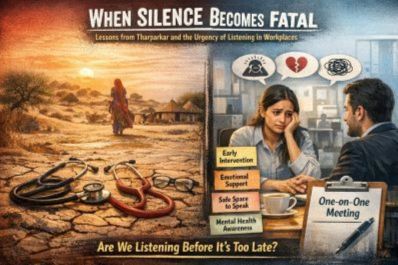
In the vast, sunburnt landscapes of Tharparkar, Sindh, where resilience is often the only currency of survival, a tragedy unfolded that should shake us far beyond its geographic boundaries. Two doctors, individuals entrusted with preserving life, chose to end their own. Their final message was painfully simple: they were not being listened to.
Pause for a moment and let that sink in.
These were not uneducated, unaware, or isolated individuals. These were trained professionals, healers who spent their days tending to the suffering of others. Yet, in their own moments of despair, they found no system, no ear, no structured space where their voices could be heard, acknowledged, and acted upon.
This is not just a personal tragedy. It is a systemic failure.
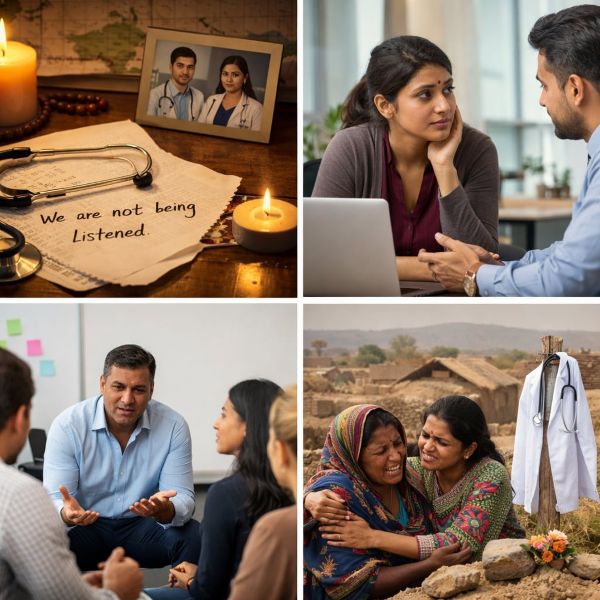 The Weight of Unheard Voices
In many parts of the developing world, including Pakistan, particularly Sindh, workplaces are often built on hierarchy rather than humanity. Authority flows downward, but empathy rarely travels upward. Employees are expected to endure, adjust, and survive. Speaking up is often mistaken for complaining. Vulnerability is seen as weakness.
But what happens when silence becomes suffocating?
It turns into stress. Stress becomes burnout. Burnout, when left unaddressed, can spiral into hopelessness. And sometimes, tragically, into irreversible decisions.
We often ask “why did this happen?” only after it has already happened. But the more important question is: what was missing before it happened?
A Simple yet Powerful Practice: One-on-One Meetings
Here in Sweden, and in many developed societies, workplaces operate on a principle that may seem simple yet carries a profound impact: regular one-on-one meetings between employees and their managers. These are often referred to as “development talks” or “performance and well-being reviews.”
These are not just about targets, deadlines, or productivity.
They are about people.
In these structured conversations, employees are encouraged to speak openly about:
- Their workload and stress levels
- What motivates or demotivates them
- Challenges within the team
- Personal well-being and mental health
- Suggestions for improvement
Managers don’t just instruct, they listen.
And this culture of listening does not stop at one level. Team leaders meet with their managers, who, in turn, engage with senior leadership. It creates a continuous loop of communication, accountability, and emotional awareness.
Why Do These Meetings Matter?
Because they prevent silence from becoming suffering.
- Early Detection of Stress
Small frustrations, when expressed early, can be resolved before they grow into overwhelming problems.
- Emotional Validation
Sometimes, people don’t need immediate solutions; they need acknowledgment. Being heard itself is therapeutic.
- Conflict Resolution
If there are interpersonal issues, they can be addressed constructively before they escalate.
- Work-Life Balance
Employees can request adjustments, less workload, more support, or flexibility without fear.
- Safe Environment
In Sweden, strict workplace norms ensure that no one can be judged or discriminated against based on gender, religion, ethnicity, or beliefs. Even verbal misconduct is taken seriously, making physical harm almost unthinkable.
This is not a luxury. This is a structure.
A Question for Us: Why Not Here?
If such systems exist and work in developed countries, why can’t they be adapted in Pakistan, especially in regions like Sindh?
The argument is often about resources. But let’s be honest: listening does not require a budget. It requires intent.
A 20-minute monthly one-on-one meeting costs nothing. But it can save careers, relationships, and perhaps even lives.
The deeper challenge lies elsewhere:
- Rigid hierarchies
- Lack of leadership training
- Cultural hesitation to question authority
- Absence of mental health awareness
And perhaps most importantly, a lack of visionary leadership, leaders who are willing to evolve, to understand that managing people is not just about extracting work, but about nurturing human beings.
Learning Before, Not After
Every tragedy leaves behind questions. But must we always wait for loss to learn?
Why do we only start conversations about mental health after someone is gone?
Why do we only discuss workplace reforms after a crisis?
Why does change come as a reaction, not as a vision?
The doctors in Tharparkar should not become just another headline, another statistic, another fleeting moment of sympathy. Their story should become a turning point, a catalyst for rethinking how workplaces function in Pakistan.
A Way Forward: Building Listening Systems
If we are serious about change, then we must move from emotion to action:
- Institutionalize One-on-One Meetings
Make them a formal part of every organization, public and private.
- Train Leaders to Listen
Not every manager knows how to handle emotional conversations. Training is essential.
- Create Safe Reporting Channels
Employees must feel protected when they speak up.
- Normalize Mental Health Conversations
Remove stigma. Encourage openness.
- Lead by Example
Senior leadership must model vulnerability and empathy.
Final Reflection
A society is not judged by how it celebrates success, but by how it responds to silent suffering.
The tragedy in Tharparkar is not just about two doctors. It is about every unheard employee, every suppressed voice, every individual who feels invisible within a system that demands their output but ignores their humanity.
Listening is not a soft skill. It is a survival strategy.
If we do not build systems where people can speak, we will continue to lose them in silence.
And the question will remain haunting, persistent, unanswered:
Why did we wait until it was too late?
Read: Beyond Borders: United Sindhi Horizon
__________________
 Abdullah Soomro, penname Abdullah Usman Morai, hailing from Moro town of Sindh, province of Pakistan, is based in Stockholm Sweden. Currently he is working as Groundwater Engineer in Stockholm Sweden. He did BE (Agriculture) from Sindh Agriculture University Tando Jam and MSc water systems technology from KTH Stockholm Sweden as well as MSc Management from Stockholm University. Beside this he also did masters in journalism and economics from Shah Abdul Latif University Khairpur Mirs, Sindh. He is author of a travelogue book named ‘Musafatoon’. His second book is in process. He writes articles from time to time. A frequent traveler, he also does podcast on YouTube with channel name: VASJE Podcast.