Meera’s calm replies during interview and decision to leave were not signs of weakness. They were a strong stand against the kind of pressure that tries to take away a woman’s right to be treated as a professional artist
- Journalism schools and media companies should make ethics and gender-sensitivity training compulsory. Now is the time to talk openly about gender fairness, media responsibility, and the laws that should protect everyone involved.
Mohammad Ehsan Leghari
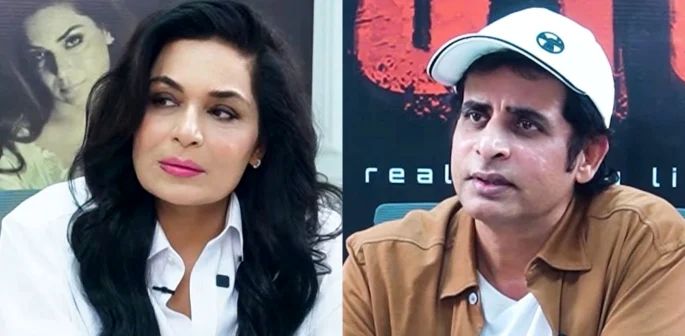
In the bright lights of a film set for Psycho, a new psychological thriller starring Meera with Shaan Shahid and Sonya Hussyn; something ugly unfolded. The interview was supposed to promote the movie, but Irshad Bhatti’s “Tough Questions” podcast quickly turned into an uncomfortable grilling. He dug into old rumours about Meera’s marriage to Ateeq-ur-Rehman, her past links with Humayun Saeed, her money matters, and even questioned a hospital built in her mother’s name. Meera, a seasoned actress known for her strength, stayed calm at first. She kept trying to bring the talk back to her film, saying, “I don’t know what you are saying. Just watch my film Psycho. I am really excited for it.” When the questions wouldn’t stop, she quietly took off her microphone and walked out. Shaan Shahid stepped in to help and had already corrected some of Bhatti’s wrong facts during the recording.
This was more than just a celebrity moment that went wrong. It shone a harsh light on bigger problems in Pakistan’s media world today. Aggressive questioning has become normal entertainment. Women’s private lives are turned into click bait. And old ideas that say men must dominate and women must stay quiet still shape how interviews happen. When the clip spread online, people called Bhatti a “manchild” and labelled the whole thing harassment. The public reaction showed that many Pakistanis are tired of this kind of behaviour. Digital platforms have grown fast, but clear rules for fair journalism have not kept up. Now is the time to talk openly about gender fairness, media responsibility, and the laws that should protect everyone involved.
 You cannot brush this off as one rude interview. It comes straight from how society in Pakistan raises boys and girls differently. Boys learn to be bold and in control. Girls are taught to be polite and obedient. That same thinking follows men into journalism, where some male hosts interrupt women, ask personal questions, and focus more on their home life than their work. Women hosts often feel they must speak softly to fit in. The shift to podcasts and social media has made things worse. It has opened the door to online bullying dressed up as “journalism.” Research on women in Punjab shows this problem touches everyone; no matter their age, whether they live in a village or city, or come from a small or large family. In one study of 40 women, the numbers were clear: 25 percent were aged 20-25, 45 percent lived in rural areas, and 65 percent were from nuclear families. Yet every one of them had faced this kind of pressure. Meera’s calm replies and decision to leave were not signs of weakness. They were a strong stand against the kind of pressure that tries to take away a woman’s right to be treated as a professional artist. The interview was never really about the movie. It was about trying to control how people see her.
Journalists hold real power, so they must use it carefully. Pakistan’s own journalists’ union has a code of ethics with 24 clear rules. One rule says information should only come from honest, direct ways; unless there is a very strong public reason otherwise. Another rule says stay out of people’s private pain and personal matters. Bhatti later said it was a “paid arrangement” and the questions were based on old public stories. But that excuse misses the point. When someone comes on your show to promote a film, you stick to that purpose. You respect their dignity no matter who is paying. The International Federation of Journalists has a global code from 2019 that says the same thing: respect privacy, avoid spreading hate based on gender, and never use your platform for personal attacks. Turning a friendly chat into a personal attack broke all these rules. Bhatti’s follow-up video admitted some people might have felt hurt, but he still called it normal “tough journalism.” That thinking shows how deep the problem runs. Famous people still deserve basic respect, especially on a professional set.
Pakistan’s media rules have struggled to catch up with fast-changing technology. The Pakistan Electronic Media Regulatory Authority (PEMRA) was created in 2002 to keep standards high, but it often focuses more on politics or “obscene” content than on protecting guests from rude treatment. It has taken action on morning shows or news that hurts institutions, but it has been slower when women guests are pushed around. A big change came in 2022 with updates to the law protecting women from harassment at work. The new rules now cover film sets, studios, gigs, and even online work. They include actors, freelancers, and anyone doing creative jobs like Meera. Harassment is no longer just about sexual comments; it includes any gender-based behaviour that creates a scary or hostile environment. Even one single incident can be enough if it makes someone feel unsafe or panicked. What happened with Meera fits this description. It proves that the old excuse of “aggressive anchoring” no longer works. Stronger enforcement of these laws, along with better self-checking by media houses, is badly needed.
The bigger picture is troubling. Newsrooms are still mostly run by men who set the tone, often ignoring women’s concerns. Weak independent watchdogs tied to the government, plus the pressure to get quick views and likes, push many creators toward drama instead of decency. Viral videos and nasty online attacks on women journalists make the problem even worse. But there are hopeful signs too. Many people, including other stars and viewers, spoke up for Meera and even suggested boycotting Bhatti’s shows. This kind of public pressure shows ordinary Pakistanis want change. Ideas from “peace journalism”; focusing on real causes, giving everyone a fair voice, and avoiding unnecessary drama, can help, especially when combined with respect for women.
Real change needs action, not just anger. Journalism schools and media companies should make ethics and gender-sensitivity training compulsory. Newsrooms must set up proper complaint committees as the new harassment law requires. Journalists need to learn how to handle difficult interviews without crossing lines. The industry should create its own strong code that puts “do no harm” first. Individual reporters should feel free to say no when asked to be unfair or aggressive. Viewers also have power, through comments, complaints, and choosing not to watch shows that cross the line.
Fair journalism means seeing the world through “gender glasses.” It means giving men and women equal chances to speak on every topic, treating everyone with respect, and avoiding old stereotypes that show women only as wives, mothers, or victims. It means asking female experts about politics and the economy, not just family matters. Simple changes in words help too: say “chairperson” instead of “chairman,” “humanity” instead of “mankind.” Personal details like age or looks should only be mentioned if they truly matter to the story.
The Meera-Irshad Bhatti moment is not an exception. It is a clear warning that Pakistan’s media stands at an important turning point. In a country working hard toward democracy and fairness, the media should lift people up instead of pushing them down. Women in politics and public life already face too much judgment and bullying. The press can either add to that harm or become a force for real equality. Pakistan is close to accepting international rules against workplace harassment. The true test will be whether the 2022 law is actually used, whether PEMRA becomes truly independent, and whether newsroom culture finally changes. Meera’s quiet walkout was not giving up; it was a powerful lesson in setting boundaries with grace. It asks the whole industry to do the same: stop questioning guests so harshly and start questioning its own habits. Replace confrontation with real conversation. Give the public the truth and information it deserves, but never at the cost of human dignity.
In the end, the best journalism does not rip open old wounds for entertainment. It lights the way toward justice and respect for everyone. Pakistani media can grow up by learning from that tense moment on the Psycho set: real strength is not about controlling others. It is about treating them with basic decency. The airwaves are waiting for that change.
References
- “Meera walks out of Irshad Bhatti podcast as host asks personal questions,” The Express Tribune, 2024.
- “Meera walkout puts focus on Irshad Bhatti’s interview ethics,” JournalismPakistan.com.
- International Federation of Journalists, Global Charter of Ethics for Journalists (2019).
- Protection Against Harassment of Women at the Workplace Act, 2022 (as amended), Government of Pakistan.
- “Patriarchy, Misogyny and Pakistani Women in Cyberspace: Feminist Qualitative Analysis,” Pakistan Journal of Indian Studies (2021).
- “Gendered Expectations and Linguistic Deviations: A Comparative Analysis of Male and Female Hosts in Pakistani Talk Shows,” Pakistan Social Sciences Review.
- Human Rights Watch, “Pakistan’s New Law Aims to Protect Women in Workplace” (2022).
Read: Academic Pressure and Mental Health Toll
____________________
 Mohammad Ehsan Leghari is a water expert, former Member (Sindh), Indus River System Authority (IRSA), and former Managing Director,