It was a pleasant reminder that, despite the increasing influence of mobile phones, social media, and digital entertainment, printed books still have a meaningful place in many Sindhi households.
By Abdullah Usman Morai | Sweden
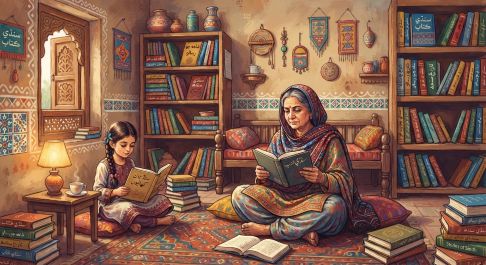
During my recent visit to Sindh, in November 2026, I came across something that genuinely pleased me. While visiting friends, acquaintances, and different homes, I noticed that quite a few people had impressive personal libraries. Some had bookshelves covering entire walls, while others had carefully arranged collections in dedicated rooms or corners of their homes.
It was a pleasant reminder that, despite the increasing influence of mobile phones, social media, and digital entertainment, printed books still have a meaningful place in many Sindhi households.
A personal library tells us something about the people living in that home. It reflects curiosity, intellectual interests, personal experiences, and a desire to explore the world beyond everyday surroundings. A bookshelf can sometimes reveal more about someone’s thinking than many conversations can.
What particularly impressed me was the diversity of books. These collections were not necessarily limited to Sindhi literature. They included Urdu and English books, national and international literature, poetry, novels, short stories, biographies, autobiographies, politics, history, philosophy, economics, travelogues, human development and reference books. Some collections contained fiction, while others focused on non-fiction, research and academic subjects.
I was especially delighted to discover that my first book was also present on the shelves of some of these homes. For an author, there is something deeply satisfying about knowing that a book has travelled beyond its writer’s desk and found a permanent place in somebody else’s personal world. It is a quiet but meaningful form of appreciation.
There is an old saying that books are our best friends. Unlike many temporary companions, books remain available whenever we need them. They introduce us to unfamiliar cultures, different philosophies, distant countries, and experiences we may never encounter personally. A travelogue can take us to another continent without purchasing a ticket, while a biography can introduce us to an extraordinary life. A novel can make us experience emotions and circumstances beyond our own imagination.
Research also supports the importance of having books at home. Studies have found positive associations between access to books in the home and children’s learning and development. Reading, particularly for pleasure, is also associated with language development, empathy, intellectual stimulation, and well-being.
But why maintain a private library when public libraries already exist?
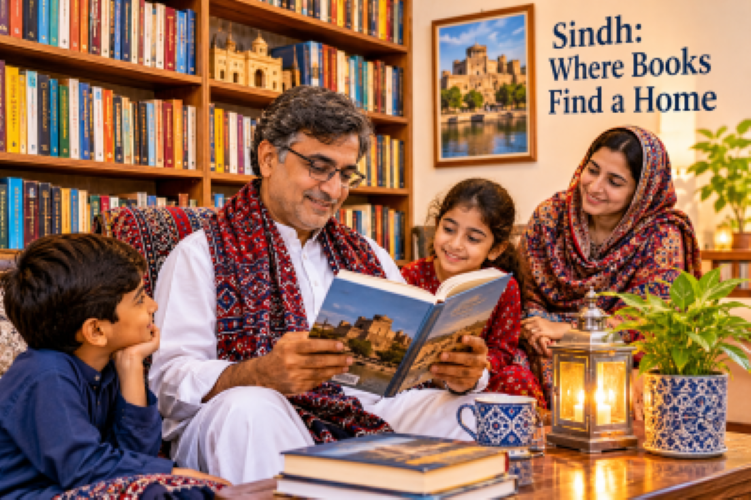
The answer is simple: they serve complementary purposes. Public libraries provide shared access to knowledge, resources and reading spaces, regardless of an individual’s financial circumstances. Private libraries, on the other hand, make books immediately accessible within the home. A person can pick up a book at any moment, revisit a favorite chapter, share it with family members, or gradually build a collection according to personal interests.
A home library can also influence younger generations. Children who grow up seeing books around them may naturally become more curious about reading. Parents can introduce books to their children, discuss stories at the dinner table, and create an environment where asking questions and exploring ideas become normal parts of family life.
Of course, owning books is not enough. Their real value lies in reading, understanding, questioning, and applying the knowledge they contain. A thousand unread books may look impressive, but even a small collection that is regularly explored can make a meaningful difference.
Winter is perhaps one of the loveliest seasons for reading. I can easily imagine a cold Sindhi evening, a comfortable chair, a warm cup of tea, a soft blanket, and an interesting book. Outside, the winter breeze moves gently through the trees, while inside, the reader travels through different worlds without leaving home. What could be more peaceful?
My observations during this visit made me optimistic. A society that keeps books in its homes, discusses ideas, and encourages reading is investing in something much more valuable than decoration. It is investing in future generations.
Sindh has a rich literary heritage, from Shah Abdul Latif Bhittai and Sachal Sarmast to modern writers, poets, historians, and intellectuals. Keeping books alive in our homes is one way of keeping that heritage connected to contemporary life.
Perhaps we should encourage every household to establish even a small bookshelf. It does not need to be expensive or extensive. A few carefully selected books in Sindhi, Urdu, and English can be the beginning of a lifelong relationship with reading.
After all, a beautiful home is not defined only by its furniture, paintings, or expensive decorations. Sometimes, its greatest wealth is quietly waiting on a bookshelf.
Read: The Timeless Art of Sindhi Hospitality
________________
 Abdullah Soomro, penname Abdullah Usman Morai, hailing from Moro town of Sindh, province of Pakistan, is based in Stockholm Sweden. Currently he is working as Groundwater Engineer in Stockholm Sweden. He did BE (Agriculture) from Sindh Agriculture University Tando Jam and MSc water systems technology from KTH Stockholm Sweden as well as MSc Management from Stockholm University. Beside this he also did masters in journalism and economics from Shah Abdul Latif University Khairpur Mirs, Sindh. He is author of a travelogue book named ‘Musafatoon’. His second book is in process. He writes articles from time to time. A frequent traveler, he also does podcast on YouTube with channel name: VASJE Podcast.