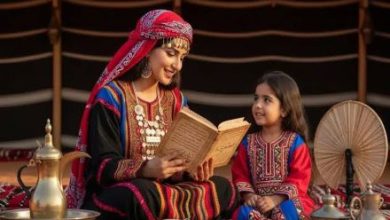
Popular Heritage and Cultural Convergence in Arab and African Cultures
Soouad Khalil | Libya
Undoubtedly, patterns of hegemony and adaptation have occurred in the cultured expression of religious life in Africa, particularly during the dominance of Arabic religious and poetic literature. Traditional African intellectuals have long adhered to expressing themselves in Arabic poetry or jurisprudence for centuries, as the sacredness of religious expression was intricately linked to artistic creation across the Islamic world—what can be referred to as Arab-Islamic globalization.
In this context, the spread of Sufism and its various orders, particularly the connections with Morocco rather than the Arab East, may have propelled African expression towards independence. This independence manifested through movements such as the Muridiyya, Tijaniyya, and Fudiya (named after Usman dan Fodio), all of which gained unique popular appeal, resulting in the creation of texts and forms of expression found in cultural centers like the Cheikh Anta Diop Institute in Senegal, as well as libraries in Timbuktu and Zanzibar.
Thus, we can say that the committees of the Organization of African Unity have named their cultural centers as hubs for languages and oral heritage simultaneously. I believe this focus has extended into the field of history, as evidenced by some local fatwas that exhibit popular adaptations, which we documented in the book “Heritage of African Languages in Arabic Script (Ajami),” published by the Arab Cultural Center in 2005.
This interplay of cultural elements underscores the dynamic relationship between Arab and African cultures, reflecting a rich tapestry of shared heritage and mutual influence that continues to evolve today.
First: The Richness of African Heritage Written in Arabic Script
In this book, the reader finds a treasure trove of African manuscripts written in Arabic script, known as “Ajami.” Some of these manuscripts are presented directly to highlight the richness of this heritage in its contexts, responding to the editor’s desire to draw attention to its importance.
The hope is that African and Arab organizations, or even UNESCO, will sponsor these sources, collect them, and rescue what can be salvaged from a heritage that confirms the traditions of writing in many African languages using Arabic script before they were written in Latin several centuries later.
In this unique volume, which is currently considered the only one of its kind, there are texts in eight African languages written in Arabic script: Majhi, Swahili, Hausa, Wolof, Manding, Bambara, and Tamacheq.
This linguistic diversity reflects the rich cultural heritage that connects Arabs and Africans, and emphasizes the importance of preserving and exploring these manuscripts as part of a shared cultural identity.
 Popular Texts on Heritage and Cultural Relations
Among these texts, there are popular writings of great value concerning the origins of the Antimoro people (Malagasy) and their relationship with the Arab world from southern Arabia and Egypt. These texts illustrate how the Marinid kingdoms emerged as completely independent entities, focusing on forming local ruling elites closely linked to Arab education, involving traders and migrants, without implying any dependency on the broader Arab culture.
Also noteworthy in this book is a popular text about the origins of the Hausa people, linking them to local interactions extending from Borno and Arawa to Kano, without any involvement of Arabs or Islam in their foundational formation. Their connection to Muslims occurs through emissaries who are traders and religious figures. The new kingdoms adopt the call to Islam in the dialogue of the Hausa people throughout West Africa, and the text connects them to the East (such as Abu Bakr al-Siddiq and Amr ibn al-As) and to the Maghreb (through Abd al-Karim al-Maghili) over transitions estimated to span several centuries, expressed in short sentences that possess their own beauty in popular storytelling.
These texts demonstrate how local cultures were able to shape their own identities even amid external influences, reflecting the richness of Arab and African cultural heritage and its diverse interactions.
Popular Texts Reflecting Cultural Heritage
In other texts, recorded through a well-known author but bearing a noticeable popular character, we find a poetic text in Swahili (Inkashefi) considered a type of elegy for ruins from the early 19th century. This text addresses the attack of herders from within the continent on the Sultanate of Pani on the eastern African coast, which led to the destruction of this region that represented a shared African and Arab cultural renaissance.
The text clearly expresses all of this through the richness of the poem, filled with popular beliefs, such as forest spirits, sea dangers, degrees of hell, and the names of God.
On the other side of the continent, we find the manuscript of Al-Akhdhari in Manding language, cited in one of the most famous popular books, “Flowers of the Gardens in the History of the Blacks,” which dates back to the early 19th century and is widespread in West Africa. This book is filled with popular texts written in local dialects, some of which have been translated into Arabic script and even into the Arabic language.
These texts demonstrate how African and Arab cultural heritage intertwines deeply, reflecting the experiences and beliefs of peoples through various literary forms.
Second: The Importance of Popular Manuscripts in Understanding African Heritage
Arabic-script manuscripts are not the only important source for understanding the origins of African peoples before and during their contact with Arabs, in peaceful, non-aggressive contexts. Famous popular epics in regions like West Africa, such as the epic of Emperor Sundiata, the founder of the Manding Kingdom in West Africa (later the Mali Empire), are considered powerful popular texts that strongly respond to prevailing narratives about the destruction of Ghana and the rise of Mali.
The official culture and the popular narrative of Manding history, known as Sundiata or sometimes as Sundiata, unfold in the prevailing dialects. In the regions of Guinea, Senegal, and present-day Mali, we find the epic of the Manding people recorded by a popular storyteller (the griot) through a well-known Guinean scholar, Djibril Tamsir Niane. This narrative is a true epic by the standards of famous folk epics and may help reveal many aspects of African heritage in relation to Arab religious heritage, without implying the dominance some speak of.
In the first part of the text, the storyteller says, “Listen, O children of Manding, and children of the Black people. I tell you about Sundiata, the father of the luminous land, and the land of the savanna, the great ancestor, and the lord of a hundred victorious kings.” Manding was an area for the kings of the Bambara, who are known today as the Maninka. They were not indigenous people but came from the East. Bilali Bounama (Bilal), the first ancestor of the Keita family and the faithful servant of the Prophet Muhammad (peace be upon him), had seven sons; the eldest son left the holy city and settled in Manding.
Moreover, the son of one of them was the first Black prince to go to Mecca for pilgrimage. On his return, he was robbed by desert bandits, but he was a just man. He prayed to God, and the jinn appeared to him, acknowledging him as king, and he returned to Manding after seven years.
Thus, the epic continues for over a hundred pages, recounting the adventures of building the great Sundiata Kingdom (Mali), without revealing conflicts with Arabs and Muslims, but occasionally addressing clashes with the Tuareg and desert bandits.
The Influence of the Hilali Epic in African Epics
Some may wish to point out the influence of the Hilali epic in such African epics, but the Hilali itself is no longer merely an Arab ethnic artifact; rather, its traces are disseminated as a human text across two continents, from the Arabian Peninsula to the far reaches of West Africa and Southern Europe.
Since the narrative styles of both Arab and African traditions suggest many ideas about mutual popular relationships, I refer the reader to numerous tales from the Hausa heritage translated into Arabic by the esteemed Dr. Mustafa Hijazi Al-Sayed. These tales directly lead the reader to the thematic similarities between texts like “The Healing Water” and the style of “One Thousand and One Nights.” Although the author is known, this does not negate the excessive popularity of these narratives, which reveals a rich reservoir of folk storytelling that encourages its popular authors to reproduce it under their names, a common practice among folklorists and cultural scholars. This underscores the necessity of caring for and collecting this heritage for fruitful African and Arab studies.
Third: How Popular Literature Reflects Arab-Afro Relationships
How do such forms of popular literature on the Arab side portray the standards of conflict or reconciliation between the African and Arab blocs, represented in major Arab popular epics and folk tales? Undoubtedly, we cannot adopt a defensive stance or overlook the facts preserved in the texts of this heritage. However, we draw attention to the fact that in-depth reading can lead us to the essence of the texts, rather than just their surface.
As we have discovered in African texts, there is often a lack of credibility in what is conveyed by official culture. We can also find reflections of a different spirit of reconciliation in Arabic texts, contrary to the images of blacks and slaves that are often portrayed in cultural narratives of battles.
The Example of Antarah ibn Shaddad: The Conflict between Identity and Freedom
If we look at a text like the epic of Antarah ibn Shaddad, that great Arab poet and knight of Banu Abs, we find that his poems are recorded among the famous seven Mu’allaqāt on the curtains of the Kaaba. He himself is the black slave from the black race, which was considered at the lowest ranks of Arab society before Islam. He tended the camels for the large Arab family in the tribe, and his father, the lord, refused to acknowledge his paternity for a long time because he was born of a slave woman.
Antarah’s black skin was an obstacle to changing his status, despite his heroic acts defending his tribe. Even here, he faced Arab arrogance that discriminated based on color and race. However, the events of the narrative soon develop to position Antarah as a leader alongside the Arabs against the Romans and the Persians, leading the knights of the tribe who had previously not recognized him.
When Antarah withdraws from defending them in protest, he emphasizes his demand for freedom while asserting his responsibilities. With his victory, his status in the tribe is confirmed, as is his recognition in Arabia through the hanging of his poems among the famous Mu’allaqāt.
During his leadership, he affirms his principles by liberating a Coptic knight (the “den of the beast”) whom Antarah captured on the borders of Syria; he freed him and continued to care for his family after his death. Additionally, the narrative takes him to invade Abyssinia, where he discovers that his mother, the slave woman, is the sister of the King of the Abyssinians.
This epic illustrates how issues of identity and freedom can intertwine in complex historical contexts, and how popular figures can reflect social and cultural struggles within their societies.
 The Spirit of Tolerance in Antarah’s Epic and the Conflict of Intolerance in the Epic of Sayf ibn Dhi Yazan
In contrast to the spirit of tolerance presented in the epic of Antarah, which arises from internal social development, the scent of regional conflict, if we may say so, imposes a different spirit of Arab intolerance in the epic of Sayf ibn Dhi Yazan. This popular narrative, with its international character, addresses the battles of this knightly leader from Yemen, who wields his sword against the Crusaders in the Levant and the Abyssinians in the Horn of Africa.
Despite claims of its origins predating the heavenly religions, the weakness of the region during the Mamluk rule from the 13th to the 16th century makes the poetic legend wander through times and places in search of a defensive spirit to save the “Book of the Nile,” which is located in Abyssinia, or the attempts of the Abyssinians to save the Copts in Egypt. This reflects the atmosphere of European Crusades against the Arabs more than it reflects battles that were not as intense with the Abyssinians during the Persian-Roman conflict.
This highlights the notion of compensating for Arab victories here in contrast to Arab failures in the north. Although the epic also presents social dimensions and worthy myths for analysis, I believe that the beginning of the Arab conflict against the Abyssinians in the southern peninsula and on the lands of Yemen and Najran caused the initial influx of Abyssinian captives who worked in agriculture in the Arabian Peninsula, thereby imposing the image of black slaves in the Arab heritage in general.
Nonetheless, the social and dialectical approach to understanding events in such epics, along with others before and after, can greatly benefit social and Arab-African studies.
The Need for a Nuanced Understanding of Arab-African Literature
We do not need to reiterate that much of the written Arab literature, such as Al-Haj’s books defending the merits of Sudan over the white populations or Ibn Khaldun’s complex portrayals, largely reflects popular images and perceptions that are open to analysis through various methodological approaches, not just historical ones.
On the other hand, these popular texts that are open to analysis should not become a source of renewed tensions between peoples according to new policies aimed at promoting fragmentation and division. This can only be achieved through the engagement of Arab and African scientific institutions in recognized projects for preserving African and Arab heritage in supported centers dedicated to studying folk heritage, Arabic-script manuscripts, and the oral and written social history that accurately preserves the history of peoples.
In light of the above, it becomes clear that the interaction between Arab and African cultures was not merely a product of colonialism or domination; rather, it was shaped over centuries through popular, religious, and intellectual exchanges, which is reflected in oral and written texts, in epics and myths, as well as in legal rulings and religious studies. This shared heritage, sometimes preserved in Arabic script and sometimes in local dialects, presents a deeper and fairer image of inter-people relations, free from prevailing historical stereotypes.
The Importance of Studying and Analyzing Texts
Studying and analyzing these texts through a critical social approach not only contributes to correcting the historical narrative but also enhances the spirit of understanding and rapprochement between peoples. It opens new avenues for Arab-African cultural cooperation based on mutual respect and awareness of shared roots.
From this perspective, there is an urgent need for genuine institutional support from academic and cultural entities, both Arab and African, to protect this heritage, document it, and pass it on to future generations as an invaluable civilizational bridge. (Concludes)
Click here for Part-1
_________________
 Souad Khalil, hailing from Libya, is a writer, poet, and translator. She has been writing on culture, literature and other general topics.