According to recent estimates from the World Health Organization unsafe food causes approximately 866 million illnesses and 1.52 million deaths globally each year
By Parkash Meghwar and Prof. Dr. Saghir Ahmed Sheikh
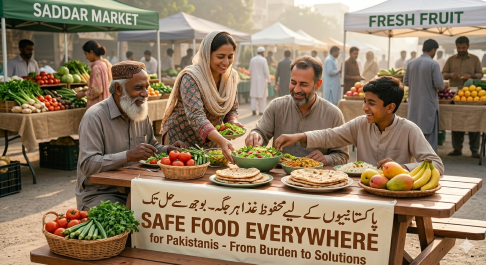
Every day, millions of people trust that the food they eat will nourish rather than harm them. Yet unsafe food remains one of the most overlooked public health challenges worldwide. As the world marked World Food Safety Day on 7 June 2026, the theme “From Burden to Solutions – Safe Food Everywhere” reminds us that food safety is not merely a technical issue; it is essential for public health, economic growth, and national development.
According to recent estimates from the World Health Organization (WHO), unsafe food causes approximately 866 million illnesses and 1.52 million deaths globally each year. These figures highlight a burden that is both substantial and largely preventable. Behind every statistic is a child missing school, a worker unable to earn a living, or a family facing unexpected healthcare expenses.
For Pakistan, the challenge is particularly significant. Evidence presented by the Food and Agriculture Organization (FAO) indicates that foodborne illnesses affect one in five Pakistanis annually, resulting in an estimated US$1.7 billion in productivity losses each year. Food contamination, adulteration, poor hygiene practices, unsafe water, and inadequate storage conditions continue to threaten both public health and consumer confidence.
Food can become unsafe at any point along the food chain. Harmful bacteria, viruses, parasites, pesticide residues, heavy metals, and naturally occurring toxins may contaminate food during production, processing, transportation, storage, or preparation. In many cases, consumers cannot detect these hazards by appearance, smell, or taste alone.
The good news is that most foodborne diseases can be prevented. Effective solutions already exist. Farmers can adopt Good Agricultural Practices to minimize contamination at the source. Food businesses can implement internationally recognized systems such as Good Manufacturing Practices (GMP), Hazard Analysis and Critical Control Point (HACCP), and ISO 22000 to manage food safety risks systematically. Markets and food vendors can improve hygiene, sanitation, and temperature control to protect consumers.
At the household level, simple actions make a significant difference. Following WHO’s Five Keys to Safer Food—keeping clean, separating raw and cooked foods, cooking thoroughly, storing food safely, and using safe water and ingredients—can substantially reduce the risk of illness.
Encouragingly, Pakistan has recently launched a comprehensive assessment of its national food control system with technical support from FAO and other partners. This initiative reflects a growing commitment to strengthening food safety governance, improving regulatory coordination, and aligning national standards with international best practices.
Food safety is a shared responsibility. Governments, researchers, food businesses, farmers, retailers, and consumers all have a role to play. Safe food protects health, strengthens economies, supports trade, and contributes to food security.
As we observe World Food Safety Day 2026, let us move beyond recognizing the burden of foodborne diseases and focus on practical solutions. Every safe meal begins with responsible actions across the food chain. By working together and relying on science-based approaches, we can ensure that safe food is available to everyone, everywhere.
Safe food is not a privilege—it is a fundamental right.
Read: Gender Food Discrimination in Pakistan
_______________________
Parkash Meghwar and Prof. Dr. Saghir Ahmed Sheikh – Department of Applied Sciences, Hamdard University, Karachi