

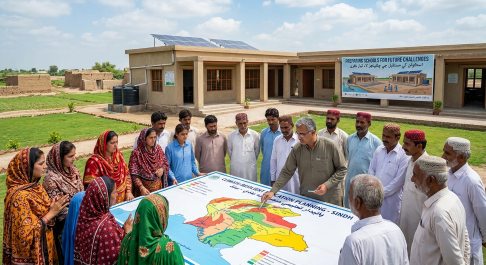
A strong education system must be able to survive floods, heatwaves, and environmental challenges while continuing to provide quality learning.
Nuzair Ahmed Jamro
When we talk about education, we often think about classrooms, books, teachers, and examinations. However, education is not possible without a safe and supportive environment. A child cannot focus on learning if the classroom is damaged by floods, unbearably hot during summer, or lacks basic facilities such as clean drinking water and electricity.
For Sindh, climate change is no longer a distant challenge. It is a reality affecting the daily lives of millions of people, especially children. Floods, heatwaves, water shortages, and extreme weather events are directly influencing education. Therefore, the future of Sindh’s education system depends not only on increasing the number of schools but also on making them safer, stronger, and prepared for climate challenges.
Learning Lessons from Climate Disasters
The devastating floods of 2022 reminded us how vulnerable our education system can be during emergencies. Thousands of schools were damaged, and millions of students experienced interruptions in their education. Many children lost months of learning opportunities because their schools became temporary shelters, were damaged, or became inaccessible due to floods.
These experiences provide an important lesson: education planning cannot be separated from climate planning. Every new school project and rehabilitation scheme must consider future environmental risks.
Building Schools That Can Face the Future
The schools we build today must be prepared for tomorrow’s challenges. Climate-resilient school infrastructure should become a priority in Sindh’s development planning. Future school projects should include better drainage systems, flood-resistant designs, heat-resistant classrooms, safe drinking water facilities, and reliable energy solutions. A school should not only be a place for education but also a safe space for children and communities during difficult times.
Green Schools: Turning Education into Environmental Action
Schools have the power to shape future generations. By introducing the concept of green schools, Sindh can create environmentally responsible communities. Solar-powered schools, plantation activities, water conservation systems, and proper waste management can reduce environmental pressure while teaching students practical lessons about sustainability.
A child who plants a tree at school today may become a citizen who protects the environment tomorrow. Using Technology for Smarter Education Planning, Modern challenges require modern solutions. Digital technology can help the education sector identify risks, improve monitoring, and make better decisions.
Through Geographic Information Systems (GIS), digital school monitoring systems, and real-time dashboards, education authorities can identify vulnerable schools, track infrastructure conditions, and plan timely interventions. Data-driven planning can ensure that resources reach the schools and communities that need them the most.
Ensuring Education Continues During Emergencies
Climate disasters should not force children away from education. Sindh needs a strong education emergency response mechanism that ensures learning continues during floods, heatwaves, and other crises.
Digital learning platforms, mobile classrooms, community learning centers, and alternative teaching methods can support students when regular schooling becomes difficult.
The goal should be simple: no child should lose education because of a climate emergency.
Empowering Teachers as Climate Champions
Teachers are not only educators; they are also community leaders. With proper training, teachers can help students understand climate risks, disaster preparedness, and environmental protection. Teacher development programs should include awareness about climate adaptation and emergency response so that schools become centers of knowledge and resilience.
Making Climate Resilience Part of Education Policy
Climate resilience should become an integral part of Sindh’s education development strategy. Annual Development Program (ADP) schemes, education reforms, and infrastructure projects should include climate-related indicators and measurable targets. Strong Monitoring and Evaluation (M&E) systems can help policymakers understand what is working, where improvements are needed, and how public resources can create maximum impact.
A Vision for Sindh’s Future
The future of education in Sindh depends on how effectively we prepare for the challenges ahead. Climate-resilient education planning is not only about protecting buildings; it is about protecting dreams, opportunities, and the future of millions of children.
A strong education system must be able to survive floods, heatwaves, and environmental challenges while continuing to provide quality learning. Sindh has the opportunity to transform its education sector by combining sustainable infrastructure, digital innovation, and effective governance. By investing today in climate-resilient schools, we can ensure that every child has a safer place to learn and a brighter future to achieve.
Read: Sindh’s Digital Education Reforms: Missing Links
____________________
 Hailing from Shikarpur, Sindh, Nuzair Ahmed Jamro is a civil servant and MS research fellow in Public Administration. He writes on governance, public policy, and digital transformation. Email: najamro@gmail.com.


