Kolkata-based author Debashree Chakraborty writes a novel about the 19 years of life of Jesus, which, according to some contemporary texts, he spent traveling extensively in the Middle East, Sindhu region and India
[Author’s Note: In the Old Testament of the Bible, there is no information about the life of Jesus for 19 years. There are some contemporary texts where eyewitnesses have stated that he traveled extensively in the Middle East and crossed the Sindhu region to enter India. Through this novel, I have tried to portray the diary of a profound spiritual journey of his life in the initial and final chapters. Foreign powers have tried to erase the history of our continent, Asia. That is why, when Notovitch returned from Hemis in Ladakh and mentioned that ancient text over 2000 years old, Max Müller sent people to Hemis to destroy that ancient manuscript. The mysterious manuscript is also mentioned in the book by Swami Abhedananda about Kashmir and Tibet. What was it that caused Max Müller so much concern over this manuscript? It is noteworthy that love cannot come into the life of the son of God, and he cannot have any children. Even the Gospels attributed to him have been confined to the secret, dark chambers of the Pope’s city, with words implanted into his mouth according to their wishes. In his name, imperialistic aggression is being carried out across the world. His only daughter, Sara, has not been recognized. His entire existence has been imprisoned. There lies an unknown chapter of his life hidden throughout the Middle East, the Sindhu region, and India. I have brought forth this history through this novel. “An Unknown Life” is in no way a novel imitating “Jesus lived in India.” This novel provides detailed descriptions of his presence across the vast land from Israel to India, not just his own, but also the mysterious narratives of many people associated with him. Was Jesus truly the founder of Christianity? If not, why must he still bear the burden of the “Roman Cross”? Is there ever to be a possibility of his release? All answers are coming. Debashree Chakraborty]
An Unknown Life
(Two thousand years ago, in the Gorakh Mountains of the Sindhu region, as Isa was on his way to enter India after being crucified)
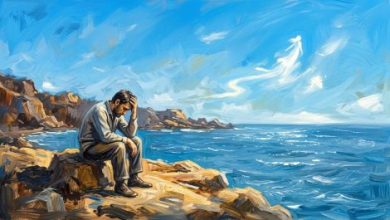
 Now the sun is setting, and Isa is sitting beneath a tree. Among this vast mountainous valley, this place is the highest. Sitting here, the mountains in front seem like waves in the sea. During the sunrise and sunset, white clouds gather over the mountains, and when the sunlight falls on them, the colors reflect in such a way that it feels as if he is looking at Mount Carmel or sitting on the shores of Galilee watching the sunset. Thinking of Galilee reminds him of Mary. He can never forget Mary Magdalene, not ever. Since birth, he has been taught that domestic life is not for him. He must fight for the freedom of the entire community. If the Roman oppression continues like this, one day they will be completely annihilated. There are many people like Mary Magdalene who have never found fulfillment in love, and they have been lost in the currents of time. Without the nation’s freedom, they too will be lost this way. Mary has elevated him to the place of God. There are many freedom fighters like him, but they have not been able to rise to that place. After returning from crucifixion, it was this Mary who first spread the word that she had seen Isa ascend to heaven with two angels. The people of Jerusalem, Galilee, and all the surrounding regions now truly regard Isa as the Son of God. While staying in Mount Carmel, freedom fighters from all around the region began to meet him secretly. He had become much healthier then. His presence and influence intensified the freedom movement in the region; in Galilee, the situation had reached a point where Galilee might have become free in just a few days. At such a time, news reached the Roman ruler that Isa was in Mount Carmel and that he had not died from crucifixion. Upon receiving this news, the Roman soldiers began to suppress both the movement in Galilee and the adjacent areas.
He began to move toward Mount Carmel. When this news reached Isa through a spy, John, Simon, Peter, Joseph, and Nicodemus took him secretly along a hidden path out of the Carmel mountain valley. The path was extremely treacherous. Nicodemus and John were doctors, and as long as Isa was not completely well, they could not leave his side. Thus, they became his companions in shadow. While traversing this dangerous path, Isa fell ill again, and fluid began to ooze from the wound on his foot. Despite the immense pain, he continued to walk. They traveled on like this, stopping only for a brief rest in some village along the way. All around them were Roman scouts, making it impossible to distinguish who was a spy and who was an ordinary person. Therefore, they proceeded very cautiously.
Eventually, after many days of travel, they reached the shore of the sea. Many people from their community worked as fishermen and boatmen there. Blending in with them, they donned the attire of fishermen, and under the cover of darkness, one deep night, they set sail by water toward the land of Sindhu. How many nights they spent at sea, he could no longer recall, but as he looked at the floating clouds above the mountains and the sunlight glimmering on them, he felt as if he was indeed moving through a sea. After all, life is like an ocean; during the journey of this life, the influences of many colors from the past manifest in the present. Then everything seems to blend together. This is not just one life; the influences from many past lives affect the current life. Memories and present experiences seem to merge into one single life. In that existence, it is not the events that matter, but the essence of the soul that takes precedence. At this moment, he also remembers his childhood. He had come to this land of Sindhu in his childhood, where he had lived for a long time and gained spiritual knowledge. After that, he entered India through the Sapta Sindhu. After spending some time in Hemis, he went to Tibet. Then from Tibet, he took a different route.
He arrived in Utkal and lived there for several years. It is said that the heart of Lord Krishna, the giver of the nectar of the Gita, is kept in the temple of Purushottama, located by the sea. Perhaps it was this that attracted him to the land of Utkal. After learning the teachings of Tantra from Tibet, he began to acquire the teachings of Vaishnav Tantra at Purushottama Kshetra. Alongside that, he started to take in the nectar of the Gita. This knowledge seemed to prepare him like a warrior for the independence movement in his homeland. Here, he felt a oneness with Arjuna.
Then he journeyed through Bodh Gaya, Rajgir, and Sarnath to arrive in Varanasi. During his stay in Varanasi, he compared the teachings of the Bhairava Tantra and the practices of power he had acquired from Tibet with the Bhairava practices in Varanasi. Kalabhairava is the protector of Varanasi; therefore, to understand him and the roots of Shiva worship, he had to come to Varanasi. He was pondering over all these thoughts. He stayed here for quite some time, as this region is a sacred ground for Shaivites, where practitioners of their community have resided and practiced for ages.
Today marks the end of one day. Tomorrow morning, a group from the Dattatreya community will arrive from Multan, and he will leave for India with them. His companions here have come to bid him farewell. From here, John, Joseph, Simon, Peter, and Nicodemus will each depart in different directions. Perhaps he will never see them again in this lifetime. Thus, throughout the ages, many partings occur on the path of life, yet the soul must continue to move forward; it does not stop. Gradually, all memories fade away, and then they take on the form of nature after sunset. Nature and life are synonymous there. However, he cannot forget Mary, Mary Magdalene. Everyone has changed, and she is no longer the same. Mary is a part of his soul, the one who has carried him, their souls united. This world may never recognize that. Still, Mary has embraced him.
At this moment, the one who needs Mary the most is Isa. But he… he is with Mary.
He couldn’t stay. Such a great sacrifice of Mary will history never remember; she too will have to be lost like him! While thinking about all this, the canvas darkened. The goddess of nature was enveloped in the darkness of night. Then, with the passage of time, the scene changed and it reached Kashmir in 2022.
Ratul had arrived in Kashmir several days ago. Here, he took refuge in a village outside the city of Srinagar, surrounded by remnants of some ancient sculptures. It is said that ascetics used to practice secret sadhana in this village in the past. Green fields surrounded the village, and on one side of the fields stood a vast, high mountain. On top of this mountain lay the ruins of a structure dating back about two and a half thousand years. The villagers say that nearly two thousand years ago, a Buddhist council was held atop this mountain.
While coming from Ladakh, Adinath had advised him to visit this village, saying he would find many answers to his questions there. On the day he arrived in the village, he saw a boy sitting under a chinar tree by the roadside. The village roads were very empty, with only a few Muslim families residing there, who were once Buddhists. The boy was smoking and, upon seeing Ratul, rushed over, took the bag from his hand, and asked, “Have you come to research the Buddhist council too?”
Startled by the boy’s words, Ratul nodded and said he wanted to stay in the village for a few days. The young man informed him that a Roman youth named Julius had been in the village for the past two days, researching Jesus. Hearing this, Ratul felt as if God himself was becoming his guide. How else could everything unfold in such a way?
Ratul learned that the boy’s name was Javed, who began to guide him. The streets were lined with huge chinar trees with dried leaves scattered on the road, as if Ratul was about to step into a chapter of unknown time along the colorful path of time. At the end of the village, there were mustard fields of a bright yellow color. On one side of that field was Javed’s house.
When Ratul arrived at Javed’s home, evening had set in. Javed lived in a two-story wooden house. He took Ratul to the upper floor. Ratul was extremely tired after traveling from Leh to Kargil and then hiring a car to reach this village. Javed informed him that a person named Julius was in this room.
The Roman youth would stay with him. Julius had come to Kashmir in search of Jesus. Today, Julius went to see the Martand Sun Temple. By the time he comes back to this room, it will be evening. Javed brought fresh sheep’s milk, hot bread, and vegetables for Ratul. After eating the warm food, Ratul covered himself with a blanket and fell asleep. The fragrance of comfort was emanating from the blanket. That night, Ratul did not dream at all. His body was so tired that as soon as he laid his head on the bed, he fell asleep.
Later, in the middle of the night, the creaking sound of the door opening woke him up. Upon awakening, he first saw Julius. After having dinner that night, the two of them returned to their rooms and discussed for a long time. Ratul learned that Jesus had lived in this village for a long time; he had come here to participate in a Buddhist council. Ratul asked Julius why he suddenly had the desire to research Jesus. Julius replied, “I have come to atone for the sins committed by our ancestors.”
“Sins of the ancestors?” Ratul inquired.
“Yes, the sins of the ancestors. The Romans erased all evidence of Jesus; I have come to find that lost existence. Now quickly go to sleep. Tomorrow morning we will go up that mountain, where Jesus had come for the Buddhist council a long time ago.”
Ratul was also extremely tired, so as soon as they closed their eyes, they fell asleep. Then, at dawn, as a flock of orange-colored birds flew toward the mountain over the mustard fields, Javed led Ratul and Julius forward toward that mountain. As they crossed the fields, a pine forest began. The winding mountain path rose upward through the forest. As Javed guided them, he said, “In the past, terrorists used to live in these areas. The ancient architectural parts that I’m taking you to have all been broken and sold by them. Our father said that when they were young, this mountain was much more beautiful, and the architecture was still intact.”
Then, from the 1990s, violence began, and gradually everything came to an end. There used to be more trees around here, but they’ve all been cut down and sold. As they walked through the forest, they came upon a mountain stream, and they crossed the river by foot. Afterwards, they sat under a tree to take a break. Nowadays, Ratul finds it difficult to walk continuously. Moreover, within every journey of life, there lies a profound spiritual feeling. In this journey, there is an immense spirituality embedded in this hilly forested land. This land is a ground for practice; for ages, people have meditated here. It was the spiritual energy of this land and environment that drew the Buddhist council to take place here.
Sitting in the wilderness, countless streams of thought flowed through Ratul’s mind. As he pondered various thoughts, he suddenly asked Julius, “Julius, tell me one thing: did Jesus establish a new religion? What do you think?”
“No, he did not establish a new religion. He practiced the ancient spiritual currents that have flowed through the earth for ages. The spirituality that is now confined to India is what drew him back to this land repeatedly. After returning from here during the first phase of his life, he combined this philosophical insight with revolution and spread a new message across the vast regions of Galilee and Judea. The message of love and compassion tied him to the ordinary people of this region. This is another way to conceptualize revolution. Ratul, I was associated with ISKCON for several days, during that time I became familiar with the philosophy of Mahaprabhu Sri Chaitanya.”
Five hundred years ago, Mahaprabhu integrated love and devotion with religion, bringing forth a massive wave that swept away all forms of caste and ethnic separatism. Just as he united everyone and brought forth a revolution against foreign enemies by seating people from all strata of society together, Jesus, two thousand years ago, tried to bring about a social revolution by seating all people together as well. In this way, he aimed to strike against Roman rule. He never claimed that he was preaching a new religion; rather, he wanted to eliminate the corrupt elements within the primitive religion. He sought to eradicate the extreme opulence, greed, immorality, cruelty, and the relentless, bloodthirsty joyousness that was conducted in the name of religion by the highest priests of the Jewish temple in Jerusalem. At that time, the Jewish priests had started conducting business in the temple in the name of religion. This is why the priests and the religious businessmen colluded with the Romans to have him executed.
The religion we now refer to as Christianity is not a religion established by Jesus in any way; rather, we could say that it was propagated by Saint Paul. Paul blended his own thoughts with Jesus’s beliefs and spread them across vast regions. He wrote letters to various people for the promotion of this religion. For this reason, many people have referred to this religion not as Christianity but as Paulism.
Many modern Jesus scholars, including Geza Vermes, believe that in his early life, he was opposed to Jesus and once went to the High Priest of the Jerusalem temple to urge him to kill Jesus and his followers. However, Jesus and his followers preferred to practice quietly through strict asceticism. They would meditate in caves in the mountains, living on fruits. In Hinduism, there is a custom of bathing in the river before receiving initiation from a guru, or sprinkling holy river water on the head before the initiation. Jesus followed this practice himself, which is considered part of baptism. There was also a custom of sprinkling holy Ganges water in places deemed impure, a practice followed in his time as well. This holy water is referred to as holy water. A manuscript known as the Dead Sea Scrolls contains a detailed description of these practices.
After resting for a while, they began their journey again, walking through the forest until they came upon an ancient sculpture. Javed shouted, “We’ve arrived! This is where the Buddhist council was held.” However, when they reached the site, they found nothing of Buddhism. There were no statues of the Buddha or anything else to be seen—only small stone pillars standing. Upon closer inspection, it became clear that the stones were white and blue. These stones must have been transported from somewhere far away.
Julius began photographing everything carefully, observing his surroundings. Ratul thought that there was no camera like the human eye; one had to capture images in the mental galleries through this camera. From this point, there was a view of the Kashmir valley extending far into the distance. A beautiful breeze was flowing, and Javed had brought food and water with him. After a long ascent, he felt good sitting down at that moment. Javed was preparing the food, and in a little while, Julius would return, then they would sit together and have lunch while chatting.
When Julius returned after a while, they all sat down together to start their lunch. Ratul was eating, but a flurry of questions was buzzing in his mind. After observing Ratul for some time, Julius said, “Ratul, perhaps you’re feeling down now that we are here. But I won’t let your spirit dampen. Let me share some information about those who were the main conspirators behind Jesus’s crucifixion. Listen up.
The most important figure among them was Joseph Caiaphas, the High Priest of the Jerusalem temple. Under Caiaphas, there were twenty thousand priests working. When Jesus began his efforts to unite the common people, Caiaphas sent spies after him. The next person I’ll mention is Pontius Pilate. He was the Roman administrator or procurator of Judea. During the trial of Jesus, Pilate’s wife, Claudia, wrote a letter requesting that Jesus not be sentenced to death. After Jesus’s execution, Pilate’s downfall also began. Six years after this incident, Pilate was exiled to Gaul, where…”
He committed suicide. The next person is Herod Antipas, who was appointed as the ruler of Galilee and Perea by the Roman authorities. He had beheaded the closest companion of Jesus as a form of execution. After Jesus’s death, he too became almost mad, and following his exile, he met with an unnatural death.
Now, I will mention two individuals who are the most crucial characters in this entire drama. The first is Joanna, the wife of Herod’s chief steward. Joanna was greatly inspired by Jesus’s religious teachings. Time and again, disregarding her own life and knowing the risks involved, she would rush to Jesus. After Jesus’s execution, Joanna disappeared, and she could not be found anywhere.
The second woman was Claudia Procula, the wife of Pontius Pilate. Claudia was not happy at all in Jerusalem, having left behind the bright and colorful life in Rome. Some scholars believe that Claudia would secretly go to listen to Jesus’s teachings disguised. Claudia and Pilate had no children, which further chilled their marital life. Among those who study Claudia, it is believed that she had secretly fallen in love with Jesus. It is said that Pilate had learned about Claudia’s love for Jesus, which instigated a deep hatred in him toward Jesus.
“Well, Julius, you are researching his coming to India. Do you firmly believe that he came to India? Because nearly two thousand years have passed, is it possible to arrive at a strong conclusion in this situation?”
“To say nothing of the Bible, there is no information found anywhere in the Gospels of Mark, Matthew, John, and Luke about him from the age of twelve until almost thirty years. Luke made a curious remark in his Gospel. He wrote, ‘And the child grew, and waxed strong in spirit, filled with wisdom; and the grace of God was upon him’ (Luke 2:40). In another place, he wrote, ‘And the child grew, and waxed strong in spirit, and was in the deserts till the day of his shewing unto Israel’ (Luke 1:80). The deserts surround Jerusalem in Israel, so he must have lost significant years of his life during that time.”
Where was he for those nearly 18 years? Even before his birth, his parents had to go into hiding because they wanted to protect the child from the oppressive King Herod of Israel. Herod had supposedly issued orders to kill the children of that region and nearby areas even before Jesus’s birth after hearing some prophecy about a future king.
“Wow, this is so reminiscent of the story of Krishna and Kansa!”
“Absolutely, Krishna’s narrative is indeed akin to Christianity. Jesus was supposedly a descendant of King David.”
“Yes, my mother told me something like that.”
“Exactly, as the child of his parents, he was at the top of Herod’s list. Until the age of 12, he reportedly immersed himself in various forms of education and spiritual practice. Then, for 18 years, he completely disappeared from the records. From statements by various sources, including Notovich, it is known that he entered India after passing through Egypt, Iraq, Iran, and Sindh. I myself have collected much information about his stay in these regions.”
Javed was listening attentively to Julius and suddenly asked, “He could have simply stayed in Egypt, Iraq, or Sindh, but why did he enter India?”
“He didn’t stay in Egypt because, at that time, Egypt was under Roman control. Moreover, only India could offer him the spiritual teachings he sought; without receiving the nectar of the Gita, how would he free his homeland from the chains of servitude? The community he followed had its roots in India. In Qumran, near the Dead Sea, they had a monastery and adhered to ancient Shaivite philosophy. The word ‘therapeutic’ was widely used in Indian philosophy as ‘theraputt,’ meaning a wise person. So, it makes perfect sense that he would come to India. Eighteen years of his life have been completely erased. Then we first see the mention of Jesus, a bright, full-grown man aged 30, as described by the eminent Luke, playing the role of a leader in various parts of Israel.”
Ratul said with a touch of sorrow, “Indeed, if Jesus was crucified and ascended to heaven, then how did he come back to India as a full-grown man and live beyond 80 years before passing away here? What about the event of his resurrection on the third day after the crucifixion?”
“Ratul, the event of this resurrection was propagated by Mary Magdalene, and then Saint Paul added many embellishments to it as he spread the word. Those who are researching him today claim that after the crucifixion, he was taken by Joseph of Arimathea and Nicodemus to a secret place where various herbal medicines were applied to heal him. Afterward, he regained his health and returned to India. Researchers believe he was about 6 feet tall and weighed 79 kilograms at the time of the crucifixion. There are many who survived the crucifixion, and Jesus was one of them. Interestingly, it is said that the graves of Moses, Mother Mary, and Jesus are all located in Kashmir. This claim was made by Hoglar Karsten. According to Mirza Ghulam Ahmad, the founder of the Ahmadiyya sect of Islam, the Holy Quran mentions that Jesus did not die on the cross. There is a verse that states, ‘We made the son of Mary and his mother a sign to mankind and gave them a shelter on a peaceful hillside watered by a fresh spring’ (Quran 23:51). The ‘peaceful hillside’ could very well refer to some part of Kashmir.”
After hearing all this, Javed said, “I had heard from my grandfather that the historical Mulla Nadiri from the time of Sultan Zain-ul-Abidin referred to Jesus Christ as ‘Uz Asaf’ in his book ‘Tarikh-i-Kashmiri,’ which he wrote in 1413. He stated that Jesus came to Kashmir during the reign of King Gopadatta. ‘AISHAN YUZU PAIGHAMBAR-I-BANI-ISRAIL AST’ (HE IS JESUS, PROPHET OF THE SONS OF ISRAEL).”
That day, as they descended from the mountain, it was already evening. When they reached the top, Ratul felt disheartened because finding anything among the dilapidated ruins was an extremely difficult task. Moreover, he did not have Julius’s keen vision. However, Ratul forgot one thing: that every journey in life hides its treasures. So that day, he did not return empty-handed. Whatever he found paved the way for his future exploration.
That night, Ratul couldn’t sleep at all. Despite his exhausted body from the day’s strenuous activity, sleep eluded him. Julius seemed to have united with Ratul during these moments; he felt he could sense all of Ratul’s emotions. So, he turned to face Ratul and said, “Ratul, there’s something else I haven’t told you. I was born and raised in the city of Turin, Italy. You know, in Vatican City’s ‘Holy See,’ a piece of burial cloth is currently being carefully preserved in Turin, called the ‘Turin Shroud.’ This cloth is kept under strict guard. It was brought from Jerusalem in Palestine on March 18, 1983. However, since 1578, the House of Savoy, Italy’s royal family, has kept it as a family possession for nearly 450 years. Before his death, King Umberto II of Savoy entrusted this cloth to Pope John Paul II at his request. This cloth was used to cover Jesus’s body when he was laid to rest. Visible imprints of sweat, salt, oil, and blood are present on it. It bears marks of wounds on the face and various parts of the body of crucified Jesus, depicting an entirely naked figure.
The Turin Shroud, where ‘shroud’ means a covering for the dead, also means mist or mystery; both meanings are deeply intertwined here. This raises a question: how can blood and fluids continue to pour from the body even after such a long time of death? In fact, within a few hours of death, a change known as rigor mortis occurs in the body. This process leads to the cessation of blood flow in the veins and arteries. So, was he… alive when…?”
“Was he buried?” The unverified gospels state that according to the Jewish “Gospel of the Hebrews,” after the resurrection, Jesus supposedly gave a certain piece of cloth, with which he was covered during his care, to two of his closest companions. Researchers believe these two were Joseph of Arimathea and Nicodemus. After this event, around 325 AD, we learn from Eusebius of Caesarea, who was a custodian of church history, that there was correspondence between Jesus and King Abgar V of Edessa, in what is now the Urfa region of Turkey, who was known as Ukamma or “the Black.” Eusebius claims that he personally translated these letters, originally written in Syrian, into Greek.
“There is a lot of information, Ratul. We will be together for quite some time, and you will learn everything. But now it’s late; you should get some sleep.” (Continues)
Click here for Part-1, Part 2, Part-3, Part-4, Part-5, Part-6, Part-7, Part-8, Part-9, Part-10, Part-11, Part-12, Part-13, Part-14, Part-15, Part-16, Part-17, Part-18, Part-19, Part-20, Part-21,
_______________

Debasree Chakraborti is a renowned novel writer of Bengali language. Based in Kolkata, West Bengal, India, she has done Master’s in Modern History from the Kolkata University, and authored some thirty books, mostly the novels, with historical perspective and themes. Her novel is ‘Maharaja Dahir’ that covers the history of Sindh from 662, the year of first attack on Sindh by the Arab armies till date, was published last year and translated by Nasir Aijaz into Sindhi language.