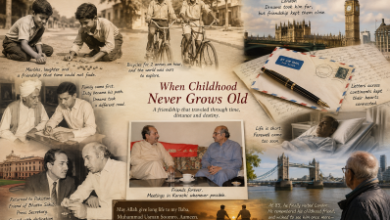
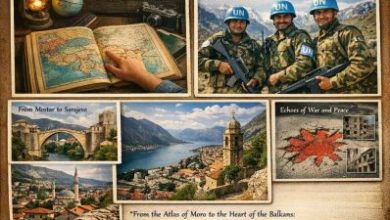
The article reflects author’s years of experience as an observer, traveler, writer and his meetings with dignitaries and some heads of state.
By Nazarul Islam | USA
I have studied, taught, and written about events in life that changed our world. Some of these, seemed insignificant yet proved to be catastrophic and left indelible mark on culture and history. I have remained a keen student my whole life, trying to piece together the causes, effects and consequences of little things that enriched my perspectives. I had just left my High School when, seemingly out of nowhere, the Cold War in Europe ended. In less than a decade, the Soviet Union collapsed. Apartheid fell in South Africa. Democracy and openness spread like wildfire around the world. A decade later, while in Florida, USA I was a new, untenured when I witnessed the tragedy of the falling Twin Towers in New York. Al Qaeda attacked the United States and the Twin Towers collapsed. I was in Washington DC in a seminar in January 2017– the same month Donald Trump was inaugurated as President of the United States for his first term.
Throughout all this change and tumult, three interconnected questions have fired my curiosity. What is the state of world politics and the international system? What has been and should be America’s role in the global order? And what is the most effective way to evaluate and generate insight for the first two questions? The last question – how best to study these consequential issues – led me to reflect repeatedly on how the past shapes both our present and future. Indeed, the overarching question tying my writing, is as simple as it is difficult to answer: how can history be applied to our current moment, and what is the promise and peril of pursuing something that is called contemporary history
When I was younger, I had pursued these questions in the way most beginners do. As a student, I was trained to put forward arguments in a structured, analytical, and confident manner. My insights, like those of other experts, would only be credible and persuasive if I removed myself from the evaluation, if I separated the object of my study from my own views or background. This valuable – and often essential – approach mirrors the best qualities of fields ranging from history to the natural and physical sciences. But was such a dry, didactic style the only way to approach such complex, contested issues? As I reflected upon the state of the world, America’s role in it, and my own career as a school teacher who cares about policy, I wondered if the traditional third-person Archimedean approach was the only way to wrestle with these consequential, hard-to-answer questions.
I still pursue serious subjects, but as I get older, I recognize I know less, not more. Answers that once seemed sure and certain now seem elusive. I am less interested in winning academic arguments than having a conversation.
The truth is, disciplining my mind can be stern, definitive, didactic, and intimidating, unwilling to countenance uncertainty. The best conversations, on the other hand, are interactive, occasionally mischievous, adventurous and bold, especially when the conversationalists are humble, inclusive, and open to change and persuasion. I am no longer uncomfortable, as I once was, offering arguments that are at times in tension with each other, and I confess that I have been wrong in the past and will be again in the future. I remind people I meet, that everyone interested in international affairs and foreign policy, even experts, will at one time or another be mistaken about how the world works and why. Honesty and humility combined with unceasing questioning and updating of assumptions, and vigorous, respectful conversation, is to be nurtured and treasured.
This does not mean we should forgo sharp, even controversial views. The grave challenges of our time demand that we ruthlessly challenge stylized narratives and conventional wisdom about the ivory tower, grand strategy and world order, the nature of power, and the role of the United States. It is still the role of the scholars (myself excluded) to rile people up, to get them to rethink and challenge their core assumptions. The process, I believe should fully aim to generate debate and discussion while discovering avenues to make sense of an often confusing, dangerous, but also promising world.
This change in my approach was animated by the presence, sometimes explicit, but more often implicit, of two enormously consequential figures who entered my life late, all of them I’ve observed at a distance – Henry Kissinger and Donald Trump
Many years ago, Henry Kissinger’s writings impressed me because he had made his admirers generous to think about and understand his views on the three questions animating my academic career: the state of the world, the role of the United States, and how to study and explore these issues. Over time, the answers I developed had been sharply at odds with Kissinger’s worldview.
The second person haunting the late years of my life is Donald Trump. My earliest impressions about Trump had first emerged as the highly unlikely candidate for the Republican nomination for the presidency of the United States. A decade later, we find ourselves in his turbulent and, for many, unexpected return to the White House. Trying to understand how and why Trump was elected, twice, to lead the world’s most powerful nation, and what that means for the United States and global order, is a vexing and challenging one, forcing me to constantly reassess my own analysis and instincts for politics and policy. What is clear is that Trump is as much a consequence of as a cause for the uncertain times we live in.
How should we think about international relations and the forces that shape it? I have reflected on this question since my early writings on the subject for nearly four decades. The traditional, conventional view sees world politics through the lens of geopolitics: the timeless struggle between great powers driven by a competition for land and resources, which is largely determined by the military balance of power. I used to see the world that way.
Over time, however, my views have changed. I’ve developed a different, and indeed controversial, view, steeped in a historical perspective that argues the global system has transformed in profound ways that are rarely accounted for in our standard analysis. Many of our theories of international relations – and the conventional view that suggests we are in a new age of geopolitics and great power competition – are based on an understanding of the tumultuous and often catastrophic events of the late 19th through the mid-20th centuries, a world marked by imperial conquest and industrialized, mass-mobilized war, violent revolution, and genocide.
What this article fails to recognize is that the conditions and circumstances that shaped that dark, tumultuous world of the past have changed dramatically. Life expectancy has more than doubled while profligacy has shrunk, governance at all levels has improved immeasurably, once lethal diseases are contained, unimaginable amounts of wealth and knowledge have been created, while resource, security, and information scarcities that plagued the world for millennia have been largely tamed.
To me, Land is a far less important source of power, much of the world is urbanized and literate, and conquest and formal empire make little sense, even if there weren’t thermonuclear weapons inhibiting large-scale invasions. Much of what counted for state power and success in 1900 translates poorly to the world of 2025 and beyond.
This does not, however, mean I hold a simple, idealistic view or version of history. Indeed, I believe that we are threatened by new, seemingly intractable, and potentially existential planetary challenges, what I label the problems of plenty. Through most of recorded history, humanity was threatened by scarcity – too little food, knowledge, medicine and technology, security. Today it is plagued by the challenges generated by our abundance and excess. The earth’s worsening climate, the dizzying array of emerging technologies, increasing inequality and migration, political polarization and despair, punctuated by a global public health crisis – the COVID-19 pandemic, which killed more than 20 million people – are problems of plenty that reveal stark challenges we are manifestly unprepared for.
International politics are also driven as much by powerful, non-material influences such as honor, fear, vengeance, humiliation, and identity as by interest. These forces evade easy definition, to say nothing of precise measurement.
This brings me to the question of world order – an issue of increasing interest to students, scholars, and policymakers. Kissinger has discussed this subject frequently in his book. He was worried that scholars and policymakers were not thinking deeply enough about the dangers that existing global institutions and arrangements were not up to the task. The vexing questions surrounding the rise of China, the profound consequences of emerging technology, America’s erratic behavior, the uncertain ‘holiday from history’ status of Europe – all worried him greatly.
Learning from published papers, I developed an eclectic views. Orders have been created and implemented by states to restrain the most dangerous parts of the international system and channel powerful global and national forces in productive, just ways. History reveals, however, that such orders are often contested. Many contemporary analysts bemoan the weakening and even disappearance of the so-called liberal international order that emerged from the ashes of the Second World War. The question remains, how well do we understand what this order consisted of, how and why it was created and maintained, what parts succeeded, and which aspects were less impressive? I have come to realize that there were many different postwar orders, and that some, like the Nuclear Non-Proliferation Treaty order, worked extraordinarily well, whereas others, such as the United Nations system, failed to fully meet their creators’ aspirations.
There was not one international economic order after 1945, but several. Most importantly, this postwar order was created to deal with the grave challenges that shaped the first part of the 20th century – imperialism and decolonization, revolution, great power war, and the Great Depression. Whatever order emerges in the future must continue to minimize these familiar challenges, while also meeting a whole new array of planetary threats for which our current institutional architecture and conceptual frameworks are woefully ill-suited.
These future orders must also possess legitimacy, a quality rarely discussed among foreign policy and international affairs experts. Kissinger often made the point that stable orders only emerged when the major players recognized and accepted that other great powers might have different perspectives of the world, including different goals and values, and even contrasting concepts of how history unfolds. That insight remains important. Today, however, we face a different crisis of legitimacy, between governments and the governed.
Many governments around the world, even – or perhaps especially – those that are democratically elected, are failing to assuage the worries and concerns of their citizens and are unable to meet their demands and expectations, creating a deepening loss of faith in state capacity and governance. Into that vacuum, populists of all sorts, raging against elites and legacy institutions, have acquired unsettling momentum, with uncertain consequences for world politics.
Which brings us to the second question that keeps reminding me— America and its engagement with the world. Perhaps the most important variable for the future of the global order is the position, policies, and health of the most consequential actor in the international system, the United States. Again, one can identify both promising and discouraging signs. The nature of America’s grand strategies are often inconsistent and unreliable, with its history of trying to both dominate and escape from the outside world, sometimes at the same time.
As a country, it invests far too little on policy as a craft, displays a tendency for violence, both internally and externally, while too often pursuing unwise policies in places as far-flung as Vietnam and the Middle East. On a range of pressing issues, from China to nuclear weapons, the United States desperately needs to interrogate its assumptions and update its grand strategies. It is also hard for many, especially those living outside of the US, to understand and trust a nation where a majority of the voting public expresses a faith, even an affection, for a leader possessing such a challenging character and offering such questionable judgment as President Donald Trump.
As a student of contemporary history however, I try to broaden the aperture on how to think about America’s characteristics, history, and relationship with the world around it. While Trump may be sui generis, America has elected more mediocrities like James Buchanan and Warren Harding than visionaries such as Franklin Roosevelt. Indeed, peer closely and the historian can identify a few unsettling similarities between FDR and Trump, including an economic policy that put America first at the expense of the world economy, his efforts to pack the Supreme Court, and Roosevelt’s norm-busting decision to run for four presidential terms, the last when he was gravely ill.
If America is exceptional, it may be less because of the political leaders it has produced over two centuries and more. Its greatness, such as it is, largely lies elsewhere. For example, the United States has remained the world’s largest, arguably most dynamic, economy since the late 19th century, despite profound changes in how wealth is created and distributed, all while competitors looking up from second place – Great Britain and Germany during the first half of the 20th century, the Soviet Union after the Second World War, Japan, the European Union, and more recently China in the post-Cold War world – have, at least in comparison, eventually stalled and even faded.
When we analyze and assess categories of power that may matter most in the 21st century – the global reach of a nation’s culture, the power of its technological innovation, its energy production, the central role of its currency and financial institutions, even its ability to be its own worst critic and find ways to improve – the story of America is perhaps not so dark. To put it another way, relying on the kind of counterfactual reasoning that should characterize how we evaluate the world: America is often the worst great power in the world, except for all the others.
How should we think about, study, and teach these important questions? American institutions have and will no doubt continue to play a central role. As a student I feel like I have access to information. I still can’t believe I get paid (so little) to write about the world while having the privilege to learn from the discourses of smart, inquisitive young people. It is no secret, however, that higher education, especially in the United States, is facing challenges and even crisis.
Some of these problems are baked into the design and structure of the academy. Clark Kerr, who was the chancellor of the University of California at Berkeley in the 1960s, has suggested that: ‘The University is a series of individual entrepreneurs held together by a common grievance about parking.’ People possessing certain traits often ‘self-select’ into the academy. Often, professors can demonstrate brilliance while also combining what would seem to be mutually exclusive traits such as insecurity and arrogance. Universities, by setting themselves apart from other elements of society and generating controversial, even unsettling ideas and technologies, have historically attracted negative political attention.
Today, however, the challenges facing higher education appear steeper than in the past. Universities are overly bureaucratized and increasingly obsessed with virtue-signaling. The stranglehold maintained and pathologies demonstrated by the academic disciplines that define research and teaching are an especially vexing problem for the study of diplomacy, statecraft, grand strategy, and international relations. While these problems mark many of the disciplines in the social sciences and humanities, it is especially disconcerting within the two fields I know best – history and political science.
Again, to be clear, scholarly disciplines serve useful purposes, by defining the outlines of fields of inquiry while organizing and regularizing how to design and pursue research, generate knowledge, validate findings, and accumulate knowledge. These noteworthy benefits come at a cost, however, especially in the disciplines most concerned with strategy and world politics. Political science is often taken by ‘physics envy’, or even worse, given its recent poor track record, economics envy, obsessed with a sort of false scientism based upon an over-reliance on theory and quantification. History is little better.
As a discipline, it too rarely encourages scholarship on critical issues and concerns that matter to large portions of the public, such as questions of war, peace, and statecraft. While political scientists can be obsessed with methods and research design, historians are often unwilling to explicitly surface their underlying assumptions and their thoughts on causality and agency. Worse, they frequently assume their normative preferences are universal and widely shared. In both fields, the research questions can appear narrow and obscure, and advancing the discipline is rewarded more than engaging real world problems. Political science and history often fail to reveal much sympathy or understanding of the world of policy and statecraft, unable to acknowledge the profound difficulty of making hard choices when faced with complexity and radical uncertainty about the future.
All is not lost, however, and the optimist in me wants to believe that we live in an ideal time to study the world. Owing to the efforts of many innovative projects and initiatives, the divide between the world of ideas and practice, the academy and policy, has narrowed. Schools of public policy and international affairs offer an opportunity to exploit the best of academic disciplines without being overly constrained by their limits. The virtues of applying history to understanding our contemporary world are being rediscovered and bigger, broader thinking encouraged. Most importantly, students are smarter, more curious, more engaged, not simply in the United States but around the world.
The task we face is by no means easy. I am especially enthusiastic about the increased interest in both applied and contemporary history, which appear similar but are not quite the same thing. Applied history involves examining examples from the past to shed light on our present and future challenges. Sometimes it demands calling upon the deep history of an issue – say, for instance, various efforts in the past to construct an international order. Knowing deep history should provide greater insight, and, hopefully, better decisions. Our current debates over the origins of great-power wars, the challenges to democracy, and world order are much better when we apply history. There are better and worse ways to do so, and we should encourage a vigorous debate and discussion of best practices.
Contemporary history, on the other hand, employs the skills of a historian in our current circumstances to provide a better understanding of where are today. In other words, it is a history of our current times. Undertaking contemporary history is a fraught exercise, however.
‘Normal’ history is difficult enough – historians vehemently argue about the past; what happened, why, and what it means. They continually revise our understanding of what came before. These disagreements persist despite the advantages that come from analyzing what has already taken place as opposed to making sense of the present and future. ‘Normal’ history, the passage of time, and the distance it creates from the events and personalities under study, should generate greater insight and understanding. It may also drain the kind of emotions and passion that too often cloud our understanding and cool-headed assessment of the current predicament.
There are lower personal stakes when the argument involves issues that shaped the world decades or centuries ago, as opposed to people and events that may have real consequences on our present circumstances. It can be hard to strive for objectivity when viewing a matter – or an American president – that impinges upon our own interests, identity, or strongly held values and beliefs. Most importantly, histories of the past are written largely knowing how the story ends.
A contemporary history of Europe since the Congress of Vienna, completed on 27 June 1914, may offer students a cautiously optimistic tone, celebrating a century of relative peace, political development, and extraordinary economic growth. Indeed, in the days and weeks after Archduke Franz Ferdinand was assassinated, many people believed a war could be averted, and if it came, it would be localized – a third Balkan War, limited in scope like the conflicts in 1912 and 1913. It was only years, even decades, after that fateful day that its full impact was recognized and comprehended.
Which generates a difficult question: Where are we in the story today? If we view our current times through a historical lens, are we at the beginning, the middle, or the end of the story? And what even is the story we are recounting?
Scholars I have known today are to put it mildly, freaking out. In contrast I often write wrote it with both my three children and their friends in mind, trying to make sense of a turbulent nation and often upsetting world. While acknowledging deep concerns with the president and his actions, I have noted that the United States and the world had gone through far more serious challenges in the past and had emerged better off. Playing off one of my favorite movies – the romantic musical La La Land – I continue to argue that America’s greatness came less from who occupied the White House and more from its economy, its culture, its people, and, most of all, its propensity for hope, innovation, and reinvention. In my writings, I have learned more on wonder than worry.
Many years later I am not convinced my balance was right. In the time since, the world has been roiled by danger: China’s suppression of Hong Kong and increasing belligerence in East Asia, deadly conflicts in the Sahel and Middle East, and Russia’s brutal invasion of Ukraine stand out among myriad tragedies that haunt our world. New challenges, from the climate crisis to emerging technologies, loom larger than ever, and as the world’s failed response to the COVID-19 pandemic revealed, we have few if any solutions to the planetary problems of plenty. In the United States, politics has become even more polarized, more bitter, angrier, and the ability to develop a national consensus on how to move forward, let alone agree on effective policies, is more elusive than ever.
From my vantage point, President Trump and the people around him seem no wiser, no more inclusive, and no more visionary than during the disruptive first term. Despite my views, however, almost 12 million more Americans voted for him in 2024 than in 2016. If I am being honest, I now lean far more on worry than wonder.
Yet our current chaotic period remains a puzzle. I often tell my well-wishers to imagine an alien who is tasked with visiting earth every 50 years and sending a progress report back to her bosses. When she compares the 2025 statistics to 1975, she notes that by every meaningful metric – life expectancy, literacy, knowledge about the world, health and nutrition, violence of all kinds, security, human tolerance and opportunity – life is measurably better than a half-century before.
And 1975, which would be bleak to us today, was much better than 50 years before that – 1925 – and so on. It is true that we live in a time of great worries, an era of palpable rage and resentment and seemingly insurmountable challenges. But we also live in a time of great wonders, where the problems that plagued humanity since the beginning of recorded time – scarcity in food and other resources such as health, information and knowledge, energy, security – have been, if not fully solved, unimaginably improved.
Concurrently, a rights revolution has dramatically increased human tolerance and opportunity, while demonstrably reducing formal and normative prejudices based on gender, race, religion, and sexual orientation in much of the world. If you were to tell someone in 1975 that all the world’s information was available, almost free, to anyone on the planet, simply by possessing a small hand-held device, they would have said you must live in an age of miracles and joy. Few of us feel that way, of course, even as we struggle to make sense of why.
Which gets to the challenge of contemporary history, or the question: where are we in the story – the beginning, middle, or end? And what precisely is the story? Is it 27 June 1914? When my close friend Humayun visited the US in 1975 America had appeared in decline, marred by deep division, drugs, crime, stagflation, and political corruption. The international system was defined by an ideological and geopolitical struggle – the Cold War – framed by the threat of thermonuclear catastrophe. The future appeared bleak. By the 1990s that world was transformed, mostly for the better.
Read: Can America afford Mass Deportation?
_________________
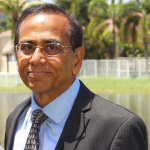 The Bengal-born writer Nazarul Islam is a senior educationist based in USA. He writes for Sindh Courier and the newspapers of Bangladesh, India and America. He is author of a recently published book ‘Chasing Hope’ – a compilation of his articles.