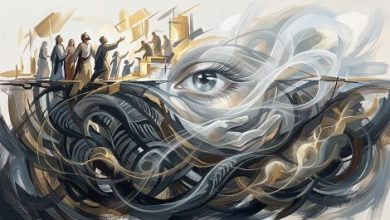
‘Ego’ plays a crucial role in our lives, shaping our self-perception, interactions, and overall experiences
- Pakistani society has generally exhibited resistance when faced with situations where women succeed or become independent in their lives
By Nazarul Islam | USA
It is an undisputed fact that ‘ego’ plays a crucial role in our lives, shaping our self-perception, interactions, and overall experiences. While often associated with negative connotations like arrogance, it is important to understand the different perspectives and functions of the human ego.
Psychologists have explained that ego is the conscious part of our psyche, responsible for mediating between our primal instincts, our moral compass (superego), and the external world. It’s the rational and realistic aspect that helps us make decisions and adapt to our surroundings.
To understand better, let us imagine egos to be drivers, who are navigating their vehicles (personalities) while their engines provide the power and the GPS (superegos) dictates the rules.
This explanation does not end here. ‘Ego’ is a commonly used term to describe an individual’s sense of self-importance, self-esteem, or even self-centeredness. A healthy ego contributes to a strong sense of self and his confidence, On the other hand, an inflated ego can manifest as arrogance, a constant need for external validation, or an inability to admit mistakes.
To confirm our convictions, we need to ask: What provocations ignite our ego driven behavior? Several factors can contribute to an overinflated ego. It all begins with Individuals who are likely to develop a powerful ego as a defense mechanism to cope with feelings of inadequacy or past negative experiences.
Ego relies consistently on a condition we refer to, as ‘narcissism’. This is the personality trait that involves an exaggerated sense of self-importance and a lack of empathy, often leading to ego-driven behaviors like seeking admiration and exploiting others. Again, egos have developed in human beings over time. Overly spoiled children or those not familiar with the feelings of empathy may be more prone to develop egoistic tendencies.
Then, there are cognitive distortions. These relate to biased thinking patterns, like believing that he is always right or underestimating others, can fuel ego-driven behavior. All this leads us to ask the big question. Are we trapped in our egos? Why?
Personal ego loves significance and validation, or something that can create patterns that perpetuate unhealthy behaviors. This “trap” can manifest itself in several ways. One such path is the fear of vulnerability. Acknowledging our personal weaknesses or mistakes is often resisted by our egos which ultimately hinders personal growth and authenticity.
In our everyday lives, we tend to emphasize on self-focus. There is focus on how others perceive themselves can lead to an emphasis on external validation, rather than an inner fulfillment.
Does this lead to developing of individual resistance to change? Our egos find comfort in maintaining a fixed superficial identity, which makes it resistant to embrace challenges or adopt new perspectives. Furthermore, human ego often creates the illusion that happiness depends on external achievements or circumstances, which leads to constant dissatisfaction.
Understanding our individual egos and its impact is crucial for personal development and building healthier relationships. Self-awareness, humility, and efforts to seek external feedback can help manage the influence of our individual egos and guide us in living more fulfilling lives.
How does ego impact our personal and professional relationships?
Our egos can significantly influence both personal and professional relationships, acting as a driving force and further, as a barrier to healthy interactions. A number of scholars have discussed the existence and implications of ego issues in Pakistani men, often linking them to the prevailing patriarchal social structure and its associated gender role expectations.
Fragile male ego is a recurring theme, suggesting that most Pakistani men could be particularly sensitive to challenges to their perceived dominance or authority, more likely from women.
A need for validation and control has always existed. The fragility of the male ego may manifest as a need for for a constant image that remains associated with individual self-affirmation that stimulates our desires to control women’s lives and decisions. Again, this may include issues of marriage, finance, and public behavior.
Pakistani society has generally exhibited resistance when faced with situations where women succeed or become independent in their lives. Some men may feel threatened or challenged by women of caliber, and higher achievements in fields of education, work places or scholarly gatherings. In response, men have responded by undermining the glorification, or by disparaging successful women.
A large number of Pakistani men are known to experience difficulties while expressing their emotions. Traditional notions of masculinity have continued to discourage the expression of vulnerability or similar emotions in men. Consequently, their drawback attitudes have led them to bottle up their emotions, thereby leading them to display anger, contributing to hostility, aggression, or to move on with their negative behaviors.
Impact on relationships and well-being needs to be examined. These ego-related issues can strain relationships with partners and family members, and may also contribute to psychological distress and hinder men’s willingness to seek help for mental health challenges.
What are the Contributing factors?
It is largely due to existence of Patriarchal society dormant in the country that Pakistan maintains a dominant patriarchal structure and deeply ingrained gender stereotypes who have largely influenced the development of male ego and their identity in Pakistan.
Then, there is the reality of a greater Socialization of masculinity. From a young age, boys are often taught to be tough, brave, aggressive, and unemotional, with emphasis placed on power, authority, and financial responsibility.
There are also cultural narratives which revolve around honor and shame. These narratives can create pressure on men to uphold family honor and avoid perceived human weaknesses, impacting emotional expression and openness.
However, there are limited exposures to alternative perspectives. There is Lack of exposure to diverse ideas, critical self-reflection, and discussions about healthy emotional profiles which can reinforce traditional, and sometimes harmful, masculine norms.
Are there solutions to the anomalies, and what is the way forward? There exist Challenging traditional norms. Promoting gender equality and critically evaluating traditional notions of masculinity are crucial steps, according to the book Modern Diplomacy.
A need for encouraging emotional literacy enters into limelight here. Our spaces for men to safely express emotions, and foster open conversations about mental health, and promoting emotional intelligence are very important in their lives.
We certainly need to promote positive role models and initiate dialogues. Showcasing examples of healthy masculinity, fostering discussion groups for men, and developing educational initiatives can help challenge harmful stereotypes.
Addressing societal pressures and stereotypes has included the handling or Tackling of gender discrimination and inequality in society, at all levels—from family units to broader society, it is necessary to create a more equitable environment for both men and women.
It’s important to remember that these are generalized observations and individual experiences can vary significantly. Focusing on fostering healthier gender relations and promoting individual well-being for both men and women is key to addressing these issues in Pakistan.
What are The Cultural Pressures “to be The Man”?
Men in Pakistani society suffer from a steady pressure of qualifying themselves to be the real ‘men’ in society. It all begins in their childhood. Pakistani boys are taught that these emotions are for others that are to be dealt with also by others.
Crying is never an option for men. Talking about feelings is quite unnecessary. A standard advice for handling stress has traditionally been some version of “toughen up” or “just deal with it.” As a result, generations of men have internalized the idea that the individual acknowledgement of mental health issues is a sign of weakness.
This mindset hasn’t exactly aged well. It has turned out, bottling up emotions like an expired soda container. Often, this has led to some pretty serious consequences—stress, anxiety, depression, and in extreme cases, complete emotional burnout. The good news? More men are starting to realize that ignoring mental health doesn’t make the ailment disappear.
In Pakistan, social media is deemed as the ultimate therapist. On this context we need to understand the impact of Social Media, which continues to offer therapy indirectly to the people in society. There is one window where Pakistani men are finally opening up—it is the social media. Influencers, mental health advocates, and even celebrities are using Instagram, Twitter, and YouTube to share their personal experiences of anxiety, depression, and therapy. When public figures openly admit that they’ve struggled, it makes it easier for the average person to say, “Oh, so it’s not just me?”
Even meme pages—arguably Pakistan’s most trusted source of news—are contributing to the conversation. Humor is being used to address serious topics, projecting discussions about mental health feel less intimidating. And let’s be honest, sometimes a well-placed meme about crippling anxiety does more than a 300-page book of self-help.
For a very long time, administration of therapy in Pakistan was seen as something extreme— aimed either for people with severe mental disorders or those who had “too much free time.”
Nevertheless, as awareness has grown, more men are now booking counseling sessions, be it online or in person. The rise of discreet, affordable therapy platforms means getting professional help no longer requires making a dramatic public announcement. Universities and workplaces are also (finally) recognizing that mental health resources aren’t just a nice-to-have but an actual necessity.
Moving on, let us come to terms with life in the year 2025. It’s not exactly breaking news that modern life in Pakistan is stressful. Economic instability, job market chaos, and the constant pressure to “settle down” by age 25 are enough explanations to send anyone into a spiral. What is the real difference, now? More and more men are realizing that ignoring stress doesn’t make our egos go away.
Mindfulness, meditation, and even something as simple as talking to a trusted friend are becoming more common. And no, this doesn’t mean Pakistani men are suddenly all cahoots about yoga retreats and scented candles—it simply means they’re finding ways to cope up with something that does not involve pretensions.
One of the most promising signs of change is the rise of male-led mental health initiatives. Support groups, community therapy sessions, and online forums are creating spaces where men can discuss their struggles without the fear of being told to “man up.”
Whether it’s a WhatsApp group for people checking in on one other or a full-blown mental health campaign, these efforts are slowly breaking down the idea that seeking help is something to be ashamed of. It has turned out that vulnerability doesn’t cancel out masculinity—it just makes life a little more manageable
Our road ahead needs to be treaded with more support and lesser stigma. Progress is happening, but there’s still a long way to go. The stigma around men’s mental health is deeply ingrained, and many still suffer in silence. However, the fact that conversations are happening at all, is a right step in the right direction.
The goal is not just to encourage men to seek help—it’s to create a culture where mental well-being is valued just as much as physical strength. With continued efforts, more Pakistani men will realize that talking about mental health isn’t a sign of weakness. If anything, it’s proof that strength isn’t about suppressing emotions—it’s about knowing when to ask for help.
Read: Mental Health Crisis Deepens in Pakistan
_________________
 The Bengal-born writer Nazarul Islam is a senior educationist based in USA. He writes for Sindh Courier and the newspapers of Bangladesh, India and America. He is author of a recently published book ‘Chasing Hope’ – a compilation of his articles.