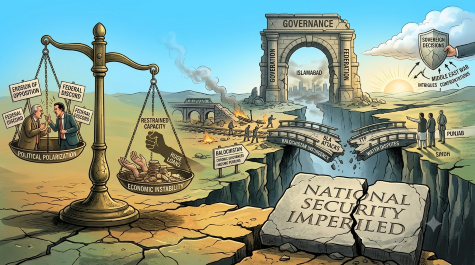
The Long-Term Consequences of Political Polarization and Economic Instability on Governance
Ambassador M. Alam Brohi
The Balochistan insurgency has intensified with a widening outreach, with its ferocious militia – the Balochistan Liberation Army (BLA) – attacking targets from the extreme western town of Noshki to Winder at a small distance from Karachi. More vicious than BLA have been the religious terrorists of Tehrik e Taliban Pakistan (TTP) and IS or the Islamic State. They wreaked havoc in the outskirts of Quetta recently attacking the resort valley of Hanna Orak and the police outpost in the prohibited area of Mangi dam killing over 40 police personnel and citizens. Khaiber Pakhtunkhwa KPK faces serious security challenges in its regions adjacent to the previous Federally Administered Tribal Agencies, posed by the TTP.
The federal harmony has been seriously overshadowed by the growing controversies among the provinces of Punjab, Sindh and Balochistan over irrigation waters caused by the repeated violation of the water accords of 1991 by the upper riparian Punjab, building controversial canals and water channels, and exacerbated by the indecision of the Council of Common Interests for intervention in the mattes falling within its purview, though it has to meet at least once in ninety days, to review the complaints of the federal provinces.
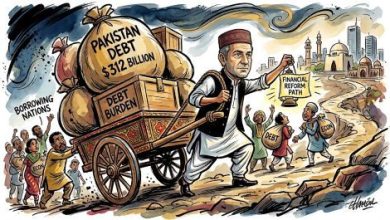
The continuing ailment of the economy, notwithstanding huge internal and external loans taken during the past four years, and the stubbornly tenacious political polarization with the systematic erosion of the opposition’s role, has greatly restrained our capacity for sovereign decisions in internal and external matters confronting us in the fast expanding Middle East War. The Middle Eastern situation, chronically underlined by unending intrigues, rivalries, competition and confrontations, dictates us to follow a cautious approach without taking sides. Diplomacy is the art of conveying one’s views in the most inoffensive language.
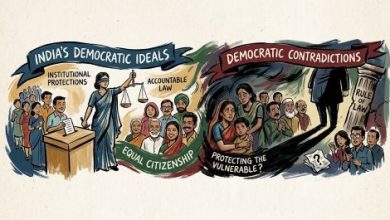
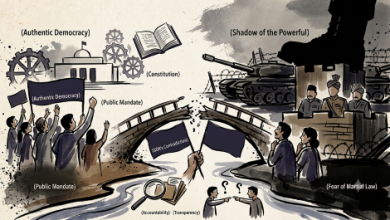
This paints a gloomy picture of the national security. The decades-long wrong policy decisions, and the violation of the constitutional scheme of governance disturbing the balance between state organs; degrading the independence of national institutions to function within their parameters; eroding rule of law, and equality before law, have plunged the country into vicious cycle of crises in national politics, economy, federal structure, and intra-province symmetry. Of all this, the chronic rebellious uprisings in Balochistan have been the most challenging problem in the nation building process.
The national security has been imperiled by a surge in Baloch insurgency with increased signs of close cooperation between the Baloch Liberation Army (BLA) and Tehreek e Taliban (TTP). The BLA has carried out 100 attacks on highways, railway tracks, trains, and police stations in the first half of the current year. However, the Tehrik e Taliban has launched over 300 attacks in the Pashtun populated districts of Balochistan and the KPK regions bordering with the former federally administered agencies. The government blames the current surge in terrorism on our archrival in the east which, in active collaboration with the Taliban regime in Afghanistan, has been fuelling rebellion in these two vulnerable provinces of the country.
The BLA has made the main highways connecting the province with Sindh and Punjab highly risky for travel. It has been selectively targeted residents, workers, and visitors from other provinces or foreigners working on foreign funded projects in the province. Recently, the residence of pro-establishment politician and tribal leader, Shafiq Ahmed Mengal was attacked in the Wadh town. The attack could have spiraled into a tribal feud and civil war worsening the situation. Shafiq Mengal is the son of former Interim Chief Minister, and Ambassador Muhammad Nasir Mengal and lives at a distance from the residential quarters of Sardar Akhtar Mengal.
Dr. Abdul Malik Baloch, President of the National Party, in a recent press statement in Islamabad, disclosed that as the Chief Minister of Balochistan (June 2013- December 2015), he met the senior rebel leaders. They agreed over 70 percent of the demands of the estranged Baloch, which could have been conveniently met by the federal and provincial administrations. However, soon after this initiative, the Pakistan Muslim League (Nawaz) switched its support over to Sanaullah Zehri who replaced Dr. Abdul Malik Baloch as the Chief Minister of Balochistan.
Sardar Akhtar Mengal has been saying this in no ambiguous terms that there could only be political solution to Balochistan conundrum. Disillusioned by the apathy of our national leadership towards Balochistan, he resigned his parliamentary seat, and has reportedly returned the emoluments paid to him as salary and allowances. This is not good for the health of the federation.
The Baloch have repeatedly displayed that they could live within the Federal structure of Pakistan. They recognized the 156 Constitution and accepted to be part of the mainstream politics. However, the voice of Baloch was silenced from 1958 to 1969 by the summary execution of the seven sons and nephews of Nawab Nauroz Khan in the early 1960s. He himself died in Sukkur Jail as a heart broken man. Baloch took part in the national elections in 1970, under the banner of the National Awami Party (NAP), won the elections in Balochistan. As a result of an agreement between NAP and PPP, they formed the Balochistan government.
The senior Bhutto dismissed the provincial administration of Sardar Attaullah Mengal in February 1973, arrested all the senior Baloch and Pakhtun leaders and imprisoned them in Hyderabad for trial on charges of treason by a special tribunal. They were in Jail undergoing trial that Asadullah Mengal, elder son of Sardar Attaullah Mengal fell victim to forced disappearance, and whose mortal remains are so far untraceable. General Zia disbanded the tribunal and released them after overthrowing Bhutto. This Baloch ordeal has since continued unabated.
What have chronically been the grievances of the Baloch, is a question that needs to be understood in historic perspective: They have stubbornly been unwilling to compromise on their political and economic autonomy within the Federation. They want their land to be treated as an equal constituent of the federation of Pakistan with political, economic and cultural rights as provided in the 1973 Constitution. Their hard and constant struggle to secure constitutional ownership over the natural resources, mines and minerals extracted from their land, has always ended in clashes and bitterness.
The Baloch grievance over their shrinking share in the federal services including those of autonomous bodies, corporations, public sector enterprises, armed forces of Pakistan, and its industrial units and educational institutions in accordance with the Constitutional clauses of 38 (g) and 39, has also been historically constant and ferocious. This, in my humble view, is historically backed by facts and figures. The share of Baloch in the lucrative jobs of corporations including Sui Southern and Sui Northern Corporations is negligible.
Read: The Deadly Cost Of So-called ‘Honor’
_______________________
 Based in Karachi, the author is a former member of the Foreign Service of Pakistan and has served as Ambassador for seven years
First published in The Friday Times Lahore