Digital transformation of BISP can improve payment systems, monitoring, and transparency. However, technology alone cannot address challenges related to literacy, connectivity, device availability, and beneficiary awareness. Future digital reforms should maintain a balance between technology and accessibility.
By Nuzair Ahmed Jamro
Ensuring Digital Services Reach Every Beneficiary
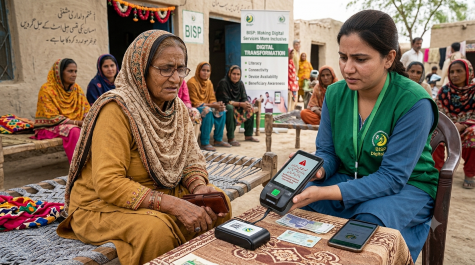
In a rural village of Sindh, an elderly woman visits a payment center to receive her quarterly financial assistance under the Benazir Income Support Program (BISP). She carries her identity card but has limited understanding of mobile applications, digital wallets, SMS notifications, and banking procedures. To complete the process, she may depend on a family member, shopkeeper, or local intermediary. For many vulnerable women, digital systems are not automatically easier to use. They require awareness, accessibility, and support mechanisms.
Digital transformation can improve public service delivery by strengthening transparency, reducing delays, and improving monitoring. However, its effectiveness depends on whether citizens, particularly those with limited literacy, poor connectivity, or restricted access to technology, can use these services without facing additional barriers. For BISP, the success of digital transformation should not only be measured by the number of digital accounts created or electronic payments processed. It should also be assessed by whether beneficiaries can receive assistance safely, independently, and through procedures that are understandable and accessible.
The central challenge is to develop digital systems that address the practical realities of beneficiaries, especially elderly women, persons with limited literacy, and communities in remote areas.
BISP’s Digital Transformation Journey
The Benazir Income Support Program, as claimed by the organization, has gradually introduced digital mechanisms for beneficiary identification, payment management, and monitoring. Initiatives such as the National Socio-Economic Registry (NSER), biometric verification, digital databases, electronic payment channels, and monitoring systems have changed the process of social assistance delivery. The transition toward digital wallets, bank accounts, and technology-based payment systems aims to address issues such as payment delays, inaccurate records, unauthorized deductions, and limited monitoring capacity.
The objectives of these reforms include:
- Ensuring financial assistance reaches eligible beneficiaries.
- Reducing payment irregularities and unauthorized deductions.
- Increasing access to formal financial services.
- Improving planning through reliable data.
However, digital systems also create new requirements. Beneficiaries need access to devices, connectivity, information, and assistance to use these services effectively. Technology can support welfare delivery, but it needs to be combined with accessible procedures and beneficiary support.
Potential Benefits and Implementation Challenges
- Transparency and Accountability
Digital records can improve tracking of beneficiary information and payment transactions. Electronic systems create a record of activities that can support monitoring and reduce opportunities for irregularities. Biometric verification can help confirm beneficiary identity, but technical failures may prevent some eligible individuals from completing the process.
Suggested Measures:
- Strengthen complaint and grievance systems.
- Provide alternative verification options for genuine beneficiaries facing biometric problems.
- Regularly review technical issues affecting payment access.
Expected Benefits:
- Fewer payment interruptions.
- Improved monitoring.
- Better access for beneficiaries facing technical difficulties.
- Payment Accessibility
Traditional payment methods often require beneficiaries to travel long distances, wait at payment points, and seek assistance from others. Digital payment systems can reduce travel requirements and improve payment management. However, beneficiaries need guidance to use digital financial services safely.
Suggested Measures:
- Combine digital payments with local support services.
- Provide assistance in areas with limited banking access and digital awareness.
- Ensure multiple channels remain available for beneficiaries.
Expected Benefits:
- Reduced travel burden.
- Easier access to financial assistance.
- Lower dependence on informal intermediaries.
- Women’s Financial Inclusion
Digital wallets and bank accounts can provide women with direct access to financial services. However, account ownership alone does not ensure that beneficiaries can independently manage their funds. Many women require information about account usage, security practices, and fraud prevention.
Suggested Measures:
BISP can introduce basic financial awareness sessions covering:
- Safe use of digital payments.
- Protection of personal information.
- Fraud prevention.
- Complaint procedures.
Expected Benefits:
- Greater confidence in using financial services.
- Reduced risk of financial exploitation.
- Improved ability to manage assistance independently.
- Use of Data for Planning
Digital systems can provide information about payments, complaints, beneficiary coverage, and service delivery gaps. However, effective use of data requires accurate records, privacy protection, and trained staff.
Suggested Measures:
BISP can regularly analyze beneficiary feedback and service challenges along with transaction data.
Expected Benefits:
- Better identification of implementation problems.
- More informed policy decisions.
- Improved service planning.
The Digital Divide: A Major Challenge
Limited Digital Literacy
Many beneficiaries have limited education and may find mobile applications, SMS alerts, and digital procedures difficult to understand. A digital system that does not consider literacy levels may create barriers for vulnerable groups.
Suggested Measures:
- Develop simple user interfaces.
- Provide services in local languages.
- Introduce voice-based information systems.
- Establish community support mechanisms.
Expected Benefits:
- Easier access to services.
- Reduced dependence on others.
- Better understanding of procedures.
Limited Access to Smartphones and Internet
Many rural households do not own smartphones or have unreliable internet access. In some cases, several family members share one device.
Suggested Measures:
BISP should maintain different service channels, including:
- Helplines.
- Facilitation centers.
- Assisted digital services.
- Community-based support.
Expected Benefits:
Digital services can reach a wider group of beneficiaries without excluding those with limited resources.
Digital Financial Awareness
Using ATMs, mobile wallets, and online payment systems requires basic financial knowledge. Without proper guidance, beneficiaries may continue relying on agents or relatives, creating risks of misinformation and unauthorized charges.
Suggested Measures:
Community-level awareness programs can be conducted through local governments, social organizations, and trained facilitators.
Training may include:
- Safe digital payment practices.
- Protection of identity information.
- Recognizing fraudulent messages.
- Understanding payment procedures.
Expected Benefits:
Beneficiaries can develop greater confidence in managing their financial assistance.
Biometric Verification Challenges
Biometric verification supports beneficiary identification, but some elderly women, farmers, and laborers may face difficulties due to unclear fingerprints caused by age, physical work, or environmental conditions.
Repeated verification failure can delay payments.
Suggested Measures:
BISP may explore additional verification options, including:
- Assisted verification at authorized centers.
- Alternative identity confirmation procedures.
- Secure digital authentication methods.
Expected Benefits:
Eligible beneficiaries can continue receiving assistance despite technical limitations.
International Experiences and Lessons
Several countries have introduced digital social protection systems while facing similar challenges related to literacy, connectivity, and beneficiary awareness.
India: Direct Benefit Transfer
India’s Direct Benefit Transfer system uses digital identity, bank accounts, and electronic payments for government assistance.
The experience shows that digital payments require supporting mechanisms, including local assistance for citizens unfamiliar with digital services.
Lesson for Pakistan:
Digital payment systems should be supported by community-level guidance.
Ghana: LEAP Program
Ghana introduced electronic payments under its social assistance program to improve payment management. Beneficiary awareness and community engagement remained important for implementation.
Lesson for Pakistan:
Digital systems should include education and guidance for users.
South Africa: Social Assistance System
South Africa maintained service access points for elderly persons, persons with disabilities, and individuals requiring assistance.
Lesson for Pakistan:
Alternative support channels are necessary for beneficiaries who cannot independently use digital services.
Philippines: Conditional Cash Transfer Program
The Philippines combined digital systems with beneficiary orientation and local government support.
Lesson for Pakistan:
Digital welfare systems require both technology and community engagement.
Somalia: Baxnaano Program
Somalia used digital systems for registration and payment delivery but also focused on awareness and local support due to infrastructure and literacy challenges.
Lesson for Pakistan:
Citizens do not need advanced technical skills; systems should be designed to remain simple for users.
Brazil: Bolas Familiar Program
Brazil used digital systems for beneficiary records and monitoring while maintaining institutional mechanisms for identifying and supporting eligible families.
Lesson for Pakistan:
Technology should support social protection objectives rather than become the primary focus.
Recommendations for More Inclusive Digital Services
- Community Digital Facilitation Centers
BISP may establish facilitation points at Union Council and Tehsil levels to assist beneficiaries with:
- Digital wallet activation.
- Payment verification.
- Complaint registration.
- Banking guidance.
- Updating information.
Possible Benefits:
- Reduced dependence on informal agents.
- Faster problem resolution.
- Improved access for vulnerable groups.
- Voice-Based Information Services
Many beneficiaries may not be able to read SMS messages or operate applications.
A voice-based system can provide information about:
- Payment status.
- Registration.
- Eligibility.
- Complaints.
Services should be available in regional languages.
Possible Benefits:
- Better communication with low-literacy beneficiaries.
- Easier access without smartphones.
- Digital Awareness Programs
Short training sessions can help beneficiaries understand:
- Digital payments.
- Fraud prevention.
- Account security.
- Complaint mechanisms.
Possible Benefits:
- Increased confidence.
- Reduced financial risks.
- Greater independence.
- Mobile Service Units
Mobile BISP units can support remote communities through:
- Registration assistance.
- Verification support.
- Complaint handling.
- Awareness sessions.
Possible Benefits:
- Reduced travel requirements.
- Improved access in remote areas.
- Artificial Intelligence as a Support Tool
AI can assist with:
- Answering common questions.
- Identifying unusual transaction patterns.
- Supporting multilingual communication.
- Analyzing complaints.
However, human oversight should remain necessary, particularly for decisions affecting vulnerable citizens.
Possible Benefits:
- Faster responses.
- Improved monitoring.
- Better identification of service issues.
- Alternative Verification Mechanisms
Additional authentication options may help beneficiaries facing biometric problems.
Possible options include:
- Assisted verification.
- Secure OTP-based methods.
- Additional identity confirmation procedures.
Possible Benefits:
- Reduced payment delays.
- Improved accessibility.
Measuring Success beyond Digital Numbers
Digital transformation should not only be evaluated through:
- Number of digital wallets created.
- Number of applications launched.
- Number of electronic transactions.
Other important indicators include:
- Can beneficiaries receive payments without unnecessary assistance?
- Have complaints and delays reduced?
- Are elderly and low-literacy beneficiaries able to access services?
- Has technology reduced practical difficulties?
The effectiveness of digital systems depends on whether they simplify access to government services.
Conclusion: Digital Services with Inclusion at the Center
Digital transformation of BISP can improve payment systems, monitoring, and transparency. However, technology alone cannot address challenges related to literacy, connectivity, device availability, and beneficiary awareness. Future digital reforms should maintain a balance between technology and accessibility.
Digital systems should improve efficiency, while service delivery should remain understandable and available to all beneficiaries. A woman living in a remote village should not face additional barriers because she cannot operate a smartphone or understand digital procedures. Government systems should provide simple options that allow her to receive assistance securely and with dignity.
The purpose of digital transformation is not only to introduce new technologies but to improve the connection between citizens and public institutions. When digital systems are supported by awareness, human assistance, and inclusive design, they can become more accessible and responsive to the needs of vulnerable communities.
Read: Climate Change – A Financial Problem
__________________
 Hailing from Shikarpur, Sindh, Nuzair Ahmed Jamro is a civil servant and MS research fellow in Public Administration. He writes on governance, public policy, and digital transformation. Email: najamro@gmail.com.