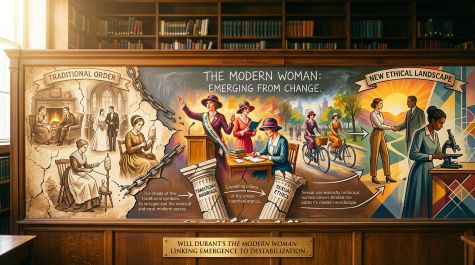
Durant links the emergence of the modern woman directly to the broader destabilization of traditional marriage and sexual ethics.
- Freed from financial dependence on individual men through independent wages, women gained the leverage to demand mutual respect, companionship, and emotional compatibility rather than mere economic security
Noor Muhammed Marri Advocate | Islamabad
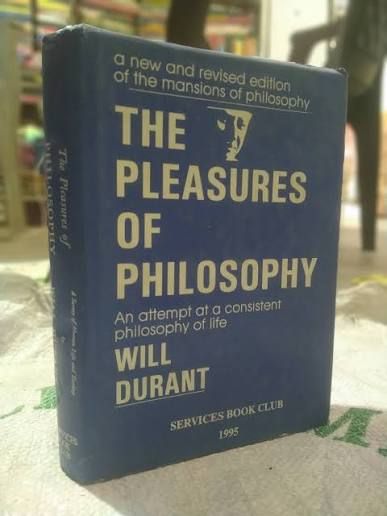
Will Durant’s “The Modern Woman” (Chapter 9 of Part Four in The Pleasures of Philosophy) examines the profound social, economic, and psychological transformation of women during the early 20th century. Writing with a blend of historical perspective and sociological observation, Durant analyzes how the Industrial Revolution dismantled traditional domestic life and forced a complete re-evaluation of female identity, rights, education, and social roles.
 Durant begins by tracing the root cause of the feminist movement: the transition from an agrarian economy to an industrial urban society. In the traditional agricultural household, the home was a self-sufficient economic unit. Women were central producers—spinning, weaving, cooking, preserving, and managing a large family enterprise. The shift to factories, offices, and city apartments stripped the home of its productive economic functions. Machinery and mass production transferred manufacturing outside the home, while smaller urban living spaces rendered large families economically burdensome rather than advantageous. As men left home daily for wage labor, women—particularly middle-class women—found themselves structurally displaced. The traditional justification for women’s subservience and confinement to domesticity evaporated because the domestic sphere itself had shrunk, driving women out of isolation and into the public sphere of education, commerce, and professional work.
A major pillar of the chapter focuses on the rise of educational and intellectual equality. Durant highlights how doors to high schools, universities, and professional training grounds—historically bolted shut against women—were forced open. As women tasted intellectual freedom, they began questioning ancient dogmas that restricted their capacities to biological reproduction alone. Durant points out that intellectual awakening inevitably brings psychological friction. Educated modern women could no longer be content with treating marriage as an exclusive career or accepting intellectual tutelage from men. However, Durant also notes the transitional pain of this epoch: education often alienated women from traditional instincts, causing a temporary conflict between the desire for independent intellectual and economic self-sufficiency and the deep-seated biological urges of maternity and romance.
Durant links the emergence of the modern woman directly to the broader destabilization of traditional marriage and sexual ethics. Freed from financial dependence on individual men through independent wages, women gained the leverage to demand mutual respect, companionship, and emotional compatibility rather than mere economic security. With birth control beginning to dissociate sex from mandatory reproduction, the modern woman reclaimed control over her body, shaking patriarchal institutions. Marriage transitioned from an indissoluble sacrament enforced by social ostracism and economic necessity into a voluntary contract based on mutual affection. Yet, Durant views this transition with cautious sobriety, recognizing that loosening old bonds inevitably created chaos, confusion, and a spike in marital separations as society fumbled toward a new equilibrium.
One of Durant’s most critical explorations centers on the psychological and biological dilemma facing the modern professional woman: the clash between career ambitions and maternal instincts. Durant observes that early feminism sometimes erred by encouraging women to mimic men—treating male habits, professional ruthlessness, and corporate lifestyles as the ultimate standard of liberation. He cautions that true emancipation should not mean abandoning female biological realities, but rather finding a social arrangement that honors them. Furthermore, nature peaks a woman’s reproductive vitality during her early twenties—precisely the years modern society demands she spend acquiring an education, establishing a foothold in a career, and achieving economic independence. Delaying children until a career is secure often conflicts with biological limits, leading to lower birth rates among the educated classes, a phenomenon Durant views with sociological concern.
Reflecting critically upon this historical trajectory, it becomes evident that despite the structural evolution toward emancipation, a tragic irony defines the modern condition. Far from achieving unmitigated liberation, the modern woman has been stripped of many of her foundational powers and intrinsic respects. In the pre-industrial agrarian era, the household was a joint enterprise where a woman reigned as the head of an economic unit. The Industrial Revolution reduced her from an autonomous co-manager of production to a mere wage-earning laborer. In this new transactional reality, she demands meager wages rather than the profound social respect she commanded when her labor was visibly and directly tied to family survival. Even in industrial Europe, such as in early 20th-century Germany, corporate systems established rigid age allowances and restrictions for reproduction, firing women who stepped outside strict industrial timelines. The machinery of industrial capitalism snatched away her traditional dignity, treating her biology as a liability. Consequently, stripped of the protective, cooperative safety net of the homestead, the modern woman often finds herself fundamentally lonely in an atomized world.
Durant concludes the chapter by projecting how society might assimilate these seismic shifts. He argues that civilization cannot survive by suppressing either women’s intellectual capacities or their biological roles. A truly modern civilization must redesign its economic and domestic infrastructure to support both, requiring flexible professional tracks, nurseries, cooperative housekeeping, and a cultural shift where men share domestic responsibilities equitably. Durant champions a partnership model of the sexes: abandoning the old Victorian master-and-servant dynamic in favor of intellectual companionship, where the modern woman stands beside man as an independent, voting, thinking equal, bringing her unique perspective to the governance and moral elevation of society.
Read: The Hunger is the Best Cook
______________
 Noor Muhammad, Advocate and Mediator, Islamabad