A Dialogue on Poetry, Translation, and Culture with Italian Poet Anna Ferriero
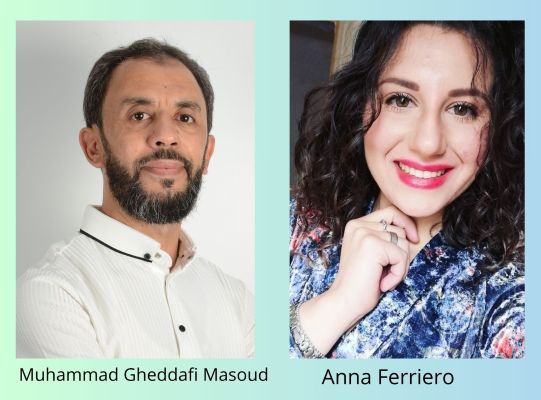
Interviewed by: Mohamed Al-Gaddafi Masoud | Libya
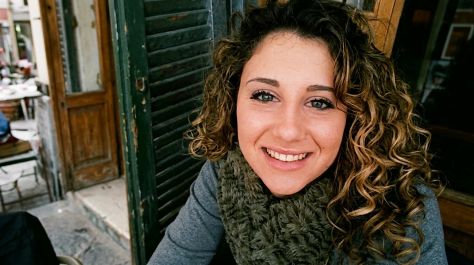
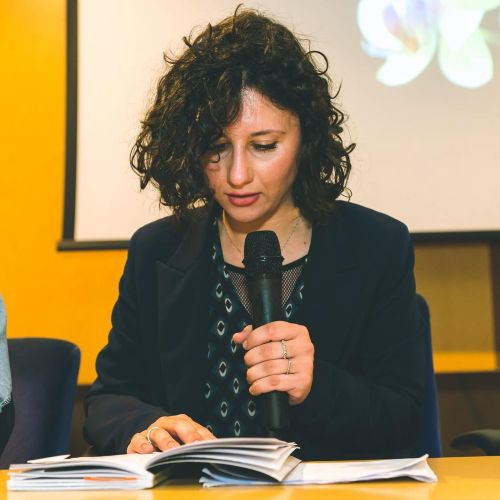
[Anna Ferriero, born on 25 April 1994 in Pollena Trocchia, Naples, is a poet, writer and literary translator (having completed the course of literary translation for the publishing sector at the Cervantes Institute of Naples). She is a member of the World National Writers Union of Kazakhstan, and a member of the Bogdani International Writers Association. She has published two poetry books and two mixed genre works. She is winner of several international awards. In this conversation, we explore her beginnings, her experiences in writing poetry and engaging with other cultures, and the way her cultural and literary identity took shape.]
 How did you discover the world of poetry?
Actually, it was largely by chance. I’ve always loved writing; I wrote from when I was a child. I enjoyed writing about what happened to me during the day in my “secret diary”. Then, little by little, I started writing whole pages of stories and tales, and about how much I loved Greek mythology and English-language literature. I think it was reading Shakespeare, Emily Brontë and Jane Austen later on that opened up the world of poetry to me.
What are the sources that shaped you poetically and culturally?
Perhaps I started to answer this question earlier, but I’d like to go into more detail. As I’ve already said, Greek mythology – rediscovering it even more deeply through the figure of Garcilaso – and in particular the myth of Hades and Persephone (the changing of the seasons is wonderful), the myth of Daphne and Apollo, the myth of Hero and Leander. Then I discovered the wonderful writing of Emily Brontë, Dickens with his A Christmas Carol – in short, English-language literature in general.
So, English literature is the most influential for you—how far have you progressed in your reading and exploration of it?
 My mum passed on her passion for the English-speaking world to me. The first film I ever saw was Wuthering Heights by Emily Brontë, and I consider it a bit like my ‘favorite film’; from then on, I became fascinated by the Gothic world, by ancient and abandoned cathedrals, and by the mystery that surrounds this setting. I then discovered the work of another writer, Mary Shelley, through her novel Frankenstein. If I had to describe the beauty and depth of English-language literature in just two words, I would point to these two novels, which, for me, represent the most fascinating cornerstones of world literature as a whole.
I gather from this that English literature is the most influential for you; how far have you delved into it?
My mum passed on her passion for the English-speaking world to me. The first film I ever saw was Wuthering Heights by Emily Brontë, and I consider it a bit like my ‘favorite film’; from then on, I became fascinated by the Gothic world, by ancient and abandoned cathedrals, and by the mystery that surrounds this setting. I then discovered the work of another writer, Mary Shelley, through her novel Frankenstein. If I had to describe the beauty and depth of English-language literature in just two words, I would point to these two novels, which, for me, represent the most fascinating cornerstones of world literature as a whole.
Where does poetic writing begin for you—I mean, the birth of a new poem? And do you work extensively on the text after writing it, before publishing it?
A poem comes into being when, in reality, it is already within the poet’s soul. Michelangelo used to say that the sculpture was already contained within the marble; he merely had to carve it to bring it to light. It works the same way with poetry. When a poem comes into being, it simply does so, without too many questions, doubts or fears, and without over-analyzing it. There are moments when nothing comes to life; the more you concentrate, the less anything stirs. And the wonder of poetry lies precisely in this sensation. A very beautiful quote by Gustavo Béquer goes: “The characteristic that distinguishes the poet from the common man is not the ability to feel emotions but the ability to remember those emotions”.
Do criticism, the interest of critics, and their opinions regarding your work matter to you?
At first, I took it much more to heart, and I’d even get upset by rejection or negative criticism, but then, little by little, I realized that a poem doesn’t necessarily have to touch people’s hearts immediately or in an almost forced way; rather, with time and the right touch of sensitivity, that meaning, that essence, will eventually come through.
Whose works have you read in Arabic literature—whether poetry, short stories, or novels?
 I was introduced to Arabic poetry when I began reading Nazım Hikmet, a Turkish poet whom I loved from the very start, with his work *The Most Beautiful of Seas*; It was only later that I ventured into contemporary Arabic poetry with Nizar Qabbani, who devotes much of his poetry to denouncing injustices against women through a language that is fresh yet at the same time ancient (rooted in his origins), resonating with young people across almost the entire Middle East. A marvelous poem that has found its way into my heart is ‘When I Love’ from the collection *The Book of Love*, and the verse I often read goes:
When I love
I become liquid light
Invisible to the eye
And the poems in my notebooks
Become fields of mimosas and poppies.
When I love
I become time beyond all time.
When I love a woman,
All the trees
Run barefoot towards me.
Which figures—from Italy and the wider world—influenced your literary and intellectual development? And were they present, either directly or indirectly, in your work?
 First and foremost, of course, is the poet of all poets, Giacomo Leopardi, who spent the last month of his life right here in my town, Torre del Greco. It was here that he composed poems such as ‘La Ginestra’ and ‘Alla Luna’; I have also dedicated a poem to him. After Leopardi, my points of reference are Foscolo, D’Annunzio, Eugenio Montale with his beautiful poem ‘Ossi di Seppia’, and Italo Svevo with his novel ‘La Coscienza di Zeno’, a dialogue between Svevo and the psychiatrist Sigmund Freud, who, after a long journey towards recovery, comes to the conclusion that evil does not exist; it is something created by man. Therefore, one can only hope for a universal catastrophe that will destroy everything, so that everything may begin anew. This final chapter is very powerful, yet deeply meaningful and gives one much food for thought.
What about your experience with publishing—publishing your first text, publishing your first book?
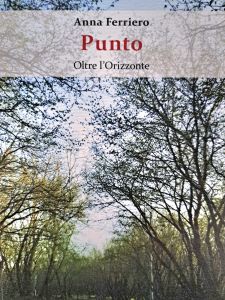
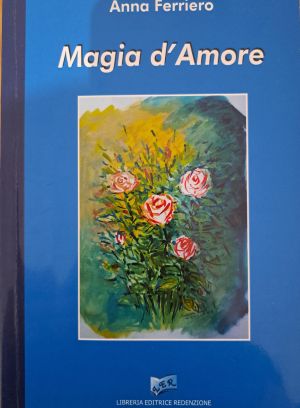
Ever since I was a little girl, I’ve always dreamt of publishing a work of my own, but I never would have thought it would be poetry. Poetry came later, without me even seeking it out. I began writing thoughts inspired by the changing seasons, by spring (the season I was born in), by the sound of the waves and the rustling of leaves in autumn. When my first collection of poems (Magia d’Amore) came out, it was an immense joy – indescribable. With my second collection (Punto – Oltre l’Orizzonte), it was another wonderful joy; obviously, the poetry here is more mature and fluid, telling a story with fewer words. There you have it. When I first began writing and then publishing my first collections, I knew nothing about this world; later, as I continued my studies, I came to appreciate the beauty and charm that lie behind the creation of a literary work.
 To what extent do awards matter to you in your poetic career?
Awards are a source of satisfaction and allow me to make myself known to the public, but they have never been my priority. When you start writing, you must never think, ‘I’ll be well-known, I’ll be famous, I’ll win first prize’, but you must always keep this thought in mind: ‘I want to share my inner world so that, through reading, people will stop making distinctions, waging wars and feeling envy’ and perhaps, for me, translating poetry is more important than winning prizes, because translation reaches deeper into people’s souls and because poetry is like love: it is written in many languages, but the meaning is always the same.
Read: Poetry as Existential Resistance to Aesthetic Numbing
______________
Mohammed Al Gaddafi Masoud was born in 1978 in Gharyan, Libya, holds a theater diploma from Tripoli’s Jamal Al-Din Al-Miladi Institute (2000) and is the author of several collections, including lyrical poetry (We Woke Up to Joy, 2006) and journalistic dialogues (My Dialogues with Them, 2008). Widely published across the Arab world, his work has been translated into numerous languages—English, Chinese, Spanish, Polish, French, Italian, and Albanian—and appeared in international print and online journals from Spain to Argentina. In 2024, he was selected as one of 72 global poets for an Italian-language anthology curated by Angela Costa, reflecting his broadening transnational literary presence.