Carbon Credits: From Basic Concept to Business Opportunity
By Ramesh Raja
Understanding Our Common Home
The Earth is our common home. It gives us clean air, fresh water, forests, fertile land, wildlife, and a stable climate. For thousands of years, nature maintained a delicate balance with human life. But everything began to change after the Industrial Revolution in the eighteenth and nineteenth centuries, when factories, power plants, and vehicles started burning huge quantities of coal, oil, and natural gas. This industrial growth improved living standards and built modern economies but it also came at a heavy cost to the environment.
To understand carbon credits, we first need to understand the problem they were designed to solve. So let’s begin at the very beginning.
 Environmental Damage
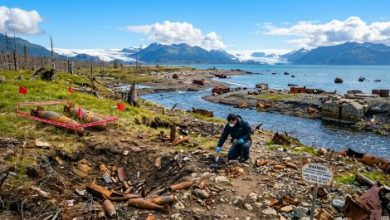
Environmental damage simply means any harm caused to nature by human activity. It takes many forms like air pollution from factories, vehicles, and power plants; water pollution from industrial waste, sewage, and chemicals; deforestation and land degradation caused by mining, construction, and waste disposal; loss of biodiversity as natural habitats are destroyed; noise pollution from industries, airports, and highways; and plastic pollution choking our rivers, seas, and oceans. Among all these problems, one has grown into the single greatest global challenge of our time; the climate change, driven largely by greenhouse gases such as carbon dioxide (CO₂), methane (CH₄) and nitrous oxide (N₂O).
Climate change affects every country on Earth, rich or poor. Its effects show up as rising global temperatures, more frequent and intense heatwaves, heavier rainfall and flooding, droughts and water shortages, melting glaciers, and rising sea levels. In turn, these changes damage agriculture and food supply, destroy forests and wildlife, worsen health problems from polluted air and water, and cause enormous economic losses through natural disasters.
A powerful real-world example is the devastating floods that hit Pakistan in 2022. Pakistan contributes less than one percent of global greenhouse gas emissions, yet it suffered some of the worst climate-related destruction in the world. This shows an important truth: the countries that pollute the least often suffer the most.
Who Caused the Damage, and Who Is Fixing It?
Not every country has contributed equally to this problem. Historically, the countries that industrialized earliest; the United States, China, Russia, Germany, the United Kingdom, Japan, and India, released the largest amounts of carbon dioxide over many decades. Today, China emits the largest amount each year, followed by the United States and India. However, if we measure emissions per person rather than as a whole country, some smaller wealthy nations actually have much higher emissions per citizen than many developing countries.
The good news is that many countries have responded with strong environmental policies. Sweden introduced one of the world’s earliest carbon taxes and has cut emissions while still growing its economy. Norway leads the world in electric vehicle adoption and renewable electricity, Denmark generates a large share of its power from wind energy, Germany has invested heavily in renewable energy and cleaner industry, and Costa Rica protects vast forests while producing most of its electricity from renewable sources. The European Union runs one of the world’s largest carbon trading systems, backed by strict environmental laws. And while China remains the biggest annual emitter, it is also the world’s largest investor in solar energy, wind energy, and electric vehicles; proof that a country can be part of the problem and part of the solution at the same time.
Read: What are carbon credits and how can they help fight climate change?
Despite contributing only a tiny share of global emissions, Pakistan has taken meaningful action of its own: the Billion Tree and Ten Billion Tree plantation programs, protection and restoration of mangrove forests in Sindh, expansion of solar and wind energy, promotion of electric vehicles, development of a national carbon market framework, and active participation in international climate agreements. Pakistan is now focusing on two things at once; reducing its own emissions and adapting to a changing climate it did little to cause.
 The Idea That Changed Everything “Polluter Pays”
Now that we understand the problem, let’s see how the world came up with a market-based solution.
In the 1970s, economists proposed a simple but powerful idea: pollution should no longer be free. This became known as the Polluter Pays Principle; those who cause pollution should bear the cost of it.
Later, economists refined this idea further. Instead of forcing every single factory to cut the exact same amount of emissions (which is expensive and inefficient), they suggested something smarter:
Companies that can reduce emissions cheaply should do more of it and be rewarded. Companies that find it difficult or expensive to reduce their own emissions can instead pay for verified emission reductions happening elsewhere.
This single idea became the foundation of the carbon credit system; the concept we’re about to explore in detail.
What Exactly Is a Carbon Credit?
Here is the simplest possible definition: a carbon credit is a digital certificate that represents the reduction or removal of one metric ton of carbon dioxide (CO₂), or an equivalent greenhouse gas, from the atmosphere.
The golden rule to remember: 1 carbon credit = 1 ton of CO₂ removed or avoided.
If a forest project removes 1,000 tons of carbon dioxide from the air, and this is independently verified, that project earns 1,000 carbon credits. These credits can then be sold to companies or governments who want to offset (balance out) part of their own emissions.
Let’s walk through a simple example. Suppose a highway authority plants one million trees. After several years, scientists measure that these trees absorb 25,000 tons of CO₂ every year, and independent auditors verify this figure. The project is then awarded 25,000 carbon credits, and if each credit sells for $20, the project earns $500,000 — money that is reinvested into planting more trees and maintaining the forest. Carbon credits don’t exist as paper certificates; they live electronically in international registries and are transferred digitally whenever they are bought or sold, much like a digital asset.
Companies buy these credits for one of two reasons: either because the law requires it, in regions with mandatory emissions regulations, or voluntarily, to meet their own climate commitments and achieve “carbon neutrality” as part of their business strategy. This second, voluntary demand comes largely from industries that cannot eliminate their emissions right away for technological or economic reasons — airlines, cement factories, steel plants, oil and gas companies, chemical industries, and shipping companies among them.
The Legal History Behind Carbon Credits
Carbon credits didn’t appear overnight; they developed gradually through international cooperation. In 1988, the Intergovernmental Panel on Climate Change (IPCC) was established to study climate change. In 1992, countries adopted the UN Framework Convention on Climate Change (UNFCCC) at the Rio Earth Summit. In 1997, the Kyoto Protocol introduced international carbon trading along with legally binding emission targets, and it formally entered into force in 2005. Then, in 2015, the Paris Agreement was adopted almost worldwide, with Article 6 laying out the rules for international carbon markets.
Almost every country has joined the Paris Agreement, but not every country has mandatory domestic carbon pricing laws. Some nations, like those in the European Union, run advanced carbon markets, while others — including Pakistan — are still building their systems. Interestingly, the United States signed the Kyoto Protocol but never ratified it, meaning it was never legally bound by that particular treaty, though it later rejoined the Paris Agreement after a temporary withdrawal.
Pakistan, for its part, has signed the UNFCCC, ratified the Kyoto Protocol, and ratified the Paris Agreement, and is now actively developing its own domestic carbon market so local projects can earn internationally recognized carbon credits.
Who Makes Sure Carbon Credits Are Real?
This is one of the most important parts of the system. A carbon credit is only issued after independent verification otherwise, the whole system would be meaningless. Trusted certification bodies include Verra (Verified Carbon Standard), Gold Standard, the American Carbon Registry, and the Climate Action Reserve. These organizations review projects, appoint independent auditors, and issue credits through secure electronic registries, ensuring that every credit sold genuinely represents a real reduction in emissions.
In regions with mandatory carbon regulations, failing to comply can be costly. Zoetis Belgium was fined under the EU Emissions Trading System, WuXi Vaccines Ireland was penalized for failing to surrender enough emission allowances, and ExxonMobil’s Scottish facility was hit with a multimillion-pound penalty for incorrect emissions reporting. These cases show that in regulated markets, carbon compliance is a serious legal and financial matter, not just good PR.
On the trading side, organizations such as South Pole, Climate Impact Partners, and Respira International develop and trade credits at scale, while major global companies like Microsoft, Google, Amazon, Shell, and BP purchase substantial volumes of carbon credits as part of their own climate strategies.
 Carbon Credits in Action; Pakistan’s Case Study
Pakistan already hosts one of the most impressive carbon credit projects in the world: the Delta Blue Carbon Project in the Indus Delta, Sindh. It protects and restores hundreds of thousands of hectares of mangrove forests and is expected to generate millions of carbon credits over its lifetime. The first credits were issued in 2022, and since then roughly 3 million carbon credits have been sold, generating around US$40 million in revenue during the project’s initial phase. Other Pakistani projects include renewable energy initiatives such as those by Bestway Cement Limited, fuel-efficient cookstove programs, and various forestry and clean energy developments, with future opportunities in motorway plantations, riverine forest restoration, agriculture, and renewable energy expansion.
On the legal side, the Pakistan Environmental Protection Act, 1997 provides the country’s core framework for environmental protection, while the Ministry of Climate Change and Environmental Coordination leads national policy. Pakistan is currently developing rules for carbon trading under Article 6 of the Paris Agreement, though it does not yet have a nationwide mandatory carbon tax or emissions trading system like the European Union’s.
How Can You Enter the Carbon Credit Business?
Here’s the part that turns this concept from theory into opportunity. Yes; an individual can enter the carbon credit business. But it’s important to understand that carbon credits cannot simply be bought and sold without a qualifying project or a professional role in the market; you need an actual pathway in.
There are several ways to get involved. You could develop a carbon credit project yourself — such as afforestation, mangrove restoration, solar or wind energy, methane capture, clean cookstove programs, regenerative agriculture, or energy efficiency projects which earns certified credits that can be sold internationally. You could work as a carbon consultant, helping organizations measure their emissions, prepare project documentation, obtain certification, and connect with buyers. You could become a carbon broker or trader, facilitating the buying and selling of credits and earning commissions. You could invest in existing carbon projects and receive a share of future revenue from credit sales. Or you could start a carbon advisory and project development company, identifying projects, arranging certification, managing monitoring and verification, and marketing credits internationally.
Whichever path you choose, a carbon business generally follows the same basic roadmap: understand carbon markets and international standards, identify a suitable project, measure the emissions or reductions involved, obtain certification from a recognized body such as Verra or Gold Standard, undergo independent verification, and finally sell the verified credits through brokers or directly to buyers. The investment required depends heavily on the model; consultancy and brokerage need relatively low capital but strong technical expertise, while forestry, renewable energy, and similar projects require significant upfront investment plus ongoing costs for certification, verification, and monitoring.
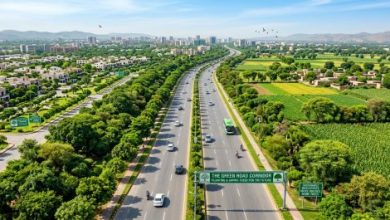
Pakistan itself offers strong potential in mangrove restoration, large-scale afforestation, motorway and highway green corridors, renewable energy, agricultural carbon projects, landfill methane capture, industrial energy efficiency, and waste management. For professionals with a background in infrastructure or public policy, starting a carbon advisory and project-development company can be especially practical, since such a company can help government agencies and private organizations develop certified carbon projects and access international markets without necessarily owning the land or assets involved.
Conclusion
Carbon credits are one of the world’s most important tools for encouraging environmental protection. They place a real, tradable economic value on reducing greenhouse gas emissions, and they reward the people and organizations who protect forests, build renewable energy, or develop other climate-friendly projects.
Carbon credits alone cannot solve climate change but they do something powerful: they turn environmental protection into a viable business model, encouraging investment in sustainability and helping finance projects that benefit both people and the planet.
For Pakistan in particular, carbon credits represent more than just an environmental tool. They are an opportunity to protect vital ecosystems like the Indus Delta’s mangroves, attract international investment, generate meaningful income, and build a greener, more resilient future for generations to come.
Read: Modern Highways and Pakistan’s Path
_______________________
 Engr. Ramesh Raja is a civil engineer and managerial/ planning professional who also contributes as a freelance writer on technical matters. He may be reached at engineer.raja@gmail.com