True idleness isn’t a lack of employment; it is a tragic absence of purpose hidden behind the mask of superficial busyness.
- Beyond its literal definition, the Sindhi word “Wando” reflects a deeper social crisis—the tragedy of a life consumed by empty noise. Discover why true greatness lies in quiet competence rather than the exhausting pursuit of public validation.
AbdullahUsman Morai | Sweden
In Sindhi, the word “Wando” generally means empty, idle, vacant, or unemployed. However, if we reflect on its social meaning, it becomes clear that a “Wando” is not merely someone who lacks a job. A truly “Wando” person is one who lacks purpose in life, whose days are consumed by meaningless engagements, and whose existence contributes neither to personal growth nor to society.
In our society, many people appear extraordinarily busy. From morning until evening, they can be seen sitting with different groups of people in offices, hotels, restaurants, political gatherings, social events, or friendly meetings. Their social media profiles are filled with photographs alongside government officials, businessmen, and famous personalities. To an observer, such a person appears highly influential and socially important.
Yet, if one examines their actual achievements, a different reality emerges. Years may have passed without them learning a new skill, contributing to social welfare, starting a meaningful business, conducting research, mentoring young people, or accomplishing anything that could withstand the test of time.
 There is a huge difference between being unemployed and being idle. Thousands of young people are unable to find jobs, yet they do not waste their time. They learn new languages, develop computer skills, read books, enroll in online courses, volunteer for social causes, or dream of starting small businesses. Such people may be unemployed, but they are certainly not “Wando/a,” because their minds remain engaged in learning, thinking, and building a better future.
On the other hand, some individuals possess jobs, resources, and social connections, yet spend their entire lives chasing appearances, attending endless meetings, and trying to prove their own importance.
Our society has developed a new social illness that may be called “the performance of busyness.” Some people constantly project the image of being indispensable, that everyone is waiting for them, that every issue requires their intervention, and that every important decision depends on their opinion. In reality, this carefully constructed image often exists merely to impress others.
Psychology suggests that many individuals try to conceal their inner emptiness through outward display. When a person cannot earn respect through character, knowledge, or competence, they often seek validation through relationships, photographs, exaggerated stories, and visible social activity. Sometimes such behavior reflects narcissistic tendencies, where admiration, attention, and acceptance become emotional necessities. It would be unfair to label every image-conscious person as psychologically narcissistic, but when someone’s entire identity rests upon public display, the behavior certainly raises important questions.
Social media has significantly accelerated this trend. Today, many people are observed or judged not by what they create but by whom they appear with in photographs. The more pictures someone shares alongside influential personalities, the more influential they try to appear.
Unfortunately, many young people become fascinated by these superficial symbols. They begin to believe that success depends less on education, hard work, and competence and more on attending gatherings, taking photographs with powerful people, and maintaining constant social visibility.
This trend is particularly dangerous because not every young person can afford such a purposeless lifestyle. Many belong to middle-class or struggling families where every hour invested in learning shapes their future. If they too become absorbed in a culture of appearances, they risk sacrificing their education, careers, and dreams.
Another harmful consequence of idleness receives far less attention. Idle individuals often interfere unnecessarily in the lives of others. They spread rumors, engage in gossip, create misunderstandings, make baseless judgments, and spend their spare time disturbing the peace of others. Many family disputes, broken friendships, and community conflicts are fueled by people who have no constructive purpose of their own.
Time is the most valuable asset in human life. Whoever wastes time is, in reality, wasting life itself. In developed societies, people use their free time for education, research, exercise, family, or community service. In contrast, many proudly say, “We spent the whole day sitting with friends.” The real question is whether those lost hours will ever return.
We must teach our children and youth that true greatness lies in silent effort rather than public visibility. Genuine respect belongs to the teacher who transforms lives, the doctor who saves lives, the worker who honestly supports a family, the farmer who cultivates the land, and the young person who contributes to national development through knowledge and skill. Sitting endlessly in gatherings, posing with influential figures, and constantly reminding people of one’s presence do not make anyone truly great.
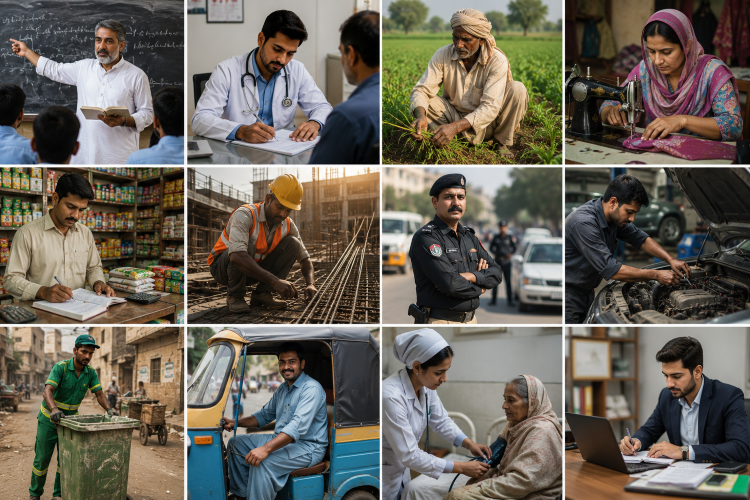 Interestingly, genuinely accomplished people are often so deeply engaged in meaningful work that they feel no need to announce their own greatness. A fruit-bearing tree bends with humility, while empty branches make the loudest noise in the wind. Human beings are much the same. Those who possess knowledge, character, and competence usually speak less and achieve more, whereas those who are empty within often try to fill that void through noise, publicity, and endless self-promotion.
At the end of life, no one will be asked how many banquets they attended, how many ceremonies they joined, or how many famous people they knew or who knew them. The real question will be, what did you do with your time? How did you use your abilities? What difference did your existence make in the lives of others?
Being “Wando” is not a flaw if one uses that time to learn, reflect, and build oneself. However, a life devoid of purpose, consumed by appearances and meaningless activity, is a tragic loss whose cost often becomes apparent only after the finest years of life have slipped away.
Every young person should therefore ask themselves one honest question every day: “Am I truly busy, or am I merely trying to appear busy?”
The sincere answer to that question may well determine the direction of their entire future.
Read: Cities Built Upon Invisible Water
______________________
 Abdullah Soomro, penname Abdullah Usman Morai, hailing from Moro town of Sindh, province of Pakistan, is based in Stockholm Sweden. Currently he is working as Groundwater Engineer in Stockholm Sweden. He did BE (Agriculture) from Sindh Agriculture University Tando Jam and MSc water systems technology from KTH Stockholm Sweden as well as MSc Management from Stockholm University. Beside this he also did masters in journalism and economics from Shah Abdul Latif University Khairpur Mirs, Sindh. He is author of a travelogue book named ‘Musafatoon’. His second book is in process. He writes articles from time to time. A frequent traveler, he also does podcast on YouTube with channel name: VASJE Podcast.