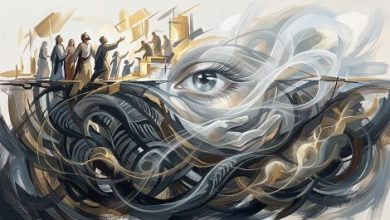
Education liberates human thought, fosters social and moral awareness, and teaches individuals to engage with the world seriously
- We need an education system that not only imparts knowledge but also produces free, dignified, and conscious individuals who can contribute to a better society.
Naveed Sandeelo
Knowledge is a beacon of light for humanity, guiding it out of darkness towards consciousness, thought, humanity, and truth. Education is not just about bookish knowledge; it is about nurturing hidden talents, building relationships with society, upholding moral values, and constructing a complete and serious personality.
As Rousseau said, “Mankind is born free, yet everywhere he is in chains.” This means that humans are naturally born free, but social institutions, including education, often restrict them. Therefore, Rousseau believes that education should be designed in a way that preserves human freedom and promotes its growth.
Knowledge helps humans understand their existence, not just in worldly matters but also in understanding the universe, nature, humanity, and spiritual truths. An uneducated person is trapped in darkness, while a knowledgeable person is enlightened, conscious, and alert.
Immanuel Kant said, “Enlightenment is man’s emergence from his self-incurred immaturity.” This means that enlightenment occurs when humans emerge from their self-imposed immaturity and have the courage to use their own reason.
The primary purpose of education is not just to secure a job or financial gain, although these are important. The true purpose of education is moral development, critical thinking, social responsibility, and a commitment to the well-being of all.
John Dewey, a prominent educational philosopher, said, “Education is not preparation for life; education is life itself.” This means that education is a continuous, experiential, and social process that makes humans true social individuals.
In Sindh, there are two notable examples of educational thinkers: Allama I.I. Qazi and Muhammad Ibrahim Joyo. They worked to awaken the youth intellectually and consciously. Allama Qazi believed that education should not be limited to books but should nurture spiritual, moral, and intellectual growth. He said, “Education gives light to the soul, and if it is used only to nourish the intellect, it produces machines, not humans.”
Ibrahim Joyo saw education as a key to political consciousness, identity, and freedom. He believed that education should be national, conscious, and critical. He wrote, “The purpose of education should be to enable people to recognize themselves, understand their nation, and resist oppression.”
The ultimate outcome of education, if taken seriously, is enlightenment. Enlightenment is not just about acquiring knowledge but using it with consciousness, questioning, and making responsible decisions.
Kant said, “Enlightenment is man’s emergence from his self-imposed immaturity. It is the courage to use one’s own reason.” Allama Qazi and Joyo also saw education as a means to produce enlightened individuals who can bring about positive change.
In conclusion, knowledge and education are essential for human development and freedom. Education liberates human thought, fosters social and moral awareness, and teaches individuals to engage with the world seriously. The thinkers mentioned above emphasize that the true purpose of education is to promote enlightenment, critical thinking, social responsibility, and freedom.
We need an education system that not only imparts knowledge but also produces free, dignified, and conscious individuals who can contribute to a better society.
Read: Pakistan and its Education Crisis
________________
 Naveed Sandeelo is a poet, writer and critic, and Lecturer at Department of Philosophy University of Sindh Jamshoro. He is author of five books: three books are on the subject of philosophy. Doing PhD at the department of Philosophy University of Karachi.