From the Conflict to Resolution
The Path of Dialogue and Peace, Lessons from European Societies


The resolution of disagreements lies not in fighting but in dialogue and discussion
By Abdullah Usman Morai | Sweden
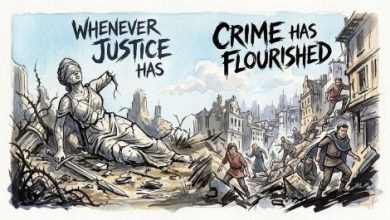
Conflict and disagreement are a common part of human life. Every individual has their own thoughts, ideas, and opinions, which can differ from those of others. Unfortunately, in today’s world, we often see that instead of expressing their ideas constructively, people resort to fighting and physical confrontations. This behavior is not limited to ordinary citizens; it is also observed among political leaders and public figures. But the question remains: is there truly no alternative to resolving conflicts?
The Importance of Dialogue and Discussion
For any society to progress peacefully, dialogue and discussion are essential. Dialogue acts as a bridge connecting the two sides of a disagreement. Through it, people can understand each other’s perspectives and seek solutions to their problems. True discussion occurs when individuals listen patiently to one another and then present their own views with reasoned arguments. Unfortunately, today, patience and understanding seem to be in short supply, particularly among those considered public leaders.
 European Societies: An Example of Peaceful Debate
In developed societies, children are taught from an early age, in daycare centers and schools, to resolve their issues through conversation rather than physical aggression or slapping. The goal of this education is to nurture future citizens who value tolerance and prefer peaceful solutions over violence.
European politics provides a strong example of how conflicts can be resolved constructively. For instance, in Germany’s parliament (Bundestag), political debates are often intense and highly charged, yet all discussions occur within the framework of legal rules and ethical norms. Leaders are never seen physically attacking each other, because they understand that respecting opponents is a fundamental part of a democratic system. Their historical struggles have reinforced the understanding that violence is never a solution.
In European societies, maintaining ethical standards is emphasized. Debate is viewed not as a battlefield but as a forum for problem-solving and making better decisions for the public. This approach extends beyond politics to all spheres of society, as education is fundamentally based on reasoning, discussion, and dialogue.
Once Done, It Cannot Be Undone
As the saying goes, spilled milk cannot be returned, or an arrow once released cannot be taken back. Similarly, if someone, especially a political figure, chooses physical action over dialogue to express their opinion, the consequences cannot be undone. No excuse can justify such behavior, as its effects are immediate and long-lasting. Such actions not only tarnish the individual’s reputation but also increase violence and hatred within society. Striking someone weaker or acting aggressively toward others reflects more of a mental flaw than simple hypocrisy.
Future generations, watching videos, reading memoirs, stories, poetry, and writings, will learn how our politicians behaved toward each other and the public; they will learn our society based on these actions and assess how advanced or mature our social systems truly were.
Conclusion
In the end, the resolution of disagreements lies not in fighting but in dialogue and discussion. True strength is shown by presenting ideas with reasoning and listening patiently to others. Those who resort to fighting reveal their own internal weaknesses. In our political and social lives, we must uphold the principle that every problem can be solved through conversation, not violence. This is the foundation of a progressive and peaceful society.
Read: Honey, Dates, and Sindh’s Economic Future
____________________
 Abdullah Soomro, penname Abdullah Usman Morai, hailing from Moro town of Sindh, province of Pakistan, is based in Stockholm Sweden. Currently he is working as Groundwater Engineer in Stockholm Sweden. He did BE (Agriculture) from Sindh Agriculture University Tando Jam and MSc water systems technology from KTH Stockholm Sweden as well as MSc Management from Stockholm University. Beside this he also did masters in journalism and economics from Shah Abdul Latif University Khairpur Mirs, Sindh. He is author of a travelogue book named ‘Musafatoon’. His second book is in process. He writes articles from time to time. A frequent traveler, he also does podcast on YouTube with channel name: VASJE Podcast.