Visionary Educator, Humble Leader, Lasting Legacy: Remembering Professor Dr. Abdul Qadir Ansari
By: Raphic Burdo
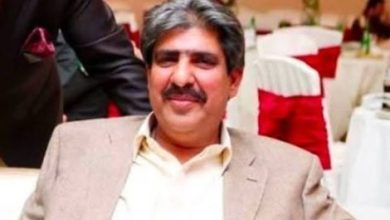
There are lives that pass through history quietly, without spectacle, yet leave behind institutions, ideas, students, and moral examples strong enough to outlive monuments. The life of Professor Dr. Abdul Qadir Ansari belonged to this rare category. His passing on 11 May 2026 closes a distinguished chapter in Pakistan’s academic and scientific landscape, but his intellectual and ethical imprint remains deeply embedded in the minds of those he taught, guided, and inspired.
To write about Dr. Ansari is not merely to chronicle the career of an educationist or administrator. It is to examine the meaning of purposeful living in a society often distracted by noise, status, and immediacy. His life represented an older and nobler ideal: the scholar as nation-builder.
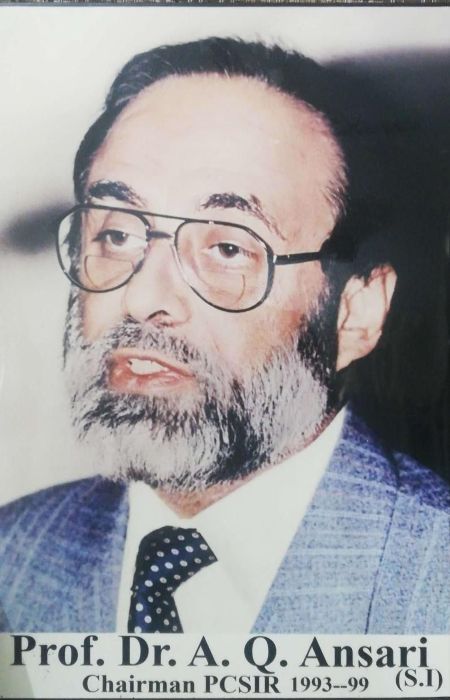 A Scholar Rooted in Service
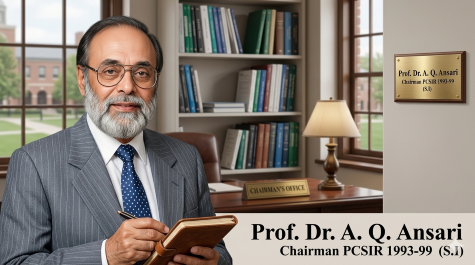
Dr. Ansari emerged from a generation that viewed education not as a commercial enterprise, but as a civilizational responsibility. His career traversed research, teaching, administration, institution-building, and public intellectual engagement. He served as Vice Chancellor of Sindh Agriculture University and remained associated with higher education and scientific development for decades. His contributions earned him the Sitara-i-Imtiaz, one of Pakistan’s highest civilian honors. Yet distinctions alone do not explain his stature.
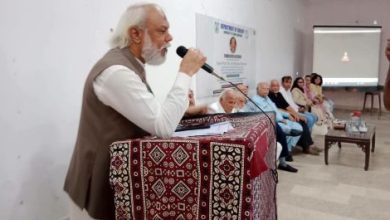
What distinguished Dr. Ansari was his unwavering belief that education must transform society rather than merely credential individuals. In speeches across years, one sees a consistent pattern in his thinking: education linked with dignity, self-reliance, scientific progress, and social uplift. At a university convocation in 2005, he urged graduates not merely to seek employment, but to create enterprises and apply knowledge practically for agricultural and economic development.
Read: Agricultural curricula needs redesign: Ansari
This was not rhetoric. It reflected his larger philosophy that education disconnected from productive life becomes sterile. Long before “entrepreneurship” became fashionable vocabulary, Dr. Ansari was urging students from farming communities to use expertise to improve productivity, sustainability, and livelihoods.
Builder of Institutions, Not Merely Careers
Pakistan’s postcolonial intellectual history contains too few institution-builders. Many talented individuals pursued personal advancement, but fewer invested themselves in building enduring systems. Dr. Ansari belonged to the latter category.
Colleagues remembered him as a figure deeply committed to strengthening educational infrastructure and increasing access to higher learning. In one public recollection, he spoke of travelling across districts with fellow educators to encourage student enrollment and persuade parents about the importance of higher education.
Such details matter because they reveal the texture of a life. Great institutions are rarely built through policies alone; they are built by individuals willing to travel difficult roads, persuade hesitant families, mentor uncertain students, and defend the dignity of scholarship in societies often indifferent to intellectual labor. Dr. Ansari understood that universities are not merely campuses. They are engines of cultural and economic transformation.
The Scientific Mind and the Human Mind
Though deeply rooted in agricultural and scientific education, Dr. Ansari’s worldview was never narrow or mechanical. He represented the classical ideal of the scientist-humanist — someone who understood that scientific advancement without moral and social consciousness remains incomplete. Even in his later years, he remained intellectually alert to technological change. At a recent international conference, he warned students that artificial intelligence and automation would radically reshape the future of work, and urged them to acquire modern technological skills and develop self-employment capacities.
There is something strikingly contemporary about this perspective. Many elderly academics retreat into nostalgia; Dr. Ansari remained attentive to the future. He recognized that knowledge systems were evolving and that young people needed adaptability, technological fluency, and intellectual resilience.Yet he simultaneously warned about environmental degradation, loss of agricultural land, and the consequences of uncontrolled urbanization. In this, one sees the synthesis that defined his thinking: technological optimism tempered by ecological and social responsibility.
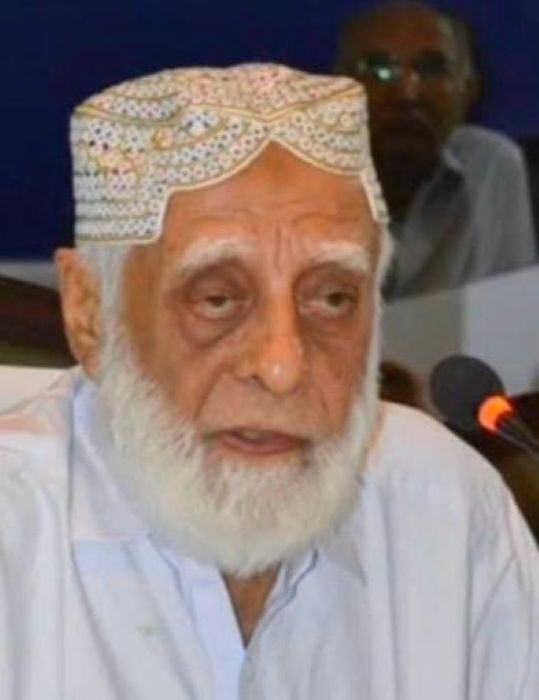 Mentor Across Generations
The true influence of a teacher cannot be quantified through titles, citations, or awards. It survives in students. Across academic references and institutional records, Dr. Ansari appears repeatedly as supervisor, mentor, researcher, and academic guide in projects spanning biomedical engineering, smart technologies, healthcare devices, AI applications, and interdisciplinary scientific innovation.
This continuity across generations is deeply significant. It demonstrates intellectual adaptability. He did not remain confined to one era’s scientific vocabulary. Instead, he continued engaging with emerging disciplines and encouraging applied innovation.
In many developing societies, older intellectual elites become guardians of stagnation. Dr. Ansari appears to have done the opposite: he encouraged young researchers to explore new technologies while remaining socially grounded. That balance may be one of his greatest lessons. For young Pakistanis searching for meaning in an age of distraction, Dr. Ansari’s life offers several enduring lessons.
- Greatness Can Be Quiet
Modern culture glorifies visibility over substance. Dr. Ansari demonstrated that a meaningful life does not require celebrity. One may live with dignity, influence generations, and shape national development without theatrical self-promotion.
- Education Is a Form of Service
He treated knowledge as a public trust. Education, in his worldview, carried moral obligations toward society, especially toward agriculture, research, youth, and national development.
- Remain a Student Forever
Even in advanced age, he remained engaged with AI, emerging technologies, and contemporary scientific challenges. Intellectual life, for him, did not end with degrees or retirement.
- Institutions Matter More Than Individuals
He invested himself in universities, systems, and students. In fragile societies, institutions survive only when individuals subordinate ego to collective advancement.
- Knowledge Must Touch Real Life
His repeated emphasis on practical learning, entrepreneurship, agricultural modernization, and scientific application reflected an understanding that knowledge divorced from society loses vitality.
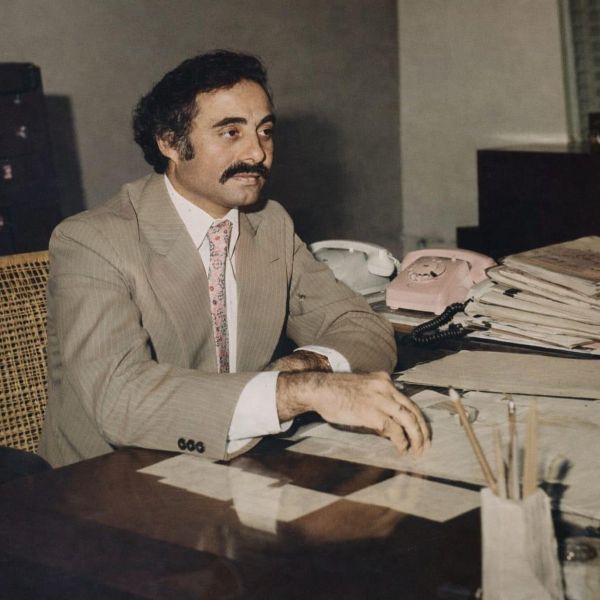 The Moral Weight of a Teacher
Civilizations are ultimately sustained not by wealth alone, but by teachers who preserve intellectual continuity between generations. Politicians may dominate headlines and businessmen may dominate markets, but teachers shape the inner architecture of nations.
Dr. Abdul Qadir Ansari belonged to that quiet fraternity of educators whose influence radiates outward invisibly through thousands of lives. His students became researchers, administrators, professionals, and citizens carrying fragments of his thinking into places he himself may never have seen. Such people do not disappear entirely.They remain alive in institutions they strengthened, in ideas they defended, in conversations they shaped, and in the confidence they gave to uncertain young minds.
In mourning him, Pakistan is also mourning a certain tradition of scholarship: disciplined, ethical, purposeful, and deeply connected to national development. Yet mourning alone is insufficient. The proper tribute to figures like Dr. Ansari is renewal, the renewal of seriousness in education, renewal of respect for scholarship, renewal of the belief that knowledge can still transform society. His life reminds us that purpose is not found in applause. It is found in contribution. And contribution, sustained across decades with integrity and humility, becomes legacy.
Read: Cadet College Petaro: Legacy of Col. Coombes
_______________________
Raphic Burdo is a public policy practitioner with special interest in education, entrepreneurship, innovation and digital transformation. He knew Dr. Ansari through Mr. Zainul Abidin Ansari, the son of the late scholar, who is himself a career civil servant.