Pakistan’s economic future risks remaining bleak, leaving future generations to bear the harsh consequences.
BY Irfan Ali
Pakistan’s population reached an estimated 255 million in 2025, growing at an annual rate of 1.5 percent. This makes the country the fifth most populous nation in the world, but the rapid increase raises difficult economic questions—particularly about unemployment and inflation—which continue to undermine sustainable economic development.
Population growth has become a black hole in the economic fabric of the country. The larger it grows, the harder it becomes for the economy to produce enough goods and services to sustain it. At some point, unchecked population growth risks tearing apart this fabric, pushing the economy towards instability and even default.
The first principle of economics reminds us that while resources are limited, human wants are unlimited. These scarce resources—land, labor, capital, and entrepreneurship—form the backbone of production. Among them, money acts as the lifeline, regulating economic functions. Defined as a generally accepted medium of exchange, money in today’s world is mostly fiat currency. Its value, however, is volatile, and fluctuations often translate into inflation.
Inflation is defined as the sustained rise in the overall price level of goods and services—too much money chasing too few goods. Occasional price spikes do not qualify; inflation occurs only when price rises are persistent over time. Economists usually explain inflation through two lenses: demand-pull inflation, when demand outpaces supply, and cost-push inflation, when supply shrinks relative to demand.
Consider a simple example: if a seller produces five samosas a day and sells them at 10 rupees each to five customers, prices remain stable. But if suddenly more buyers appear or customers have extra money without any increase in production, prices will inevitably rise. That is inflation in action.
The second major issue Pakistan faces is unemployment—when people are actively seeking jobs but cannot find them. Unemployment and inflation often move together, creating a double burden on the economy. Too few jobs leave idle capacity, while too many jobs can overheat the economy, leading to rising prices.
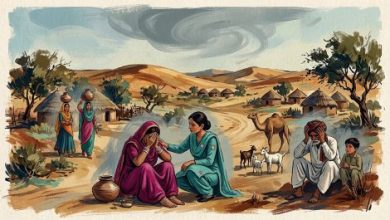
Natural disasters worsen this cycle. The devastating floods of 2022 and 2023 echo earlier calamities of 2010–11. They disrupted agricultural production, pushed food inflation higher, and left basic commodities—such as flour—out of reach for ordinary households.
Balancing these pressures requires sound economic policies, both fiscal and monetary. The central bank must carefully adjust interest rates to manage money supply, while fiscal authorities need to tighten tax and spending policies. Without such discipline, Pakistan’s economic future risks remaining bleak, leaving future generations to bear the harsh consequences.
Read: Sanghar’s Unemployment Woes
___________________
Hailing from Sanghar, Irfan Ali did BS in Economics from University of Sindh, Jamshoro. He is former teacher of Bahria Foundation College Sanghar and OPF high school Sanghar campus.