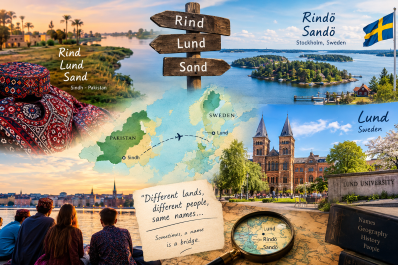
From Lund, Rind and Sand of Sindh to Lund, Rind Ö and Sand Ö of Sweden
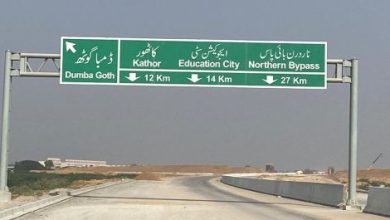
Living in Sweden, I have often experienced this curious feeling when I encounter family names/surname/caste or places that remind me of Sindh and Pakistan. Among the names that particularly attract my attention are Lund, Rind and Sand. In Sindh, Lund, Rind, and Sand are familiar names associated with communities and tribal identities and surnames. Yet, in Sweden, similar names appear in a completely different geographical and cultural setting.
By Abdullah Usman Morai | Sweden
Sometimes, the most fascinating discoveries during life abroad don’t happen in museums, libraries, or famous tourist destinations. They happen in ordinary conversations, when someone introduces themselves, hands over a business card or simply tells you their surname. A familiar-sounding name can suddenly transport you thousands of kilometers away, to another country, another culture, and perhaps even your childhood memories.
Living in Sweden, I have often experienced this curious feeling when I encounter family names/surname/caste or places that remind me of Sindh and Pakistan. Among the names that particularly attract my attention are Lund, Rind and Sand. In Sindh, Lund, Rind, and Sand are familiar names associated with communities and tribal identities and surnames. Yet, in Sweden, similar names appear in a completely different geographical and cultural setting.
The resemblance is intriguing. Is it merely a coincidence? Could some of these names share distant linguistic roots, or have they developed independently in different parts of the world? And why do certain names make us feel connected to places we have never imagined linking together?
These questions may not have simple answers, but they open an interesting window into the relationship between language, geography, identity, and human history.

When a Swedish Letter Changes the Meaning
One of the first things to understand is the Swedish letter ö. In Swedish, ö means “island.” It is an ordinary word as well as a letter, and it appears in the names of many Swedish islands and places.
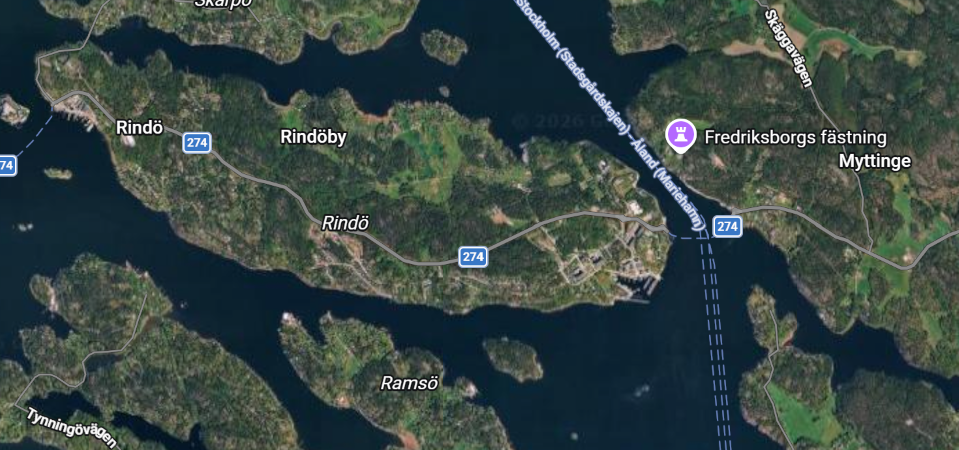
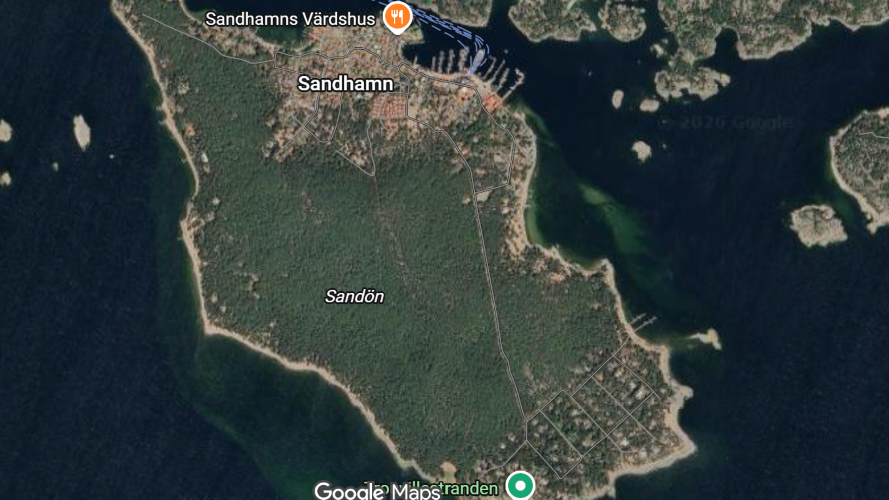
Near Stockholm, for example, there are islands called Rindö and Sandö. When I see these names on a map, I cannot help thinking of Rind and Sand communities in Sindh and Pakistan. The resemblance is striking: Rindö can be read as “Rind Island,” and Sandö as “Sand Island.”
Imagine a person from Sindh, familiar with the names of local clans and communities, looking at a Swedish map and finding Rindö and Sandö. It is easy to imagine the smile that might appear on their face. One might even wonder whether a Rind from Sindh would feel at home on Rindö, or whether a person named Sand would enjoy a visit to Sandö!
Of course, the resemblance alone does not establish any historical relationship. In Swedish place names, the element -ö means island, but the origin of the first part of a place name needs to be investigated separately. The names of islands do not automatically tell us anything about the origins of Pakistani family names.
Nevertheless, these small linguistic surprises make geography more personal. A map that once seemed to belong to a distant country begins to remind us of home.
Lund: A Name Shared Across Continents
The most fascinating example for me is Lund.
In Sindh and other parts of Pakistan, Lund is a familiar name associated with a tribe. In Sweden, Lund is also a surname. And the similarity does not end there: the name is found in neighboring Scandinavian countries, including Denmark and Norway, as well as in the United Kingdom.
According to surname reference sources, the Scandinavian form of Lund derives from the Old Norse word lundr, meaning a grove or a small, wooded area. Historically, such names could identify someone who lived near a particular landscape feature. In England, the surname may have developed from local place names, including places called Lund, Lunt or Lound.
This is where the story becomes particularly interesting. The same spelling can have different histories in different societies.
In Scandinavia, a person Lund might carry a surname connected with woodland, an inherited family name, or a place of origin. In Pakistan, a person bearing the name Lund may belong to a tribal community with its own traditions, genealogies, and historical narratives.
The spelling may be identical, but the stories behind it need not be.
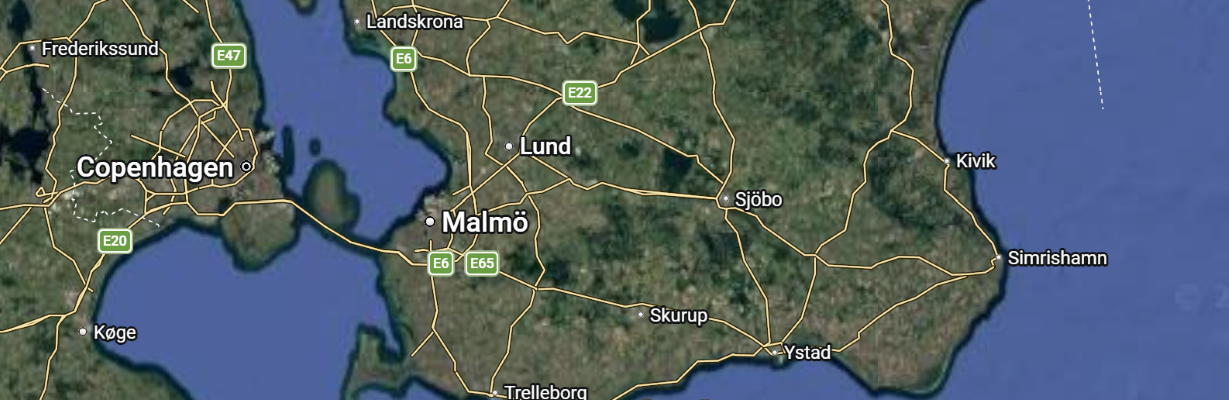
There is also a Swedish town named Lund, situated in the southern province of Skåne, close to Malmö. It is home to the prestigious Lund University. The university was founded in 1666 and inaugurated in 1668, and today Lund is recognized as an important center of education, research and student life. It is only about 15 minutes by train from Malmö.
For someone from Sindh, therefore, the word Lund can lead in several directions at once: towards a familiar tribal name, towards a Swedish surname, towards a historic university town, and towards a wider Scandinavian landscape.
What a journey for just four letters!
Other Swedish Names That Sound Familiar
Lund is not the only Scandinavian surname that catches the eye. Sweden has numerous surnames built around words associated with nature and geography.
Consider these examples like Lind, associated with the linden tree, and a well-established Swedish surname. Lund, associated with a grove or small wooded area. Sand, a word meaning sand, is also used as a surname. Lundberg, combining lund with berg, meaning mountain or hill. Lundgren, combining lund with gren, meaning branch. Lindberg, combining lind with berg. Lindström, combining lind with ström, meaning stream or current. Sandberg, combining sand with berg. And Sandström, combining sand with ström.
These examples illustrate a broader Swedish naming tradition in which elements drawn from trees, forests, hills, water, and other landscape features appear in surnames. Sweden’s official population statistics also document the extensive use of geographical elements in family names.
Some of these names may sound familiar to a Sindhi speaker, but it is important not to confuse resemblance with shared ancestry. Lind, Lund and Sand belong to recognisable Scandinavian naming traditions; Rind and Lund in Pakistan belong to a different social and historical context.
There is no reason to assume that every person with a similar-sounding name is part of the same family or community.
Are the Names Connected?
This is the question that naturally follows: could the Rinds, Lunds and Sands of Pakistan have some connection with the people who bear similar names in Sweden, Denmark, Norway or Britain?
The honest answer is that the similarities alone do not provide evidence of such a connection.
The Lund surname in Scandinavia has a documented linguistic explanation linked to woodland. English forms of the name also have geographical and historical explanations. Meanwhile, the Lund name in Pakistan is associated with a tribal identity. The Rind tribe has its own history and traditions.
These are different historical contexts. Establishing a common origin would require much more than comparing spellings. Researchers would need reliable historical records, linguistic evidence, genealogical documentation and, where appropriate, carefully interpreted genetic research.
The same caution applies to Sand and Rindö or Sandö. A place name may preserve an old description of the landscape, while a family or tribal name may have developed through entirely different circumstances.
It is tempting to construct a grand story connecting distant populations. But history is more interesting when we distinguish what we know from what we merely imagine.
And perhaps that is part of pleasure: the mystery does not disappear simply because we refuse to invent an answer.
A World That Is Smaller Than It Looks
When I encounter someone in Sweden with the surname Lund, I may briefly think of Sindh. When I see Rindö or Sandö on a map, my thoughts may travel from the islands around Stockholm to the villages, towns and communities of Pakistan.
The people themselves may look different, speak different languages, follow different traditions and have completely different family histories. One may have grown up beside the Baltic Sea, while another may have spent childhood near the Indus. One may speak Swedish at home, while another speaks Sindhi, Balochi or Saraiki.
Yet a familiar name can create a small moment of recognition between these distant worlds.
This is one of the quiet pleasures of living abroad. The longer we spend time in another country, the more we discover that the world is full of unexpected echoes. A word on a road sign, a name on a letterbox, a village on a map, or a conversation with a stranger can awaken memories of home.
Perhaps names are not bridges in the literal historical sense, but they can certainly become bridges in our imagination.
For a Sindhi living in Stockholm, Rindö and Sandö may evoke Rind and Sand in Sindh. For someone from Pakistan visiting Lund, the town’s name may prompt thoughts of familiar people and places thousands of kilometers away.
We may never establish a connection between these names, and perhaps none exists. But the curiosity they inspire is valuable.
After all, travelling is not only about discovering new landscapes. It is also about seeing familiar things differently.
Sometimes, a journey from Sindh to Sweden begins with nothing more than a name.
Read: Journey From Sindh To Sweden
____________
 Abdullah Soomro, penname Abdullah Usman Morai, hailing from Moro town of Sindh, province of Pakistan, is based in Stockholm Sweden. Currently he is working as Groundwater Engineer in Stockholm Sweden. He did BE (Agriculture) from Sindh Agriculture University Tando Jam and MSc water systems technology from KTH Stockholm Sweden as well as MSc Management from Stockholm University. Beside this he also did masters in journalism and economics from Shah Abdul Latif University Khairpur Mirs, Sindh. He is author of a travelogue book named ‘Musafatoon’. His second book is in process. He writes articles from time to time. A frequent traveler, he also does podcast on YouTube with channel name: VASJE Podcast.