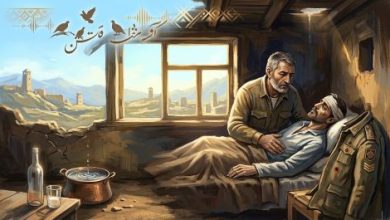
Kolkata-based author Debashree Chakraborty writes a novel about the 19 years of life of Jesus, which, according to some contemporary texts, he spent traveling extensively in the Middle East, Sindhu region and India
[Author’s Note: In the Old Testament of the Bible, there is no information about the life of Jesus for 19 years. There are some contemporary texts where eyewitnesses have stated that he traveled extensively in the Middle East and crossed the Sindhu region to enter India. Through this novel, I have tried to portray the diary of a profound spiritual journey of his life in the initial and final chapters. Foreign powers have tried to erase the history of our continent, Asia. That is why, when Notovitch returned from Hemis in Ladakh and mentioned that ancient text over 2000 years old, Max Müller sent people to Hemis to destroy that ancient manuscript. The mysterious manuscript is also mentioned in the book by Swami Abhedananda about Kashmir and Tibet. What was it that caused Max Müller so much concern over this manuscript? It is noteworthy that love cannot come into the life of the son of God, and he cannot have any children. Even the Gospels attributed to him have been confined to the secret, dark chambers of the Pope’s city, with words implanted into his mouth according to their wishes. In his name, imperialistic aggression is being carried out across the world. His only daughter, Sara, has not been recognized. His entire existence has been imprisoned. There lies an unknown chapter of his life hidden throughout the Middle East, the Sindhu region, and India. I have brought forth this history through this novel. “An Unknown Life” is in no way a novel imitating “Jesus lived in India.” This novel provides detailed descriptions of his presence across the vast land from Israel to India, not just his own, but also the mysterious narratives of many people associated with him. Was Jesus truly the founder of Christianity? If not, why must he still bear the burden of the “Roman Cross”? Is there ever to be a possibility of his release? All answers are coming. Debashree Chakraborty]
An Unknown Life
(Codex Chacos, Gospel of Judas)
(Location: Portugal, Year: 2022) (Location: Egypt, Al Minya, Beni Mazar Village. Time: An afternoon in 1978)
 This morning, Omkari and Ali arrived in a village in Portugal. The village is surrounded by dense forests, and within them are small ancient fortresses. They are currently standing in front of a house. The house is made of wood, with a nameplate in front that says Professor David Almedia. After ringing the doorbell for about three to four minutes, Professor David Almedia finally opened the door. As cold as it is outside, the inside of the house is quite warm, with a heater burning in one corner, and the wonderful fragrance of old books creating an extraordinary atmosphere. A yellow table lamp is lit in the room, casting light that reflects off Professor David Almedia’s white hair and beard, intensifying a deep, mysterious environment. The professor and Ali are sitting side by side. Ali rolls up his blazer and shirt sleeves to show the professor his wrist, and as the professor places a narrow device on Ali’s wrist, a beam of light appears, displaying a nine-digit number. A smile spreads across the professor’s face. He removes the device and says, “I have been waiting for your arrival for a long time. For the past few days, my health has not been good; I was afraid that if something happened, it might not be possible to deliver his treasure to him.”
Ali firmly holds the professor’s hands and says, “I understand. I myself always live with this fear. Well, I will surely accept that invaluable treasure from you, but before that, I will record your statements. This is my directive. Because a meeting with him is simply not possible. We will keep your statements as a living document of history and present them.”
The Professor gestures for the recording to begin, and as Ali starts recording, the professor begins to speak…
It was an afternoon in 1978. In the rugged landscape of Beni Mazar village in Egypt, several rough hills stand tall, piercing the sky. In the golden light of the afternoon sun, these peaks resembled golden mines. For ages, these hills have stood in this manner. The people of this village and the surrounding areas feel a deep connection to these hills, and their desire to learn about them is strong. Locals believe that there was once a flatland in this region, and due to the erosive action of the wind, the flatland has eroded, giving rise to these hills. When seen up close, these hills appear to be small mountains. In the afternoons, village youths play on the flat land beneath these hills. This area is so barren that the horizon stretches endlessly… The region is so barren that no agricultural work is possible here. Moreover, there is no pathway established for transportation that people could use. The movements of the boys are hard to interpret. On the afternoon I am speaking of, they began throwing stones at the hills with pieces of rock in their hands. As they threw, they noticed that dust started to fall from the hill’s base. Within moments, the village youths were amazed to see the mouth of a cave reveal itself on the hillside. This cave had been sealed for many years, but strangely, that day it became exposed. The mouth of the cave was so narrow that an adult person would not be able to enter. In their youth, the desire to explore is strongest, so they entered the cave and began searching all around. Such caves or abandoned places often hide treasures. In Egypt, treasures of this sort have been discovered multiple times amid the ruins of ancient architecture. While searching, they found a burnt clay pot. At first, they observed the pot from a distance because inside such pots are often hidden Egypt’s famous cobras. After a while of scrutiny, they realized that nothing else would emerge from the pot. They then approached it and turned it over, revealing several ancient papyrus scrolls from thousands of years ago. Through the hands of these youths, the papyrus made its way to the black market for antiques in Cairo. This marks the beginning of the “Gospel of Judas’s journey” once more. Since the people of the black market deal in such items, they understand the value of each one very well. Upon examining these papyrus scrolls, they discovered that the language written on them was neither hieroglyphic nor Nubian Tocar. As the examination continued, the papyrus scrolls were stolen from the antique shop. This happened because the Catholic Church’s agents roam around the black market. They buy such papyrus scrolls at high prices. If such items come into the hands of the Catholic Church, it means they are lost forever. Many secret organizations, like ours, always keep an eye on the Catholic Church. They too had been monitoring this particular item, and in 1983, it was possible to recover this important artifact again. We learned that the papyrus had been stolen by Greek antique dealer Nikolaus Koutlakis, an accomplice of the Catholic Church. We attempted to revoke his antique business license.
Omkari had been listening attentively to the professor for a long time. After the professor spoke continuously for a while and then fell silent, Omkari asked, “What was written on this papyrus in Greek? And it seems this gentleman was an expert in ancient Greek, which is perhaps why he was engaged in this special task.”
The professor looked at Omkari in surprise for a moment, then said, “Remarkable. Yes, he was able to decipher much of what was written on the papyrus because a large portion was in ancient Greek. Nikolaus had tried to hide it in Geneva. At that time, a team led by myself and Professor Stephen Emmell went to recover it.”
“Sir, did you teach somewhere?” Omkari inquired.
Professor David chuckled and said, “Yes. I taught Ancient Languages at Yale University. Anyway, we recovered the papyrus and sent it to Southern Methodist University. After that, as the papyrus was being deciphered, the veil began to lift from a great mystery of the world. The newly born baby was named, and we named it ‘Codex Chacos.’ A textual analysis revealed the use of two different languages here: some Greek words (loan words) and also ‘Coptic text.'”
Omkari asked again, “Why was there a use of two different languages? Does that mean it was not written by the same person at one time?”
Once again, Professor David was surprised. After a brief silence, he said, “Yes, exactly. Through radio carbon dating and several routine checks, we found out that these were not written at the same time. The parts written in Greek were composed between 130 and 170 CE, while the Coptic texts were written between 220 and 280 CE.”
Until then, Ali had been quietly playing the role of a listener. Now he said, “Then why were papyri from two different times placed together?”
Omkari replied, “Ali, to know that, we need to find out what is written in this papyrus.”
Professor David nodded in agreement, saying, “Absolutely. Specialist Rudolf Kasser informed us about the section written in Coptic. About thirty papyri had been discovered, but only thirteen were published at the time. The rest were said to have been damaged due to mishandling. According to him, the papyri written in Greek were authored by Irenaeus of Lyons, known as a ‘Christian writer.’ However, no leads have been found about who wrote the rest. Nonetheless, these writings changed our understanding of Judas, as well as the perception of the relationship between Jesus (Isha) and Lady Magdalene.”
For a while, there was silence all around; morning had arrived. When the professor stood up and pulled back the window curtains, sunlight began to enter the room, yet the darkness hadn’t completely lifted. Therefore, he kept the table lamp lit. To understand that time, we must reach 30 CE. Isha wanted a free and independent state of Israel, free from Roman rule. He wanted to liberate the Jews from the chains of Roman oppression. That is why he personally initiated the freedom movement. He was an exceptional speaker; to drive any freedom movement forward, unity among the common people was essential.
There was unity without which it was never possible to advance the freedom movement. Under the leadership of Isha (Jesus), the common Jews began to unite, forming a magnificent demonstration of solidarity, with Isha as their universally recognized leader. As Isha faced financial difficulties while leading this movement, Mary Magdalene handed over all her possessions to Isha to further the cause. Judas, who had earned a significant fortune through his trading, selflessly contributed that wealth to Isha as well. This donation was altruistic, and both individuals began to protect Isha with their respect and love. Initially, Isha did not understand, but later he realized that he was gradually becoming a target of jealousy among his close disciples. Those twelve (excluding Judas) wanted to usurp his power for themselves. They also desired an independent state of Israel, but they wanted to establish themselves in high positions within that state, not Isha (Jesus). They began to plot to remove Isha from the scene, considering both Mary Magdalene and Judas as their principal enemies. They needed to stigmatize these two individuals at any cost. Thus, Leonardo da Vinci’s “The Last Supper” was completely altered, with Mary placed in the position of a prostitute and Judas branded as a traitor.
Once again, there was silence. Tears streamed from Omkari’s eyes, and after a moment, she collected herself and said, “At this moment, I am strongly reminded of two individuals: one is the wife of the Great Lord, Vishnupriya Devi, and the other is Netaji Subhas Chandra’s wife, Emilie. The disappearances of both the Great Lord Maha Prabhu and Subhash Chandra Bose are as mysterious as Isha’s, and the solution to that mystery has yet to be found. Both these great leaders sought to liberate the nation from the shackles of oppression. History has honored both, but it has not remembered the sacrifices of these important women in their lives, just as it has erased the legacy of Mary Magdalene. It hurts deeply.”
“Well, you’re Bengali! That’s why you thought of these two. There are many such people in the world whose sacrifices have been forgotten by history. However, we will not allow this injustice to happen to Lady Magdalene; we will restore her place in history once again.”
“You yourself are saying that all the evidence has been erased, so how will you accomplish the impossible?” Omkari asked, very disturbed.
“We have been working for a long time to uncover the unknown chapters of Isha’s life. We know what happens when such important evidence is found. During the reading of the Gospel of Judas, the Pope’s representatives came and bought the pages of this papyrus for a large sum of money. They are now housed in the Coptic Museum.”
“The Coptic Museum? Where is this museum?”
A special area in Old Cairo is called Coptic Cairo. It is here that this museum is located, covering nearly eight thousand square feet. It has collected all the “artifacts” related to Christianity from around the world. There are more than sixteen thousand artifacts organized into about twelve sections. Surrounding this museum are several Coptic churches. In the corner room on the second floor of this museum are thirteen papyrus pages of the Gospel of Judas, as the others were removed. They were intentionally removed because if this information fell into the hands of the Catholic Church, it would have destroyed the church. So only what could be given to them was provided.
“And the rest! Where did those go?”
Before we can know where the remaining portions of the Gospel of Judas are, we need to find out what was written within it. During that time, many freedom-seeking groups were formed to gain independence from the Romans. However, there was no unity among them. Isha (Jesus) united these scattered groups and built the movement for a free Israel. As this movement continued, it eventually faced a severe financial crisis. The Gospel of Luke states, “And the movement faced financial challenges.” The Gospel of Judas says, “The woman from Galilee, Mary, supported [the movement] financially.” “Mary was the first woman to support Jesus’ movement financially.”
“Unusually, Mary took the leading role.” Not only that, “Mary has personal bonding.” It is not mentioned that Isha’s mother or sister was being referred to. Because it is natural to have a personal bond with a mother or sister, but since it has been written this way, it is certainly referring to Mary Magdalene. Some statements from the Gospel of Philip also support the Gospel of Judas. It states, “And the companion of the… Mary Magdalene… loved her more than all the disciples, and used to kiss her often on her…” Dr. Esther D. Byer has addressed this in her work “The Mary Magdalene Cover-Up.” She filled in this gap and wrote, “And the companion of the savior, Mary Magdalene. The savior loved her more than all the disciples and used to kiss her often on her forehead/cheek/lip.” Judas did not betray Jesus at the Last Supper; it was one of his closest associates who did. Many were involved in this conspiracy, and Isha himself became aware of it. That is why at the Last Supper, he took a loaf of bread, divided it into twelve parts, and dipped it in red wine, giving it to his twelve closest disciples. This bread symbolized Isha’s blood and flesh. It meant that he shared himself among these twelve. He did not desire power. He wanted the unity of the movement he created to be maintained. With great affection, on that day, he washed the feet of those twelve. This meant he forgave them. He forgave those who had put him in such great danger. Because he did not want the unity among them to be destroyed. Judas was not guilty. And the lost portion of the Gospel of Judas is with me. Today I will hand it over to Ali, and Ali will pass it on to the hands of Lady Magdalene and Isha’s heir. (Continues)
Click here for Part-1, Part 2, Part-3, Part-4, Part-5, Part-6, Part-7, Part-8, Part-9, Part-10, Part-11, Part-12, Part-13, Part-14, Part-15, Part-16, Part-17, Part-18, Part-19, Part-20, Part-21, Part-22, Part-23,
_____________

Debasree Chakraborti is a renowned novel writer of Bengali language. Based in Kolkata, West Bengal, India, she has done Master’s in Modern History from the Kolkata University, and authored some thirty books, mostly the novels, with historical perspective and themes. Her novel is ‘Maharaja Dahir’ that covers the history of Sindh from 662, the year of first attack on Sindh by the Arab armies till date, was published last year and translated by Nasir Aijaz into Sindhi language.