Dance is one of the earliest human expressions, born alongside language, encompassing rituals and rhythms
- Over time, music and rhythm merged, and dance became one of the most comprehensible art forms. Plato called it: “Speech without words.”
Souad Khalil | Libya
Art is a talent whose foundation is the artist’s sensitivity and their ability to express the emotions of life and respond to the inspiration of nature in the form of vivid and beautiful images that leave in the human soul a sense of balance and harmony. By nature, the artist is a sensitive person, quick to react emotionally, and when moved, seeks to engage others in expressing the feelings that arise from their inner reactions and inspirations.
As we know, primitive forms of art existed in prehistoric times, but with the beginning of civilization and human history, more refined arts emerged alongside folk arts. Folklore has been passed down through millennia until the 19th century, when it began to be studied scientifically in institutes and universities, with theories and methodologies, becoming a source of inspiration even for modern arts.
 Thus, folklore is as ancient as culture itself, dating back to when humans first developed the capacity to learn. Art seeks to master inner life and reorganize it in a way that brings us satisfaction and well-being. The sense of beauty in the arts comes from its ability to awaken emotions, memories, and feelings within us, creating harmony and balance. When an artist expresses their emotional experiences, they organize them in a harmonious way that evokes joy and wonder in us—just like folk art does.
What is Folklore?
Scholars have struggled to translate the term “folklore” as “popular literature” or “folk art” or “folk tradition.” In truth, there is no separation between popular literature and other forms of traditional artistic heritage. This heritage should not be sought only in backward societies or among primitive tribes, but also as the linguistic and artistic production of the masses over centuries. When expressed in spoken language, it is an integral part of folklore, and its history is part of folklore’s own history. The term can refer to both spiritual and artistic heritage.
According to Fawzi El-Antil, folklore is a cultural legacy, transmitted orally or through practice more than through written records. It includes dance, songs, stories, legends, proverbs, agricultural customs, domestic rituals, traditional architecture, and social structures.
Various dictionaries provide definitions of folklore:
The Arabic Encyclopedia defines it as all that is orally transmitted within a community: dances, songs, stories.
Jonas Balys describes it as the science of folk traditions, poetry, and heritage.
The Folklore Dictionary defines it as the systematic and classified study of folk materials to interpret the life and culture of peoples through the ages.
Webster’s Dictionary defines it as a collection of beliefs, dances, songs, tales, and proverbs passed down orally or spread among a group.
The Oxford Dictionary considers it the study of popular beliefs and customs.
 The American Folklore Dictionary sees it as the sum of inherited beliefs and customs that have survived among the less educated classes of modern societies.
For Balys, folklore includes traditional creativity from both primitive and civilized peoples. Taylor considers it as material passed down from generation to generation without known authorship.
Despite the differing definitions, we can say that folklore includes all oral artistic forms, including beliefs, customs, dances, and popular theatrical forms. All of this is drawn from the book by Nadia El-Demerdash and Ola Tawfiq: Introduction to the Science of Folklore.
On Popular Dance:
The book states that folk dance is one of the oldest art forms, even shared by the animal world, as movement is one of the most primitive expressions of the emotional activity of prehistoric humans.
Dance is a language with its own artistic structure and vocabulary, where gesture replaces words. Studying dance allows us to learn about cultures without physically visiting them. Every gesture in dance has a meaning and a psychological response. Thus, it is considered one of the oldest arts, followed by singing, which evolved in parallel and was often associated with religious rituals.
Art aims to organize spiritual life to convey harmony and inner peace, and the sense of beauty in art comes from its ability to activate feelings and create balance.
Interest in folk art emerged in the 19th century and developed into a discipline with its own methodologies and concepts.
 The historical study of the arts, especially dance, helps us understand its evolution and delve deeper into the history of peoples.
In the book Introduction to Folklore, the development of dance is traced from primitive art made of carvings on bones and stones, to cave paintings, to religious rituals such as spells to confront unknown forces. Later, in agricultural environments, art turned toward decoration and ornamentation, with a stronger emotional connection to the people.
For nomadic peoples, abstract decorative art developed, giving rise to a blend of folk and decorative art.
According to Saad Al-Khadem, many see folk art as a form of entertainment accessible to the masses. But if we return to the concept of folklore, we find it includes dance, songs, stories, and all orally transmitted forms without known authorship.
In 1949, UNESCO experts categorized folk arts into four types:
Folk sculpture and painting
Folk applied arts
Folk literature and verbal arts
Folk dance, music, and theater
From this, we can conclude that folk art or folk heritage is synonymous with “folklore,” and everything that applies to folklore also applies to folk dance, as it is passed down through generations and represents a part of the people’s culture.
Folk dance is not the result of individual artistic inspiration or academic training. It is a collective art, created by the people to express their dreams, emotions, and hopes.
According to the book Introduction to the Science of Folklore, folk dance is:
A work of unknown authorship
Traditional, passed down through generations
Subject to modification based on place and conditions
A collective product, with various individuals and groups contributing to its creation, form, and performance
 It is also considered an ethnographic dance, with authentic and spontaneous traits that reflect the life and spirit of the people. It is folkloric because it retains traces of ancient customs, beliefs, and legends, and serves as a mirror of traditional culture and the relationship between the people and nature, religion, and society.
Some scholars classify it as tribal or national dance, typical of each country, performed with traditional costumes and indigenous music. It represents the evolution of primitive dance adapted to rural and urban life.
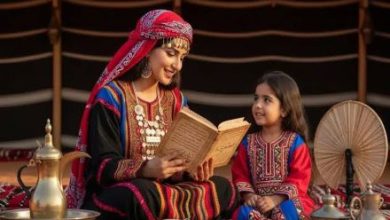
Each people has its characteristic movements, because dance reflects the people’s character, mood, culture, environment, and traditions. Religious peoples have dances that express devotion and joy, such as those of ancient Egypt or Greece.
We can conclude that dance is one of the earliest human expressions, born alongside language, encompassing rituals and rhythms. It is an ancient practice, fundamental in human history—not only an art but also the “mother” of all arts. Animals danced to the rhythm of life, and humans imitated them. Over time, music and rhythm merged, and dance became one of the most comprehensible art forms. Plato called it: “Speech without words.”
Source: Introduction to the Science of Folklore, Dr. Nadia El-Demerdash / Dr. Ola Tawfiq
Read: Music’s Magic: Pleasure and Healing
_________________
 Souad Khalil, hailing from Libya, is a writer, poet, and translator. She has been writing on culture, literature and other general topics.
All images provided by the author