President Zardari could not risk the political career of his children by supporting the division of Sindh. He was apparently under mounting pressure from the powerful circles
Ambassador M. Alam Brohi
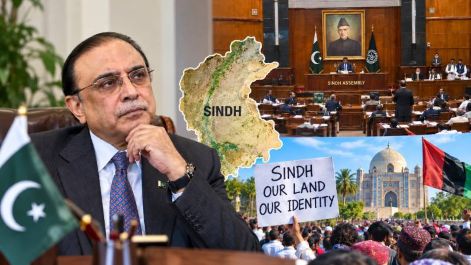
President Asif Ali Zardari has apparently taken a tough stand on the division of Sindh as part of the establishment’s plan of carving out more provinces in the country. At an appropriate time, he slipped out of the country, and has deliberately prolonged his stay in London. Minister of Interior Mohsin Naqvi, last week, had a marathon meeting with him. The subject matter under their deliberations could be none other than the purported new provinces. The post-meeting statement of Mohsin Naqvi betrayed an impression of disappointment or incredulity. President Zardari, during the meeting, remained serious and quiet conveying an aura of toughness.
The provincial President of Pakistan People’s Party (PPP) Sindh, Mr. Nisar Ahmed Khuhro moved an adjournment motion in the Sindh Assembly to discuss the division of Sindh. Mr. Nisar Khuhro could not have made such a significant move without the consent of President Asif Ali Zardari or Chairman Bilawal Bhutto Zardari. The motion was discussed for a couple of days from 31 August, with all speakers coming hard on the purported plan of the division of Sindh. The members were agitated, anxious and in fighting mood.
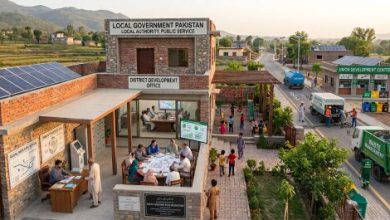
Judging the tense atmosphere in the House, the protagonists of additional federal units mostly from the MQK-P rephrased their earlier demand for more provinces as new administrative units for the decentralization of powers. However, they could not elaborate what more administrative decentralization they want to have in the country, already divided in over 150 districts, and 36 divisions. No member from amongst them referred to the District Nazim system introduced by General Musharraf or talked of the empowerment of Local Governments.
The proponents of the plan were unable to elaborate their concept of an administrative unit to satisfy the inquisitive questions of the PPP members. The devil is in details. The moot question was whether or not these so called administrative unit would have a political complexion with a name, political, economic and administrative institutions including legislative assembly, political government, cabinet, and governor, a share in NFC award, irrigation water, and administrative posts: or would it be a simple administrative unit under the umbrella of the government in the province. Anyhow, the plan of new federal units, carved out of the territories of existing historic and cultural sub-nations, was condemned and rejected by the PPP representatives.
The members of the Provincial Assembly across the aisle were given adequate time to speak. Later, the adjournment motion was converted into a resolution against the division of Sindh and placed before the members for adoption. The supporters of the new units, however, chose to boycott the vote, given their small numerical strength. While exiting the Hall, they raised anti-Sindhudesh slogans. The PTI members did not walk out, but abstained in the vote.
Anyhow, the plan of new federal units, carved out of the territories of existing historic and cultural sub-nations, was condemned and rejected by the PPP representatives.
The House adopted the resolution unanimously, with no vote against it. This was the seventh resolution passed by the Provincial Assembly against any geographical change in the territorial limits of Sindh or the detachment of any part of it. The Provincial Assembly, as reported by Tribune, had passed such resolutions in 1948, 2012, 2013, 2014, 2019, and most recently on Feb 21, 2026, affirming the unity and territorial integrity of Sindh.
The speeches made in the Assembly represented the anger of the people of Sindh against the purported division of their land, which has the singular privilege of being a historically independent nation and the inheritor of the Indus Civilization that had once flourished on the banks of the mighty Indus dating back to over 5000 years. History is witness that Sindhis, in every human evolutionary epoch, had fought hard battles for the independence and integrity of their land.
The history ensconces a long list of warriors with their heroic fights for the independence of Sindh from Raja Dahir to Dodo, Dolah Darya Khan, Hosh Muhammad Sindhi, Ruplo Kohli, Pir Sibghatullah Rashdi, battling with Arabs, Delhi Sultans, Tarkhans, Pathans, British Forces, respectively – with the last two sons of Sindh waging guerrilla wars against the occupation of Sindh by British Imperialists. Ruplo was from the Thar Desert. He tasted the sweet kiss of martyrdom empurpling his desert with his blood.
Pir Sibghatullah Rashdi was the grandfather of the current Pir of Pagara. He fought his guerilla war against the British imperialists for over a decade. He was treacherously arrested in 1941, tried by a military court, and sent to the gallows in March 1943. His armed struggle has been preserved in the history as Hur Tehrik. His slogan was ‘Watan or Kafan’ (Country or Shroud). Prominent among the post-independence nationalist leaders fighting for the constitutional rights of Sindh were G.M. Syed, Hyder Bux Jatoi, Fazal Rahu, Rasool Bux Palijo, and Muhtarma Benazir Bhutto.
President Asif Zardari knows how Sindhis waged a national movement against the federalization of Karachi and, later, the amalgamation of Sindh into West Pakistan. Mr. Ayub Khuhro was dismissed as Chief Minister of Sindh in 1948, and disqualified under EBDO to hold any public office for ten years. The sitting Chief Minister Abdul Sattar Pirzada refused to force the members of Sindh Assembly to pass the Bill of One-Unit in 1955. The federal government brought back Ayub Khuhro as Chief Minister. He employed all possible coercive measures to get the Bill passed by a half empty House, with the speaker and over two dozen defiant members locked up in government rest houses in Sindh.
The people of Sindh passed a very harsh judgment on him calling him ‘traitor of Sindh’. This sobriquet haunted him throughout his remaining years. He was later appointed as Defence Minister by Prime Minister Feroz Khan Noon. However, he lost his political and electoral credibility forever. Nisar Khuhro is his nephew. He joined the PPP before the general election of 1988. Muhtarma Benazir Bhutto accommodated him with a party ticket against a provincial constituency from Larkana district (Warah Tehsil). He never looked back.
President Zardari could not risk the political career of his children by supporting the division of Sindh. He was apparently under mounting pressure from the powerful circles. He played his cards carefully by adroitly involving the party and the Legislative Assembly. This would apparently relieve him and Chairman Bilawal Bhutto Zardari from any pressure. In the presence of so many resolutions passed by the Legislative Assembly of Sindh, it would be easy for President Zardari to foil attempts aimed at forcing him to support the division of Sindh, and go down in the history as traitor of Sindh like Ayub Khuhro.
The PPP is preparing to convert the public goodwill garnered through the hard hitting speeches into a nationalist movement to mobilize the people of Sindh particularly the youth against the purported threats to the territorial integrity of the motherland -Sindh. This will be a political masterstroke by PPP leaders to wipe the stains of corruption and incompetence off their faces, and relegate nationalists to political periphery.
Read: The Systematic Institutional Decay
__________________
 The writer is a former member of the Foreign Service of Pakistan and has served as Ambassador for two terms. He is the author of five books.
First published in The Friday Times Lahore