When the earth sings, the fragrance of the soil in the enchantment of melodies on-airs sweet voices scented with love.
Those Thursday Nights; Melody, Memory and Music
By: Ramesh Raja
Music is not merely an arrangement of sound; it is a quiet force that shapes emotions, connects souls, and gives voice to what words often fail to express. From the earliest rhythms of human civilization to the refined compositions of masters like Ludwig van Beethoven, the timeless voice of Lata Mangeshkar, the classical brilliance of Pandit Bhimsen Joshi, and the spiritual depth of Abida Parveen, music has remained a constant companion of humanity. It lives in our celebrations and in our solitude, in our memories and in our dreams.
Great musicians are not just performers; they are storytellers of the human condition. Through melody and voice, they carry culture, history, and emotion, turning simple moments into lasting memories. As Friedrich Nietzsche once said, “Without music, life would be a mistake.” This thought helps us understand why we gather here today not just to listen, but to honor a voice that has touched hearts across Sindh.
In this spirit, the Sindh Graduates Association (SGA), true to its tradition, has always recognized and celebrated the cultural heritage of Sindh, its symbols, and its remarkable artists. Today’s program, “An Evening in the Name of Shafi Faqir,” is not just an event, it is a tribute. A tribute to a voice that carries the fragrance of soil, the depth of Sufi thought, and the simplicity of truth.
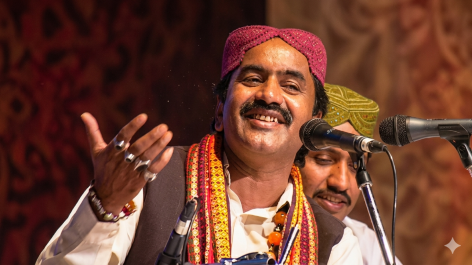
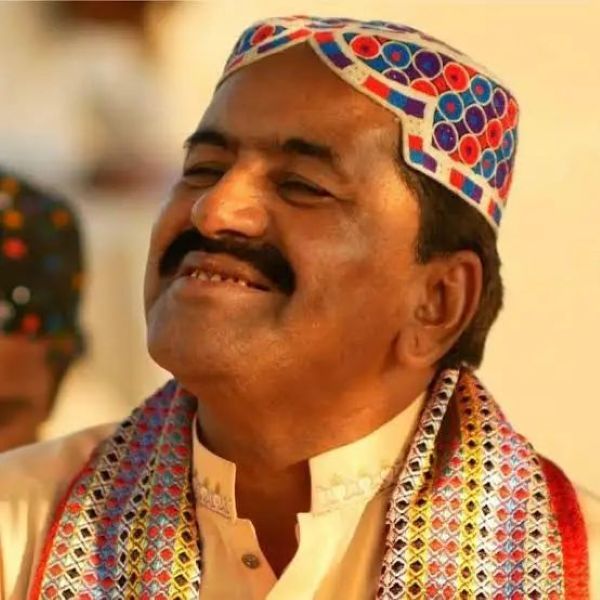 Ustad Shafi Faqir is not only a singer; he is an experience. He is among those rare artists who have created their own space in the world of music. His voice has not only entertained but has enriched Sindhi music with new life and meaning. SGA’s effort today is not only to promote music but to honor a living treasure, because true recognition should come while the artist is still among us.
When poets, writers, and musicians sit together, the gathering becomes more than music. It turns into a conversation of ideas, of feelings, and of shared heritage. And there could be no better place for such a gathering than Hyderabad, a city that has always been a center of Sindhi culture, literature, and music. At the same time, it is important to acknowledge the efforts of those who keep such traditions alive. My friends and literary activists, Dr Mushtaq Phul and Manzoor Ujjan, are true admirers of music and literature. They are among those spirited individuals who make such gatherings possible. It is their passion and commitment that turn ideas into meaningful events, and this indeed reflects their greatness.
For me, this occasion is deeply personal.
During the years 1997–98, when I was posted in Sann, I had the privilege of spending many Thursdays at the shrine of G. M. Syed. Those evenings are still alive in my memory. Sitting in that spiritual atmosphere, listening to Ustad Shafi Faqir was not just hearing music, it was feeling something beyond words.
Every Thursday, he would arrive, often along with Juman Darbadar, and sometimes with Haleem Baghi. Many familiar faces would also be there, including Bashir Khan Qureshi and other friends. I would go with my dear friend Shankar Lal, who always carried a tape recorder. We would record those precious moments, not realizing at that time that we were preserving history.
Those cassettes would travel with me to Gambat. There, nights would come alive again as we gathered with Saah Shaikh Nazir Sirohi and friends, listening to the same voice, the same magic. In this way, the music of Sann would reach Gambat, carried not by technology alone but by love and admiration.
Sometimes, those journeys extended even further. We would go to Ranikot, spend the night under open skies, and let the music echo in the silence of the hills. Those were simple days, but full of life, full of meaning.
At that time, Ustad Shafi Faqir was still shaping his journey. His students, who today are well-known artists, had not yet come forward. His own voice was evolving, gaining depth and strength. It was a period of growth, of dedication, and of passion.
I also remember how he gradually turned towards modern Sindhi poetry. Along with Haleem Baghi, he began singing the verses of Sheikh Ayaz and other great poets. Before this, artists like Sadiq Faqir and Ashiq Nizamani had already taken steps in this direction and Rasool Bux Palijo had played an important role in bringing the poetry of Sheikh Ayaz to the voice of Jiji Zarina Baloch. It is important to remember that a large number of Sheikh Ayaz’s works were sung by her and reached the people.
Then came the time when Ustad Shafi Faqir’s cassettes entered the market. Slowly but surely, his voice spread across Sindh. He became popular not only among common listeners but also among educated circles. His music had depth, and people could feel it.
Over the last two decades, his students have carried his legacy forward and gained great popularity. Today, Ustad Shafi Faqir is not just an individual artist. He is an institution, a complete academy of music in himself. His name stands among the greatest in Sindhi music.
But beyond all achievements, what makes him truly special is the connection he creates. When he sings, it feels personal. It feels as if he is speaking to each listener directly. That is the true power of music.
Today, as we honor him, we are also honoring our culture, our language, and our shared memories. For people like me, this is not just a formal event, it is an emotional moment. A moment to say thank you for the countless evenings, the unforgettable melodies, and the lifelong inspiration.
In honoring Ustad Shafi Faqir, we are not only celebrating a great artist, we are acknowledging the timeless power of music to heal, to inspire, and to unite us all.
Read: Deserts Sing, Hope Breathes Through Dunes
____________________
 The author of this article, Engr. Ramesh Raja, is a Civil Engineer, visionary planner, PMP certified and literary enthusiast with a passion for art and recreation. He can be reached at engineer.raja@gmail.com