The proletarian struggle, therefore, may not be ending. It may be entering its most technologically advanced phase.
- The struggle of the industrial worker was for dignity against the power of the factory owner. The struggle of the new proletariat may be for dignity, opportunity and a fair share of the wealth generated by AI, data and technological capital.
By: Ramesh Raja
Humanity is standing at the threshold of another great transformation. The Industrial Revolution changed civilization by replacing human muscle with machines and creating the modern factory worker. Electricity multiplied industrial power, the computer transformed information, and the internet connected economies and societies across borders. Now artificial intelligence is taking this transformation into a new and far more profound territory: the automation and augmentation of human intelligence itself. For more than two centuries, one fundamental question has remained at the heart of political economy: who owns the means of production? In the 19th century, those means consisted primarily of land, factories, machinery and physical capital. Karl Marx and Friedrich Engels identified the wage-dependent industrial worker as the proletariat and argued that the relationship between labor and capital would remain a fundamental source of social and economic conflict. The world has changed dramatically since Marx’s time, but the question of ownership has not disappeared. It has simply moved from the factory floor into the digital and technological infrastructure of the modern economy.
From the Factory Worker to the Digital Proletariat
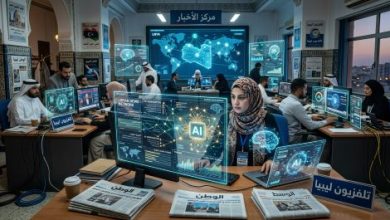
The original proletariat emerged with industrialization. Millions left rural communities and entered factories where machines and productive assets were owned by others, while workers exchanged their labor for wages. Long working hours, low wages, dangerous conditions and child labor produced a powerful response. Trade unions, workers’ movements and socialist organizations demanded dignity, fair wages, shorter working hours, workplace safety and social protection. The struggle took different political forms. The Paris Commune of 1871 became an early symbol of working-class political power, while the Russian Revolution of 1917 transformed Marxist ideas into a revolutionary state project. Elsewhere, however, labor movements pursued gradual reform rather than revolution. Over decades, these struggles helped establish the eight-hour working day, minimum wages, collective bargaining, pensions, workplace protections and the modern welfare state. But the worker of the 21st century increasingly occupies a different world. The factory may have been replaced by an office, warehouse, laptop, smartphone or digital platform. A delivery rider, call-center employee, software developer, freelance designer, warehouse worker, driver, content moderator or remote professional may appear independent, yet remain economically dependent on a digital platform that controls access to customers, determines visibility, measures performance and influences income. The factory gate has, in many respects, been replaced by the login screen, while the old supervisor was visible and the new supervisor may be an algorithm. This is the emergence of algorithmic management, where software can allocate tasks, monitor productivity, evaluate workers and influence employment decisions. The worker may not know why an assignment was given to someone else, why a particular rating affected income or why an automated system judged performance inadequate. Economic power can therefore become less visible while becoming more pervasive.
Data, Algorithms and the New Means of Production
Industrial capitalism depended on coal, iron, oil, land and machinery. The new digital economy increasingly depends on data, algorithms, semiconductor chips, cloud infrastructure, computing power, AI models, robots and data centers. Data has become a strategic economic resource because every search, purchase, movement, communication and digital interaction can generate information. When collected and processed at enormous scale, that information can be transformed into commercial intelligence, predictive systems and increasingly capable artificial intelligence. This creates a new version of an old question: who owns the value created by human activity? People generate enormous quantities of data through their everyday lives, yet the infrastructure capable of collecting, storing, processing and monetizing that data is concentrated in relatively few corporations and institutions. The economic struggle of the future may therefore involve not only wages and working conditions, but also data ownership, privacy, intellectual property, access to computing power and control over technology. Artificial intelligence takes this transformation even further. Earlier waves of automation primarily threatened repetitive physical labor, whereas AI can now perform or assist with tasks involving language, analysis, coding, research, design, translation and decision-making. It may eliminate certain occupations, transform others and create entirely new forms of work. The critical issue, however, is not simply how many jobs AI will destroy or create. It is who will capture the productivity gains. If AI allows one worker to produce what previously required several people, society could become enormously more productive. That productivity could mean shorter working weeks, better healthcare and education, greater social security and a higher quality of life. But if the gains are concentrated among those who own AI systems, data, intellectual property and computing infrastructure, technological progress could instead produce unprecedented economic concentration. The central question therefore becomes whether AI will liberate human beings from unnecessary labor or make human labor increasingly subordinate to technological capital.
The Rise of the Cognitive Proletariat
The new proletariat will not necessarily resemble the factory worker of Marx’s century. It may include platform workers, service employees, technicians, programmers, administrative staff, creative professionals and highly educated specialists whose work is increasingly mediated, evaluated or replaced by intelligent systems. A university degree may no longer provide permanent protection from technological disruption. AI can already assist with tasks traditionally associated with lawyers, accountants, engineers, programmers, journalists, designers, researchers and other professionals. The professions themselves may survive, but their structures, skills and employment requirements are likely to change. A new economic hierarchy could consequently emerge between those who own technological capital, those who design and control AI systems, those who possess scarce technological skills, those who work alongside AI and those whose labor becomes increasingly replaceable. This would represent a significant transformation of the traditional class structure. The divide may no longer be simply between the owner of the factory and the worker. It could increasingly be between the owners of intelligent capital and those whose livelihoods depend upon it.
From Labor Rights to Algorithmic Rights
The Industrial Age created the need for labor rights. The AI age may require a new generation of algorithmic rights. Workers may need the right to know when AI is being used to make consequential decisions about their employment. They may require protection from discriminatory algorithms, excessive workplace surveillance and automated dismissal without meaningful human review. They may need stronger rights over their personal data, opportunities for continuous education and reskilling, and social protection during periods of technological displacement. Perhaps most importantly, society will need to decide how the benefits of automation are distributed. The question should not merely be how many workers machines can replace, but how machines can enable human beings to live better while working less unnecessarily. The eight-hour working day was once a radical demand. The AI age may eventually force societies to reconsider the length of the working week, the distribution of income and even the traditional assumption that employment must remain the primary route to economic security.
The Continuing Relevance of Marx
Marx’s theory should not be regarded simply as a relic of the industrial era. Its continuing importance lies in its examination of the relationship between labor, capital, ownership and the distribution of economic power. The means of production have changed, but the fundamental question remains. The factory has become a data center, the machine has become an algorithm, the industrial supervisor has become software, the raw material increasingly includes data, and capital increasingly includes technological intelligence. Yet behind every advanced system remains society itself. AI does not emerge from nowhere. It depends upon generations of human knowledge, scientific research, public education, infrastructure, electricity, natural resources, workers and the vast quantities of data generated by human activity. Therefore, the future debate should not be about rejecting capitalism or stopping technological progress. It should be about ensuring that capital serves society rather than society becoming subordinate to capital. If artificial intelligence dramatically increases productivity, its benefits should strengthen the welfare of states, expand opportunities, improve public services and raise the living standards of ordinary people. Technological wealth should not become the exclusive property of a narrow technological elite. Ultimately, the wealth created by intelligent machines should benefit the society whose labor, knowledge and data made them possible.
The proletarian struggle, therefore, may not be ending. It may be entering its most technologically advanced phase. The struggle of the industrial worker was for dignity against the power of the factory owner. The struggle of the new proletariat may be for dignity, opportunity and a fair share of the wealth generated by AI, data and technological capital. The great promise of artificial intelligence is not a world in which human beings become unnecessary. It is a world in which human beings become less trapped by necessity. Technology should give humanity more time for family, education, creativity, science, culture, community and meaningful life.
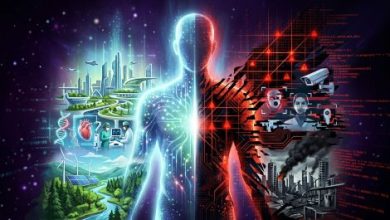
The defining question of the 21st century may therefore no longer be simply capitalism versus socialism, or workers versus machines. It may be something much more fundamental: if intelligent machines create an increasing share of the world’s wealth, will that wealth belong primarily to those who own the machines, or to the society whose labor, knowledge and data made them possible? The answer may determine whether the Age of AI becomes an age of unprecedented inequality, or the beginning of a new social contract in which technology, capital and artificial intelligence ultimately serve humanity.
Read: When Superstition Becomes a Business
________________
 The author of this article, Engr. Ramesh Raja, is a Civil Engineer, visionary planner, PMP certified and literary enthusiast with a passion for art and recreation. He can be reached at engineer.raja@gmail.com