The Shikarpuri Merchants and their Network
The historic town of Sindh was an important commercial center of the region due to its strategic geographic location, on the extensive network of trade routes connecting Central Asia, Afghanistan and Iran with India.

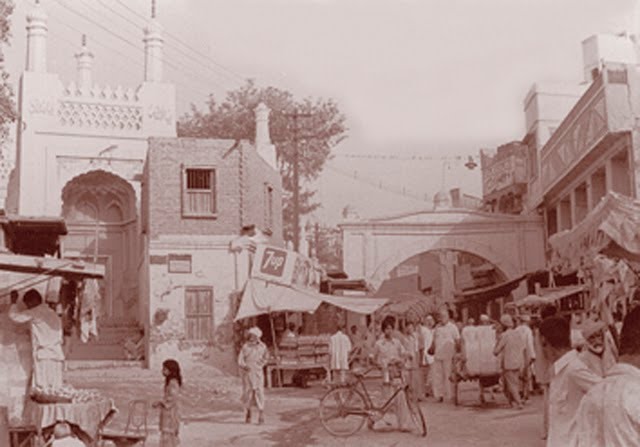
[The historic town of Shikarpoor (Shikarpur) in Upper Sindh, Pakistan, became an important commercial center of the region due to its strategic geographic location, on the extensive network of trade routes connecting Central Asia, Afghanistan and Iran with India. Shikarpoor served as a base for an enterprising community of Hindu merchants. The legacy of these affluent merchants is reflected through the remnants of the towns’ historic fabric that speaks of a patronage for arts and building crafts. Shikarpoor was pushed into the abyss of decline owing to various developments of 19th century; most importantly among others the introduction of railways and mass exodus of Hindus at the time of India-Pakistan Partition. At present under threat of rapid demolitions and absence of effective measures for protection, this historic fabric is fast disappearing]
By Anila Naeem
Markovits, in his book ‘Global World of Indian Merchants’, traces the extents and influence of Shikarpoori Merchants’ network extending to Kirman (in southeast Iran) as its westernmost outpost; Keria (in eastern Kashgaria) as its easternmost; Chimkent (in Turkestan) as the northernmost; and Aden (in Arabia) as its southernmost post. He describes it as a network that ‘developed during the period of the rise of Durrani Afghan Empire, and consolidated itself in the Central Asian Khanates between 1800 and 1870’. According to him Shikarpooris played an important role in Russian Central Asia between 1880-1917, in Chinese Sinkiang and in southeastern Iran. In the aftermath of the Russian Revolution these merchants suffered heavy losses, but on their return re-strengthened themselves and their network in India proper during 1920s and 1930s. Markovits identifies the period between 1917 and 1947, as the time when the ‘Shikarpuri network went through a process of reorientation’, when the surplus male population returning from Central Asia started to settle in Karachi and other localities in India. This in many ways laid the basis for post-1947 diaspora of this community of traders. Existing research on the Bania Hindus of Sindh has established that they became the main ‘beneficiaries of the socio-economic transformation in Sindh during the British period’.
Shikarpoor did not have much of its own manufactures, and could not compete with other trading and manufacturing centers of that time, but its merchants without doubt played a major role in distribution of the merchandize produced in those emporiums to far off lands, by organizing and financing the caravan trade from India to Khorasan. The forte of the city and its merchants as quoted by Thornton (1844) was ‘…banking and other branches of monetary traffic’, carried out through a very sophisticated system of ‘bills of exchange’ called hundi in local terms. For almost a period of one and a half century the banking houses of Shikarpoor ‘…came to dominate the financial transactions over a vast area comprising not only Afghanistan, but parts of Iran and Central Asia’. The Hundis were issued by Headquarters in Shikarpoor, and accepted throughout the vast region of the network, without question. These provided traders and travelers with a facility of safe carriage for their money in times when dangers of being looted on the way were very high.
Thus, in spite of commission charged at almost as high as twenty to twenty five percent, these transactions were still acceptable as a more secure mode of money transfer. To maintain a monopoly, hundis were not circulated widely outside the Shikarpuri networks. Thornton (1855), mentioning credibility of these bills writes that they could be ‘…negotiated in every part of India and Central and Western Asia, from Astracan to Calcutta’. Burton (1877) gives a similar account saying that these bills could be ‘…discounted, without question or demur, in places distant a six months march’. Hundis were written in a script known only to the Sindhi Hindus containing ‘…marks which effectually prevented forgery … [as they were] known only to the writer and to his correspondents’.
______________________
Excerpted from ‘Shikarpoor: De-Spirited and Defamed – Waiting to be Salvaged’, a research paper authored by Anila Naeem, Department of Architecture and Planning, N.E.D. University, City Campus, Din Mohammad Wafai Road, Karachi, Sindh Pakistan
Courtesy: ICOMOS