Silent Killers: Malaria, Dengue Hit Pakistan
The Growing Threat of Malaria and Dengue in Pakistan


Malaria and dengue are not just health problems—they are major economic and social issues that quietly harm Pakistan’s progress.
- Without quick and coordinated action from the government, healthcare workers, and communities, these diseases will keep hurting the most vulnerable people.
Sher Muhammad Khan
Pakistan is a country dealing with many problems, like political issues, economic difficulties, and climate changes. Now, it is facing another serious challenge: the quick spread of diseases carried by mosquitoes, especially malaria and dengue. These diseases are often not talked about much, but they are causing deaths, overloading hospitals, and making people even poorer. Even though these diseases can be prevented and treated, their numbers are going up because of poor sanitation, climate change, Rapid city-growth, and weak healthcare systems.
This article explores how malaria and dengue are becoming bigger problems in Pakistan. It looks at the reasons they are spreading, their effects on people’s lives, and what can be done to stop them from causing more harm.
The Rising Burden of Malaria in Pakistan – Current Statistics and Trends
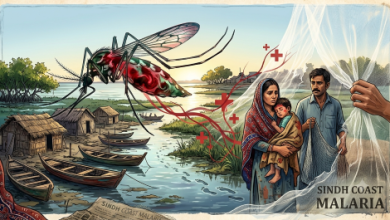
Malaria is still a serious issue in Pakistan, with around 3.5 million cases reported every year, according to the World Health Organization.
It is common in areas like Sindh, Balochistan, and southern Punjab, where standing water, poor drainage, and limited access to healthcare allow the Anopheles mosquito, which spreads malaria, to thrive.
Pakistan accounts for 5% of the world’s malaria cases, with Plasmodium vivax being the main type (70% of cases), followed by Plasmodium falciparum (30%).
Children and pregnant women are especially at risk because their immune systems are weaker, making them more likely to die from the disease.
Factors Fueling Malaria’s Spread – Climate Change & Flooding
More rain and flooding, like the 2022 super floods, have created more places for mosquitoes to breed.
Higher temperatures help mosquitoes breed faster and allow the malaria parasite to develop quicker.
Urbanization & Poor Sanitation
Rapid and unplanned city growth has led to water pooling in slums and construction sites.
Poor waste management allows water to collect in old containers and tires.
Weak Healthcare Systems
Rural areas lack proper diagnostic tools and antimalarial drugs. People are often misdiagnosed because the symptoms of malaria are similar to other illnesses.
Insecticide Resistance
Mosquitoes are becoming resistant to common insecticides like DDT, making insecticide spraying less effective.
The Dengue Epidemic: A Seasonal Nightmare
Alarming Surge in Cases
Unlike malaria, which is more common in rural areas, dengue has become a big problem in cities.
Spread by the Aedes aegypti mosquito, dengue cases have gone up a lot. In 2023 alone, over 50,000 cases and hundreds of deaths were reported. Cities like Lahore, Karachi, and Peshawar are most affected because of high population density and poor water storage.
Dengue outbreaks usually happen after the monsoon season (September to November), when rainwater pools and creates perfect breeding conditions.
The disease has four types (DENV-1 to DENV-4), and getting infected with a new type can lead to severe dengue, which can be deadly if not treated on time.
Why Dengue is Thriving in Pakistan – Lack of Public Awareness
Many people don’t recognize the early signs of dengue, like high fever, headaches, and joint pain, and don’t seek treatment quickly.
Some think dengue is just a mild virus and ignore it, which can lead to serious illness and death.
Ineffective Vector Control
City clean-up campaigns are not consistent and do not target mosquito larvae effectively. Some communities resist indoor spraying because of wrong information.
Healthcare Overload During Outbreaks
During dengue peaks, hospitals run out of platelets and ICU beds. Private clinics charge high fees for tests and treatment, making healthcare unaffordable for poor families.
Global Warming Extending Transmission Seasons
Warmer temperatures allow mosquitoes to survive longer, increasing the time they can spread the virus.
Socio-Economic and Health Impacts
- Loss of Lives
Malaria and dengue kill thousands of people each year, with children, the elderly, and those with weak immune systems most at risk.
Many deaths happen because people delay treatment.
- Economic Burden
Productivity decreases as workers and students miss school or work due to illness.
Families spend a lot of their income on treatment, which puts them in more debt. Public health budgets are stretched thin as they deal with outbreaks, taking away money from other important programs.
- Overwhelmed Health Systems
Hospitals in areas with high dengue cases face shortages of beds, forcing patients to share beds or lie on the floor.
Delayed diagnosis worsens outcomes, especially for severe cases of malaria and dengue hemorrhagic fever.
Solutions and the Way Forward
- Strengthening Vector Control Measures
Community-based larval surveillance: Get local volunteers to find and remove breeding sites.
Biological control: Use fish that eat mosquito larvae, like guppies, in stagnant water.
Innovative insecticides: Use different chemicals to prevent mosquitoes from developing resistance.
- Public Awareness Campaigns
Use media and social platforms to spread information about symptoms and prevention.
Teach children in schools about how to avoid mosquito breeding and stay safe.
- Improved Healthcare Preparedness
Train healthcare workers to diagnose the diseases quickly and accurately.
Keep stocks of important medicines and supplies, like anti-malarials and platelets, ready for emergencies. Set up mobile clinics in remote areas to provide fast testing and treatment.
- Climate-Resilient Urban Planning
Develop proper drainage systems to prevent waterlogging in cities .Enforce rules to stop construction sites from creating stagnant water.
- Research and Vaccine Development
Test malaria vaccines, like RTS’S/AS01 (Mosquirix), in high-risk regions.
Consider introducing the Dengvaxia vaccine in areas where dengue is common.
Malaria and dengue are not just health problems—they are major economic and social issues that quietly harm Pakistan’s progress.
Without quick and coordinated action from the government, healthcare workers, and communities, these diseases will keep hurting the most vulnerable people.
In a commendable collaborative effort, the Health Department of Badin, the National Rural Support Program (NRSP), and the People’s Primary Healthcare Initiative (PPHI) recently celebrated week for the Malaria and Dengue Awareness Campaign in all over district Badin. The sessions across high and middle schools in the district. The initiative, aimed at educating students—both girls and boys—on prevention and early detection, represents a crucial step in Pakistan’s fight against these silent killers
Pakistan needs to adopt a strong plan that includes prevention, education, and better healthcare to fight these silent killers.
The time to act is now—before another outbreak takes more lives.
Read: Climate Change Effects on Personal Life
_______________
 Sher Muhammad Khan, Development Professional, Writer, Blogger, working with National Rural Support Program-NRSP, District Coordinator -GFATM Project (Malaria) District Badin