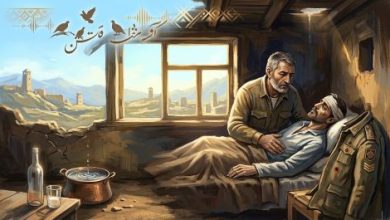
Through this award-winning novel, the author has attempted to illuminate a lesser-known chapter of Meerabai’s life
Meera
By Debasree Chakraborti
Place: Chittorgarh Fort
Pratap remained silent for a while and then said, “So many years have passed, Saanjh. Sitting in this era I have tried many times to see Mira of the past, but her face always appears very blurred to me. Even now, I can see that scene—Mira sitting in the courtyard of the new temple she had built for her Giridharji, lost deep in thought. From all around, accusations were floating against her—that Emperor Babur had sent Mira a diamond necklace. The Rajput women of Mewar took great delight in spreading slander about her character, adding all sorts of colors to the story. In truth, they could never become Mira themselves, and so they found joy in belittling her.”
The rain began to drizzle, drop by drop. From the look of the sky, soon it would pour heavily. It had been a long time since she had drenched herself in the rain, and Saanjh’s heart overflowed with joy. She said,
“But I’ve heard that after listening to Tansen’s praise of Mira’s songs, Emperor Akbar came in disguise to hear her sing, and being pleased with her singing, he gifted Meerabai a diamond necklace.”
Pratap replied, “Look, Saanjh, as far as I know, Mira never had any connection with Akbar. Even the story about Babur is doubtful. Such tales were spread only to portray Mira as a mere wandering yogini. Besides, I believe that giving her a necklace by removing it from one’s own neck after hearing her sing was actually meant as an insult. Do you know the real truth? Mira secretly tried to keep contact with kings across India in order to protect Mewar and Rajputana.”
Pratap began the tale again, “One day Rana Ratan Singh was in his palace when Banbir came to him and said, ‘Ratan Singh, Mira still has that diamond necklace. The last ascetic who came to her—we captured him, but we could not recover anything. From tomorrow…’”
“It has been strictly forbidden for any ascetic to meet Mirabai. If any ascetic disobeys this order, he will be killed. Such is the harsh decree I have given.”
Ratan Singh said, “But one thing I simply cannot understand—why would Babur suddenly send Meerabai a diamond necklace?”
Banbir replied, “Ah, this is exactly why I call you thick-headed. With this kind of wit, how will you ever rule a kingdom? Listen, Mira’s uncle Veeramdev was secretly in contact with Babur. He had informed Babur about how Merta would fight against Mewar. Because Merta’s financial condition is poor—almost like beggary—Babur sent Mira a diamond necklace. After all, it isn’t possible to send such a large sum of money through a messenger.”
Ratan Singh said, “But why would Babur send it through Meerabai? He could have sent it directly to Veeramdev, and that would have been much simpler.”
Banbir made a sound of irritation and said, “Don’t waste your little intelligence. You hardly have any to begin with, and if you spend even that, it will be a disaster. So from now on, try little by little to rely on my wisdom instead.”
Ratan Singh said, “But why would Babur send the necklace to Meerabai at all?”
Banbir replied, “Because Mira is Mewar’s daughter-in-law. If Babur’s necklace of charity reaches Merta through her, it indirectly insults Mewar. In other words, it is a deliberate insult to Mewar’s Rana, Ratan Singh. That is why Babur took the shelter of such a ruse. But don’t worry, eliminating all your enemies one by one—that is my duty.”
Ratan Singh, overjoyed, said, “The more I see of you, the more amazed I am. To have someone as skilled a politician as you by my side, I consider myself fortunate.”
A cruel smile appeared on Banbir’s lips as he said, “Trust me blindly. I am the only one who truly wishes you well; the rest are all your enemies. You saw it yourself—even your own maternal uncle abandoned you and fled in your time of danger.”
“Hmm, that I know,” said Ratan Singh. “But is there no way to get rid of Mira somehow?”
Banbir said, “I am only waiting for the right time. My messengers, Champa and Chameli, are always keeping watch over Mira’s palace. Now I just have to wait.”
All day long Champa and Chameli loitered around Mira, keeping a sharp eye on her every movement. Mira understood everything but remained unperturbed. Yet these days, she had written a number of songs addressed directly to the Rana.
Hidden in each song was a piercing note of accusation.
“Ranaji, why do you keep such deep hostility?
Ranaji, why does this slander taste sweet to you?
Ranaji, I sing only Govind’s praises, Ranaji, I shall no longer remain bound by your chains.”
Every song was written and sung solely in reference to the Rana. Hearing them, Ratan Singh grew restless—he could no longer bear Mira’s accusations. One way or another, Mira had to be removed. But Banbir was waiting for the right moment—when would that moment come?
If things went on like this for long, the Rana himself would become disgraced. For though confined, Mira was using her songs as weapons to send messages far and wide. Mira was exceedingly intelligent, and keeping such a woman in Chittor for long could only invite danger.
One night, while the Rana was asleep, Banbir came with news: in the sanctum of Giridharji’s temple, Mira was speaking with someone.
Banbir said, “I have told you many times that Mira’s character is not good. Now, in the darkness of night, she is indulging in debauchery with someone inside the temple. This is the moment I was waiting for—now she can be caught red-handed.”
Rana Ratan Singh and Banbir, along with guards, rushed to Giridharji’s temple and banged on the door. After a while, the temple door opened. Standing there at the threshold, dressed in the robes of a devotee, was Meerabai.
Ratan Singh asked, “So late at night, with whom were you speaking inside the temple?”
Meerabai smiled gently and replied, “I was speaking with my Giridharji, sharing with Him my joys and sorrows.” Banbir said with great ferocity, “Have you no other place for your filth? Before the whole world you put on the guise of a saintly woman, and in the darkness of night behind the closed doors of the temple you indulge in sin with a man. Your days are over. Now you have been caught red-handed.”
Ratan Singh pushed Mira aside and entered the sanctum of the temple. He searched carefully everywhere—there was no one. The sanctum was empty, no trace of anyone. Ratan turned back, lowered his head, and walked away. Banbir and the guards too entered the sanctum, but indeed found no one. They too had to return, defeated. Thus, even this opportunity to humiliate Mira slipped from their hands.
Once they left, Meerabai closed the temple doors and went inside. She began shifting the pile of flowers offered at Giridharji’s shrine. Beneath that pile, near the deity’s altar, lay a small lotus flower. Pressing it, a square slab of stone on the floor slid aside, revealing an underground tunnel. From that passage emerged Champa, Chameli, and the temple priest Gadadhar Pandit.
Mira placed Giridharji’s garland in Panditji’s hands and said, “Panditji, hidden within this garland is a most precious necklace. You will deliver it to Jaymal and tell him that this necklace will help protect Merta. It is not wise to wait any longer—you must leave at once.”
Panditji, holding the garland given by Mira, disappeared down the tunnel. Chameli closed the secret passage, covered it with flowers of worship, and sat in a corner of the temple with her head against the wall. Meerabai, taking up her ektara, sat before Giridharji and began to sing.
Pratap said, “Do you know, Saanjh, in this fort the maids had no dignity, no honor. Once, even Champa and Chameli had misunderstood Mira gravely. But in her company they discovered her true character. Such love and respect a queen could give her maids was something they had never even imagined.”
Chameli said to Meerabai, “You do not know what terrible conspiracies are being woven against you. Leave this place while you still have time, Bai-sa.”
Mirabai had replied to them, “Call me only Bai-sa. I am…”
“…one of you.” That is why even the palace maids began to call her Bai-sa.
You see, Saanjh, Mirabai wanted to erase all divisions of society.
Hearing Champa and Chameli’s words, tears welled up in Mira’s eyes. Since her mother’s death she had been forced to live by fighting constantly—how much longer she would have to fight, she did not know.
Mira began to sing:
“Apan na aavaye likh nahi,
Bhaji ban pari laal chhavan ki…”
All around was a silent night. Mira’s song spread far beyond the fort. Rana Ji wondered—
“To whom is Mira sending these messages? You do not come, nor do you send any letters.”
But to whom was Mira sending these signals? Even within Giridhar’s temple no one was to be found!
At that moment Banbir came and said, “Ratan Singh, Mira cannot be kept here any longer.”
Ratan Singh replied, “But how will you kill Meerabai? Her devotees will never accept her death. That could bring us danger.”
Banbir said, “Do you not know there is a rule among the Sisodias? If any woman of the royal family was viewed with suspicion, then charanamrit of Goddess Kali would be sent to her. If she were guilty, she would die after drinking it.
We will send charanamrit for Mira from the royal court. You will drink it first before everyone, and when nothing happens to you, then poison will be mixed into it and sent to Meerabai. After that, whatever is destined will happen.”
Saying this, Banbir walked over to the balcony (jharokha).
Pratap said, “Saanjh, the royal families of Rajasthan have for generations been steeped in vile conspiracies. They did not hesitate even to kill a daughter-in-law of the family by making her drink poisoned charanamrit. I feel disgust even to speak of such things. Saanjh, just think once—how could Mira live amidst such a loathsome environment?”
Tears filled Saanjh’s eyes as she said, “Truly, hearing all this, I can only bow my head in reverence to Meerabai.”
Pratap said, “One day Champa and Chameli asked Meerabai, ‘Bai-sa, our Ranaji died because of Babur, and yet you are joining hands with him?’
Then Meerabai replied, ‘Bapu-sa’s death did not happen because of Babur. Those who killed Bapu-sa are enemies of the entire motherland. That is why it is necessary to remove them.’
Champa then asked, ‘But what if those enemies are very close to us—our own people?’
In response Mirabai said:
“Ācāryāḥ pitarah putrās tathaiva ca pitāmahāḥ,
Mātulāḥ śvaśurāḥ pautrāḥ śyālāḥ sambandhinas tathā.”
(This is a very important verse from the Shrimad Bhagavad Gita.)
The Lord has said here that lust (kāma), anger (krodha), and greed (lobha) are the three gates to hell. In truth, all three are different forms of desire (kāma). When one gives undue importance to worldly objects, people, or possessions, these three arise.
The activity of kāma (desire) is of two kinds:
Īṣṭa-prāpti (attaining what one desires)
Aniṣṭa-nivṛtti (removing what is undesirable).
Within attainment itself there are two divisions:
The desire to accumulate wealth (lobha),
The desire to enjoy pleasures (kāma).
When there is an obstacle to the removal of what is undesirable, anger (krodha) arises. That anger is directed at those who hinder our enjoyment or accumulation, or at those who harm us, leading to actions of destruction against them.
But Arjuna had not wished to kill his own kinsmen, for he felt that doing so would condemn him to hell.
When Arjuna’s mind was weak, at that moment Lord Krishna told him that to excuse the sins of one’s own kin is itself equivalent to sin. Those whom Arjuna wished to forgive because they were his relatives had already filled the pot of their sins to the brim. If forgiven at that time, they would have caused immense harm to many others.
I too have given sinners many chances. But when I have seen that change in them is impossible, I have had to choose another path. And as for the matter of Babur, as you mention—he is now a very important piece in the politics of India. Therefore it is with him that I must move forward.” (Continues)
Click here for Part-1, Part-2, Part-3, Part-4, Part-5, Part-6, Part-7, Part-8, Part-9, Part-10, Part-11, Part-12, Part-13, Part-14, Part-15, Part-16, Part-17, Part-18, Part-19, Part-20, Part-21, Part-22, Part-23, Part-24, Part-25, Part-26, Part-27, Part-28, Part-29, Part-30, Part-31,
__________________
 Debasree Chakraborti is a renowned novel writer of Bengali language. Based in Kolkata, West Bengal, India, she has done Master’s in Modern History from the Kolkata University, and authored some thirty books, mostly the novels, with historical perspective and themes. Her novel is ‘Maharaja Dahir’ that covers the history of Sindh from 662, the year of first attack on Sindh by the Arab armies till date, was published last year and translated by Nasir Aijaz into Sindhi language.