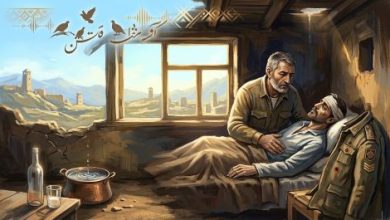
Through this award-winning novel, the author has attempted to illuminate a lesser-known chapter of Meerabai’s life
Meera
By Debasree Chakraborti
Place: Merta, Chittor
From the balcony of their hotel room, Pratap and Saanjh could see the Merta Fort. Both of them stood there, gazing intently at the fort.
Saanjh said, “I can’t believe my eyes. The fort I am looking at now is the very place where Meera spent such an important part of her life. I have been to Merta before, but coming here with you feels like I’m discovering it all over again. Tell me, Pratap, you were talking about Vikramjit. But you never finished that story.”
Pratap replied, “Hmm, Vikramjit is like an important pawn in the chessboard of Meera’s life. One evening, when Banbir, Vikramjit, and a few courtiers were drinking, Udabai appeared there. At that time Udabai had free access to Vikramjit’s palace. Banbir had instructed the guards and other attendants that Udabai should always be treated with the highest respect. Gradually, Udabai even began to think of herself as the Queen Mother of Mewar. Dressed in the clothes and jewelry given by Banbir, she would wield her whip in the inner chambers of Chittor Fort. This benefited Banbir the most, because with the power he gave her, Udabai became his most loyal ally.
That day, Udabai secretly pulled Banbir aside into a dark corner of the palace and whispered something to him before leaving. Hearing what she had said, Banbir turned to Vikramjit and sneered, ‘Shame, shame, Vikramjit! Meera Bai has no respect for you as Rana. She truly believes in her heart that you are unworthy of the throne—that’s why she dared to say such a thing. After all you’ve done, is this the reward you get?’
Vikramjit, completely puzzled, replied, ‘I don’t understand.’
Looking at Vikramjit’s clueless face, Banbir said, ‘Meera Bai thinks that I am plotting to remove you in order to become Rana myself. If I had wanted to be Rana, do you think I would have made you Rana in the first place?’”
Banbir finished his words and immediately burst into a display of fake tears.
Hearing this, Vikramjit flared up in uncontrollable rage. He already viewed women with suspicion and disdain. In his eyes, every beautiful woman was his rival. So he roared, drew his sword, and shouted, “Today is Meera Bai’s last day. She has no right to live anymore. Blinded by the arrogance of her beauty, she dares to act this way!”
Banbir, in his heart, laughed. His arrow had struck the exact target.
Screaming like a frenzied beast, Vikramjit charged toward Meera Bai’s palace. His wild, furious cries echoed through the fort. In Mewar Fort, everyone loved and deeply respected Meera. Seeing Vikramjit’s behavior, people began to condemn him from all sides. Murmurs rose throughout the fortress. Yet no one dared to stop him, for everyone knew too well what havoc could come when a weapon lay in the hands of a madman.
The entrance to Meera’s palace was closed. Vikramjit kicked at the doors, shouting, “Such an insult! To keep the doors barred in the face of Mewar’s Rana! Meera, your time is over—if you have any courage, come out!”
Terrified, Meera’s maid trembled at his enraged cries. Then Meera herself came forward, opened the door, and stood in front of him, casting a sharp, piercing gaze upon Vikramjit.
At that moment, Vikramjit froze. Meera’s beauty shone, but more than that, her face and eyes carried an extraordinary aura of dignity—something he had never seen in any woman before.
Meera said, “Vikramjit, aren’t you the Rana of Chittor? Is this how a Rana of Chittor behaves? Go stand in front of a mirror and look at yourself—see what you look like right now. And always remember this: you are the Rana of Chittor, the representative of all its people. The honor your forefathers earned through generations—you have reduced it to dust!”
No one had ever spoken to Vikramjit this way before. This woman was breathtakingly beautiful and dignified, yet she did not feel like a rival to him at all. For the first time, Vikramjit did not see her as competition. Instead, her words struck him silent.
Two guards were standing outside Meera’s palace. Turning to them, Meera Bai said—
“Take Vikram with you,” Meera Bai ordered the guards. “In this drunken state, he cannot go alone. Go, escort him safely back.”
As Meera commanded, the guards led Vikramjit away to his palace.
The fortress of Chittor lay shrouded in thick darkness. From different corners of the fort, faint torchlight flickered. Amid this atmosphere, a deep conspiracy was unfolding. A guard came and reported everything that had happened in Meera Bai’s palace to Banbir. Hearing the report, Banbir’s eyes turned a murky gray, hiding something deeper than the ocean itself, impossible to read from the outside.
At that moment, a shadow appeared on the wall of Banbir’s chambers. Lifting his face toward it, Banbir said, “Ah, you’ve come?” The figure was his trusted spy. In the dim light of the torch reflecting in Banbir’s hand, something gleamed.
Banbir handed the spy a ring and said, “You must go to Merta. Go to Veeramdevji and tell him you’ve been sent by Karmetabai. Tell him that Meera is in grave danger.”
The messenger hesitated and said, “But it will take time for him to arrive. What if something happens in the meantime?”
Banbir’s eyes flashed brightly. He replied, “That’s exactly what I want. By the time he arrives, they’ll see Meera already dead, and then they will turn their fury upon Vikramjit.”
Just then, another spy arrived with urgent news: the Sultan of Gujarat, Bahadur Shah, was marching with his massive army to attack Mewar.
Banbir’s face lit up with excitement. “This is what I have been waiting for!” he exclaimed.
The spy added, “There is more bad news. Prince Uday Singh has been sent away from the Mewar fort to Kumbhalgarh.”
Banbir said coldly, “Now is not the time to worry about Uday Singh. First, we must settle matters with Vikramjit.”
Meanwhile, in the shifting shadows of Chittor Fort, a different scene played out in Vikramjit’s palace. In his drunken stupor, the face of Meera Bai kept appearing before his eyes—the very woman he had despised all this time, yet now…
Face to face with her, Vikramjit now felt not hatred but respect welling up inside him. What was this strange emotion? Could such a thing even be possible? A woman with such dignity could never truly be wicked. Then… had everything he’d heard about Meera all these years been lies?
That night Vikramjit had a dream. He saw himself lying in a cradle. On one side of the cradle stood Meera Bai, and on the other, Banbir. Banbir was saying, “Vikramjit, never trust Meera Bai, she is a liar.” From the other side, Meera was saying, “Shame on you, Vikramjit! Aren’t you the Rana of Chittor? Is such behavior befitting of you?”
Vikramjit felt the cradle swaying violently until at last it snapped. He was falling from Chittor Fort into the abyss below. He tried to scream, but no sound came out. He struggled desperately to shout, and finally, with sheer terror, he woke up.
When his eyes opened, he saw Banbir’s face looming over him. The terrifying expression on Banbir’s face made him recoil in fear. Startled, Vikramjit exclaimed, “What is this? You here? I got so frightened!”
Banbir said calmly, “Why should you fear me? I am your well-wisher.” Then, with a sinister undertone, he added, “But there is indeed something to be afraid of.”
Vikramjit asked, “Why, what has happened?”
Banbir replied, “For the past few days, Meera Bai has been seen speaking with a young ascetic. Every day they spend time together at the temple of Giridharji. We have decided to catch them red-handed tomorrow.”
Hearing this, Vikramjit hesitated and said, “But from what I’ve seen of Meera Bai, I cannot believe she could ever be like that. To me she seemed only noble, like a true well-wisher.”
Banbir instantly realized that seeing Meera had sobered Vikramjit from his drunken haze. Twisting his words, Banbir said, “You saw her when you were half-dazed, that’s why you could not recognize her true nature. Just wait a few more hours—tomorrow you shall see with your own eyes.”
The next morning, before the darkness had fully lifted, Meera Bai sat on the temple courtyard of Giridharji, stringing a garland. At that moment, a tall, handsome young ascetic entered the temple. Climbing the steps, he came and stood before Meera Bai…
Meera sat down. As she continued stringing her garland, she cast a glance at the ascetic and said, “I have never seen you in Chittor before. Where have you come from?”
The ascetic replied, “I have come from Dwarka. A divine command in a dream brought me rushing to Chittor.”
Meera looked at him in surprise. “A dream command? What command was that which brought you here?”
The ascetic said, “Since you ask, I will tell you. One night, as soon as I had fallen asleep, Lord Ranchhodji appeared before me in a dream. What an exquisite vision—his divine radiance lit up the entire world, wiping away all darkness. Overwhelmed, I fell at his feet.
Meera asked, “And all this—you saw only in your dream?”
The young ascetic replied, “Yes, everything happened in my dream.”
Meera sighed deeply, kept threading her garland, and said, “I see… then what happened?”
The ascetic continued, “I placed my head upon his feet and prayed, ‘O Lord, grant me liberation now. I can no longer bear the chains of this worldly life.’ Then the Lord said to me, ‘There is only one path to your liberation, and that is through Meera Bai. If you can once touch the lotus feet of Meera Bai, bride of the royal family of Chittor, only then will you be freed.’”
After finishing his words, the ascetic paused for a while. But Meera Bai went on stringing her garland with full concentration, not paying him any attention. Then the ascetic stretched out both hands toward her and pleaded, “Do not disappoint me like this. To me, you are like a heavenly goddess. Give me your feet.”
Still absorbed in her task, Meera Bai said, “I am astonished at your audacity. Do you know what the consequence of such insolence can be?”
The young ascetic begged humbly, “I am prepared for anything. I only wish to touch them once.”
Just then, guards came rushing in from all sides, with Banbir at their head… Vikramjit.
Banbir said, “Do you see now, Vikramjit? Didn’t I tell you this has been going on for a long time? Today we caught her red-handed.”
Vikramjit looked at Meera with an accusatory gaze and said, “Looking at you, one would never guess you could stoop so low in secret.”
Meanwhile, in the midst of the quarrel, the young ascetic bolted out of Giridharji’s temple and disappeared. Yet no one tried to stop him. Hearing the commotion, Champa, Chameli, and several others rushed to the spot. Among them, an elderly woman said, “Why, that boy who just ran away—he’s the same one who begs outside the Bhavani temple. I’ve seen this young ascetic there many times.” Supporting her, a young woman added, “Yes, I too have seen him when I go to the Bhavani temple outside the fort. But what was he doing here?”
Banbir sneered, “Shame, shame! You were lecturing Vikramjit about protecting the family’s honor, and here you are, disgracing yourself with a filthy beggar! This cannot be tolerated.”
Vikramjit turned to Meera with disgust and said, “So you are truly a woman of corrupt character. For this, you must be punished. I am the Rana of Chittor. I will decide your punishment.”
Without waiting for more, Meera fled from the place and hurried back to her palace.
All day she had remained without food or water. Weak in body, she lay down on her bed. Later, Champa and Chameli returned from Giridharji’s temple with the evening offering and a sherbet.
Champa said, “Bai Sa, we understand your sorrow. The way you were insulted in front of so many people today—such humiliation is unbearable.”
Chameli added, “Bai Sa, today’s entire incident was pre-planned.”
With great effort, Meera Bai sat up from the bed, leaned against the wall, and said, “For ages upon ages, women have been humiliated. What is new in this? Look at Sita’s story. When Ravana abducted her, Sita cursed him fiercely. Yet after the victory of Lanka, when Ramchandra first saw his wife again, his words were: ‘The battle I fought and won was not for your sake.’ Sita’s humiliation did not end there. When she was brought back from the Ashok Vatika…”
When Sita was being brought back in a palanquin, Rama did not approve of it. He said that Sita should be brought back on foot, and that if everyone saw her along the way, it did not matter. “Visṛjya śibikāṁ tasmāt padbhyām eva mārgataḥ” — “Let her dismiss the palanquin and come walking.”
Sita was the daughter of a king, the bride of a royal household. To bring her back walking on foot before the eyes of all was something neither Vibhishana, Sugriva, Lakshmana, nor Hanuman regarded well. For it was not only against Aryan custom, but even in non-Aryan cultures such an act was considered deeply humiliating.
Lifting the cup of sherbet and taking a sip, Meera Bai said, “In truth, he wished to humiliate Sita. And soon his real nature was revealed when he said:
‘Prāpta-cāritra-saṁdehā mama pratimukhe sthitā,
Dīpo netrāturasyeva pratikūlāsmi me dṛḍhā.
Tad gaccha tvānujānāmi adya yatheṣṭaṁ Janakātmaje,
Eta daśa diśo bhadre kāryam asti na me tvayā.
Kaḥ pumāṁs tu kule jātaḥ striyaṁ para-gṛhāśritām,
Tejasvī punar ādadyāt suhṛd-lobhena cetasā.
Rāvaṇāṅka-parikliṣṭāṁ duṣṭāṁ duṣṭena cakṣuṣā,
Kathaṁ tvāṁ punar ādadyāṁ kulaṁ vyapadi mamahat.
Yadarthaṁ nirjitā me tvaṁ so ’hyam āsāditaṁ mayā,
Nāsti me tvayy abhiṣvaṅgo yatheṣṭaṁ gamyatām iti.’
The meaning is: ‘I have doubts about your chastity. I cannot bear to see you before my eyes. Therefore, you may go wherever you wish in these ten directions. Tell me, can any man of noble birth accept a woman like you? You have been tainted by sitting on Ravana’s lap, polluted by his wicked gaze. If I were to take you back, my lineage would be dishonored. The reason for which I rescued you has now been fulfilled. I have no further attachment to you. You may go wherever you desire.’
After this, Sita had to undergo the ordeal of fire. For ages, women have been subjected to such trials by fire. Listening to his subjects, Rama even abandoned his wife while she was pregnant. From then on, he kept no relation with her at all.”
During Sita’s pregnancy, Rama did not think of what would happen to her, nor of what would become of her children. When did he remember? At the time of the Rājasūya sacrifice—for such a sacrifice cannot be performed without one’s wife. Then Sita was sought out and again preparations were made for another fire-ordeal. But this time, Sita did not undergo the trial by fire. Instead, she took refuge in the lap of her mother, the goddess Madhavi.
So, you see, Rama humiliated Sita so deeply, yet she was later placed upon the seat of divinity. In truth, this is the rule of the world: if you can accept it, well and good; if not, there is nothing to be done.
Champa said, “Bai-sa, this cannot be allowed to go on any longer. Do something to free yourself from this situation.”
Mira Bai replied, “Since you have reminded me of Rama, I will write a letter to Tulsidas-ji tonight. My messenger will wait behind Giridharji’s temple. The letter must be delivered into his hands. He alone can save me from this danger.” (Continues)
Click here for Part-1, Part-2, Part-3, Part-4, Part-5, Part-6, Part-7, Part-8, Part-9, Part-10, Part-11, Part-12, Part-13, Part-14, Part-15, Part-16, Part-17, Part-18, Part-19, Part-20, Part-21, Part-22, Part-23, Part-24, Part-25, Part-26, Part-27, Part-28, Part-29, Part-30, Part-31, Part-32, Part-33,
_________________
 Debasree Chakraborti is a renowned novel writer of Bengali language. Based in Kolkata, West Bengal, India, she has done Master’s in Modern History from the Kolkata University, and authored some thirty books, mostly the novels, with historical perspective and themes. Her novel is ‘Maharaja Dahir’ that covers the history of Sindh from 662, the year of first attack on Sindh by the Arab armies till date, was published last year and translated by Nasir Aijaz into Sindhi language.